
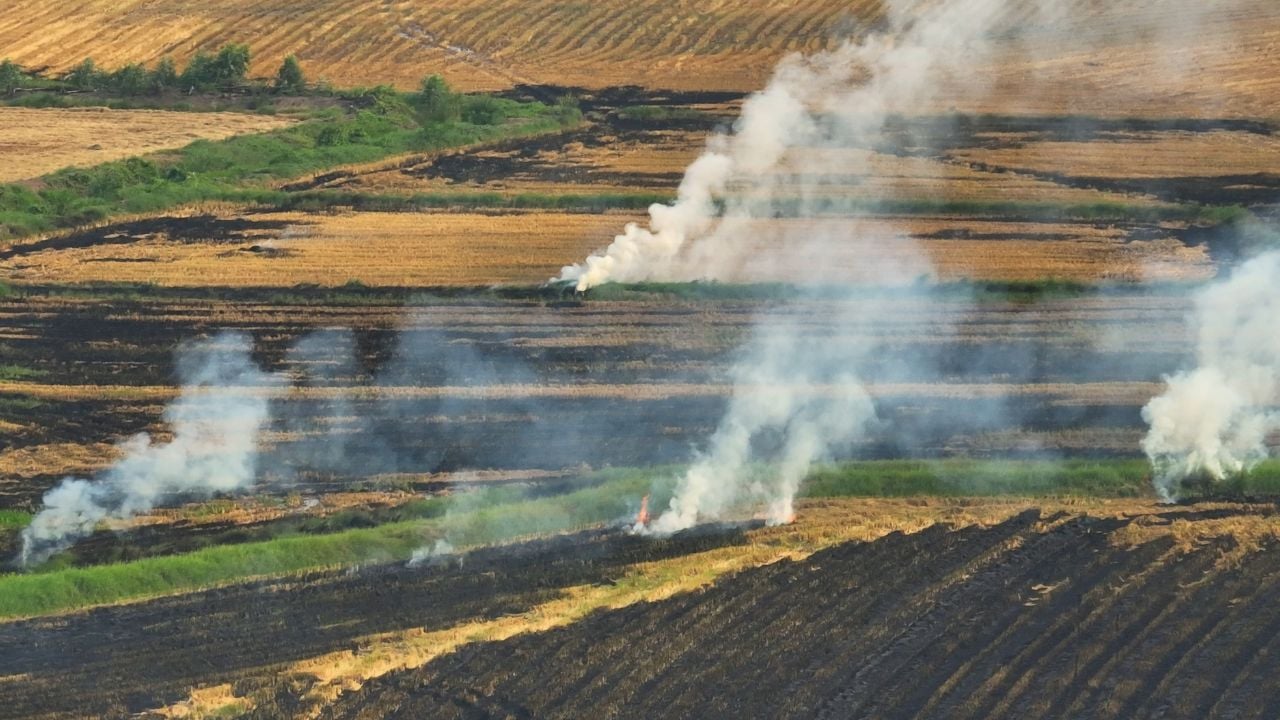
8 Burn Ban Rules Texans Get Wrong in Their Own County

You’ve lived in your Texas county for years. Surely you know what a burn ban means there.
Then someone asks a question you can’t quite answer, and you realize you’ve been relying on what you’ve heard rather than what you’ve read.
These are the burn ban rules Texans get wrong in their own county.
Note: This is general information, not legal advice. Outdoor burning rules, exemptions, and penalties vary by county and are subject to change, so confirm the current order with your county fire marshal or county judge’s office.
1. One Law, 254 Versions
A Texas burn ban never comes from one office in Austin.
Not the governor.
State law hands that power to 254 separate counties.
Under the Texas Local Government Code, Section 352.081 lets a county’s commissioners court order a ban the moment drought or another public-safety hazard shows up inside that county alone.
Nothing about it flips on or off statewide at once.
2. City-Limit Cutoff
A county’s burn ban order stops right at the city-limit sign.
The Local Government Code only reaches the unincorporated part of a county, the land outside every incorporated city and town.
Cross into Fort Worth, Waco, or any other incorporated city, and the county’s order no longer applies.
Different rulebook.
Cities write outdoor-burning ordinances too, and some skip the topic altogether.
The same street can follow two different rules, depending on which side of the boundary it sits on.
3. Private Property Included
Under a Texas burn ban, a resident’s backyard counts as much as a neighbor’s overgrown lot or an empty field.
The order reaches the entire unincorporated county, private property included.
Every acre.
That covers the leaf pile behind a garage, the brush pile at the property line, and the burn barrel that has stood in a side yard for years.
All of it falls under the same restriction once a county order takes effect.
4. Cooking-Fire Exception
A Texas burn ban makes an exception for a cooking fire that a brush pile never gets.
The Texas Commission on Environmental Quality carves out fires used in the noncommercial preparation of food.
A grill, a smoker, or a charcoal pit can keep working even under an active ban.
The exception comes with conditions.
Counties that spell out the details tend to require the fire to sit on concrete, gravel, or bare dirt at least five feet from anything that burns.
The flame stays covered.
Water needs to stay within reach too.
Toss a pile of yard waste onto that same fire, and it crosses back into banned territory.
The State Rule vs. the County Add-Ons
Texas’ cooking-fire exception exists because state environmental rules exempt fires used for the noncommercial preparation of food, full stop.
The five-foot distance, the covered flame, and the water bucket aren’t state law.
Individual counties add those safety terms to their burn ban orders, so the fine print can differ slightly from one county line to the next.
A grill left unattended, or set up closer than the county’s rule allows, can still draw a citation even though the fire itself is legal.
5. $500 Ceiling
Texas treats a burn ban violation as a criminal charge, not a warning with no teeth.
Breaking a county’s order is a Class C misdemeanor, the same low-level criminal category Texas uses for a basic traffic ticket, punishable by a fine of up to $500.
No jail time.
A sheriff’s deputy, a constable, or the county fire marshal’s office can write the citation.
Repeat violations tend to draw closer attention from all three.
6. a 90-Day Clock
A Texas burn ban isn’t a standing rule that lasts until someone remembers to cancel it.
State law caps every order at 90 days.
A commissioners court has to formally re-adopt it to keep the restriction running past that date.
Rain can end it sooner.
A county can lift the order the moment drought conditions ease, long before the 90 days run out.
Many counties do exactly that after a soaking storm.
7. Same Day, Split Verdicts
Two Texas counties can land on opposite sides of the same burn ban question on the very same afternoon.
According to Texas A&M Forest Service, every county sets and lifts its burn ban independently, based on local conditions.
No shared switch flips them all together.
A commissioners court checks the drought reading for its county alone, usually the Keetch-Byram Drought Index.
Texas A&M Forest Service calculates that number down to the county level.
Each court decides from there.
A driver can leave a burn ban behind at one county line and cross into a second ban an hour later.
8. Fireworks Loophole
Fireworks feel like they should fall under a Texas burn ban.
They don’t.
The state’s burn-ban statute never mentions fireworks at all.
Restricting them takes a separate legal step, a local disaster declaration a county judge has to issue and the commissioners court has to approve within days.
An active burn ban, sitting there by itself, changes nothing about a fireworks stand at the county line.
A county that wants both restrictions in place has to put its name on two separate orders, not one.
Fall’s Wildfire Math
Texas burn bans spread in the fall for a simple reason: Wildfire activity doesn’t slow down just because summer ends.
Texas A&M Forest Service tracked 1,078 individual wildfires by the end of August 2026.
Those fires together burned through more than 301,000 acres.
Fire analysts there tie nine out of every ten of those fires back to a person, not lightning.
August alone contributed 313 of those fires and 121,774 of those acres.
A flash drought is why.
Grasses, brush, and timber all lose their moisture fast once a flash drought sets in, which is exactly what pushed August’s numbers up.
The same dry pattern carries into the fall months that follow, since a flash drought doesn’t reverse itself just because the calendar changes.
That’s the ordinary rhythm behind a fall burn ban, not a single bad week.
Psst! How much do you know about Texas wildfire history? Take our quiz and see how many you can get right.
Quiz
Texas Wildfire IQ
Answer these questions on Texas wildfire history and burn ban trivia. We bet you can’t get them all right. Prove us wrong?
Which wildfire became the largest in Texas history when it burned more than a million acres in 2024?
Ranch Burn Carveout
Farmers and ranchers work under a separate carveout inside Texas' burn ban law.
A certified burn manager, licensed through the Texas Department of Agriculture, can still burn pastureland or brush during an active county ban.
The exemption isn't automatic.
A certified manager has to file a written burn plan first, naming the site, the crew, the equipment, and how the crew would control the fire if it escapes.
State law requires that plan to name a certified burn boss and carry at least $1 million in liability insurance.
It also has to notify neighboring landowners, local fire authorities, and the Texas Commission on Environmental Quality.
Many counties also require sign-off from the county's emergency management office or fire chief before anyone strikes a match.
That's a local add-on layered on top of what state law already demands.
What a Rancher Loses by Skipping the Paperwork
Those requirements exist so nobody mistakes a legal prescribed burn for the exact kind of fire a county order exists to stop.
Skip a step. Protection disappears.
State law strips away the liability protection a certified burn earns, leaving the rancher on the hook for any property damage the fire causes.
8 Texas Roadside Attractions Locals Are Weirdly Proud Of
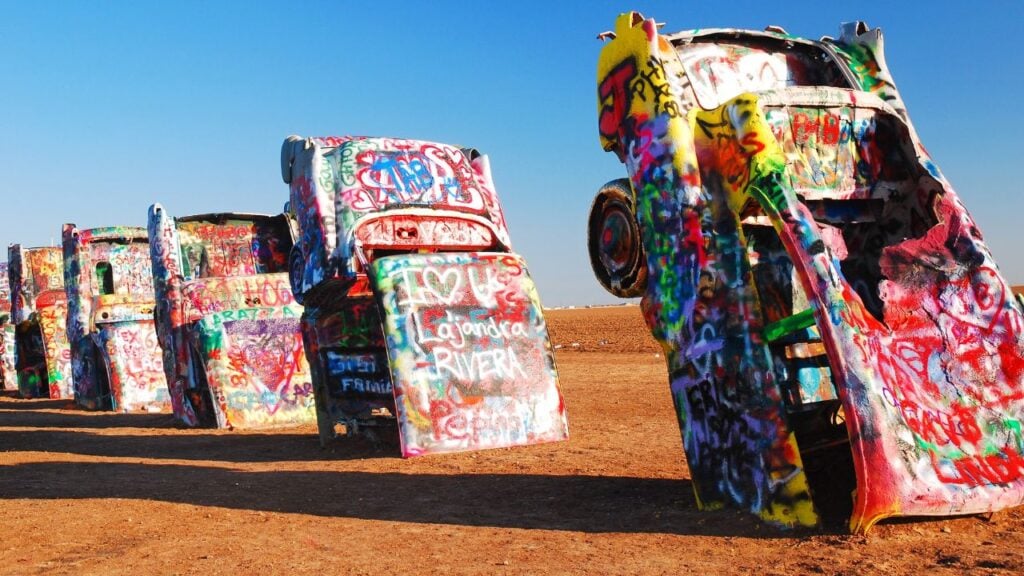
A Texas Panhandle town spent six years and $350,000 fixing a 47-foot cowboy statue that many tourists have never even heard of.
That kind of loyalty shows up again and again across the state, at roadside stops locals will defend far longer than a tourist ever sticks around.
8 Texas Roadside Attractions Locals Are Weirdly Proud Of
4 Texas Fence Line Disputes That End Up in Court Over a Few Feet
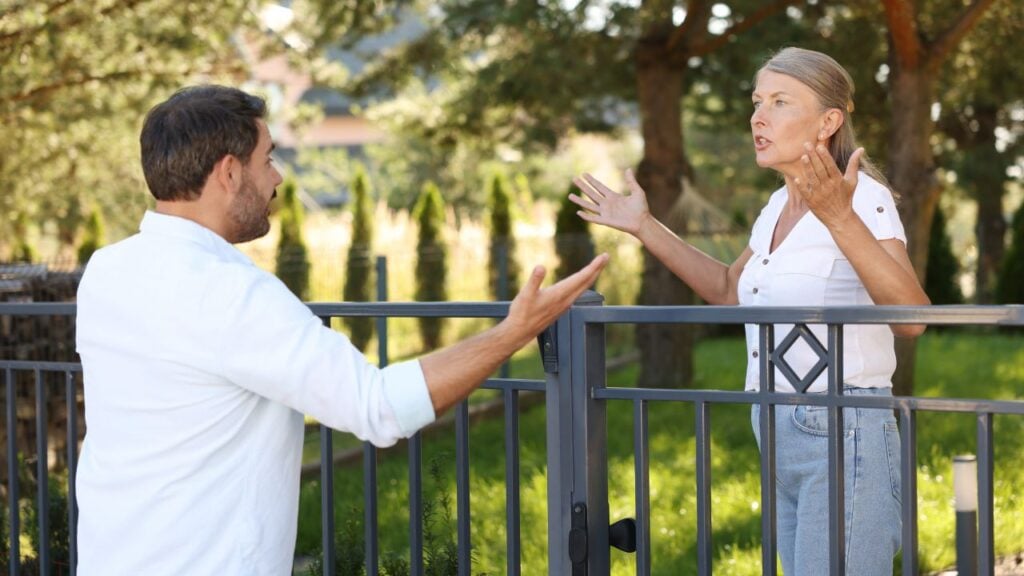
A Houston-area homeowner once refused to tear down a fence a survey proved sat on his neighbor's land.
An appeals court made him pay $21,440 over it, and that kind of dispute keeps landing in front of Texas judges over just a few feet of ground.
4 Texas Fence Line Disputes That End Up in Court Over a Few Feet
