

8 Car Insurance Discounts Tennessee Drivers Have to Ask For

Do you think your car insurance bill already includes every discount you qualify for?
It may not.
Insurers often build dozens of savings programs into a policy, then wait for a driver to enroll, submit proof, or ask before a single one takes effect.
That’s true for drivers in every state, not just Tennessee, since many insurers run these programs off the same nationwide playbook.
These are the car insurance discounts Tennessee drivers often have to ask for.
Note: This is general information, not insurance advice. Coverage, discounts, and terms are subject to change, so check the specifics with your insurer or agent.
1. Multi-Policy Discount
Multi-policy savings only show up on a Tennessee policy once a driver actively links their auto coverage to a separate home, renters, condo, or life policy with the same company.
State Farm calls its version the Multiple Line discount, and it doesn’t apply just because a driver happens to own a house insured somewhere else.
The two policies have to be connected by request.
Nothing connects on its own.
That link pays off: Bundling a home and auto policy saves drivers an average of 14%, or roughly $56 a month, according to Forbes Advisor’s review of the country’s largest insurers.
Tennessee drivers pay an average of $1,789 a year for coverage in the first place, so a double-digit percentage off that number adds up fast.
2. Mature Driver Discount
Tennessee’s Mature Driver Discount is written into state law, not just an insurer’s fine print.
Every auto insurer doing business in Tennessee has to lower the premium for a driver 55 or older who finishes an approved accident-prevention course.
Nobody applies it automatically.
A driver has to complete the course, then hand the certificate to their agent before the number on the bill moves at all.
What Counts as Tennessee’s Safety Course
Tennessee’s Mature Driver Discount only recognizes a course taught by a Department of Safety-approved instructor or delivered through an online class the commissioner has signed off on.
A self-paced program built by an outside website doesn’t qualify, even when the page calls itself a defensive driving course.
The discount doesn’t last forever, either.
It expires three years after the course date.
The driver, not the insurance company, has to send proof of a repeat course before that renewal date arrives.
3. Telematics Discount
Telematics programs track a Tennessee driver’s actual habits through an app or a small plug-in device: Braking, mileage, night driving, phone use.
Sitting out earns nothing.
State Farm’s version, Drive Safe & Save, advertises savings up to 30%.
The savings only kick in once a driver sets up the app and lets it run.
Many major carriers run a similar program that needs the same opt-in step: An app to download at signup, or a call to activate a plug-in device.
4. Multi-Vehicle Discount
A 12% discount is sitting unused in many Tennessee driveways where two cars still ride on two separate policies.
Progressive pays that average savings simply for listing more than one vehicle on the same policy.
It isn’t alone.
Nothing merges the policies automatically.
A driver has to call the insurer and ask to add every car to one shared policy before the saving shows up.
Other large carriers run their own version of the same discount, with savings ranging from 8% to 25% depending on the insurer and the vehicles involved, according to Forbes Advisor’s review.
5. Farm Bureau’s First Mile Discount
Farm Bureau Insurance of Tennessee built the First Mile program for teenagers just starting to drive.
A 16- or 17-year-old watches a short safety video, meets with an agent, passes a quiz, and signs a safe-driver pledge.
That’s it.
Finish the steps, and the discount can reach 10% off the teen’s share of the policy.
The catch is the program only runs through Farm Bureau, which means joining the Tennessee Farm Bureau for $30 a family first, since the insurer only sells policies to members.
6. Good Student Discount
Good student credit rewards a Tennessee teen’s report card, not just their driving record.
State Farm extends it to any full-time student up to age 25 who keeps a B average, ranks in the top 20% of their class, or lands on the honor roll.
Grades alone can cut costs.
The discount can reach 25%, but only after a parent submits the report card, test scores, or an honor roll certificate.
No insurer checks a transcript on its own.
Psst! How much do you know about Tennessee’s driving laws? Take our quiz and see how many you can get right.
Quiz
Tennessee Road Rules IQ
Answer these questions on Tennessee’s driving and insurance laws. We bet you can’t get them all right. Prove us wrong?
If a Tennessee jury finds a driver 50% at fault for a crash, what happens to their claim?
7. Military Discount
Military discounts matter to many Tennessee drivers, especially around Fort Campbell in Clarksville and Naval Support Activity Mid-South in Millington.
The insurer GEICO offers up to 15% off for drivers on active duty, retired from the military, or in the National Guard or Reserves, but the saving needs paperwork first.
Paperwork proves it.
A DD-214 discharge form or an active-duty ID card does the job.
Skip the document, and the policy prices out like anyone else's, family history at Fort Campbell or not.
8. Paid-in-Full Discount
Tennessee's paid-in-full discount never applies on its own.
Many policies default to monthly or installment billing.
A driver has to switch to a single upfront payment at signup or at renewal before the discount unlocks.
Cover six months of premium in one payment instead of monthly installments.
The discount runs 6% to 14% at the country's top carriers, according to Forbes Advisor's review.
It takes an active choice.
Autopay and paperless billing stack on top of that at many insurers, each needing its own opt-in.
Coverage Worth Keeping Anyway
Tennessee requires every driver to carry liability insurance, but a discount hunt can leave a policy without a second kind of protection: Coverage for when the other driver has none.
The Insurance Research Council put Tennessee's uninsured-driver rate at 20.9% in its last published state-by-state estimate, one of the highest in the country that year.
A newer nationwide study from the same research group put the uninsured rate at 15.4% across the U.S. by 2023.
That's not a small gap.
Tennessee law does require every insurer to build uninsured motorist coverage into a new policy automatically, matching a driver's own liability limits.
Tennessee sets its minimum liability limits at $25,000 per person and $50,000 per accident, per Experian.
Uninsured motorist coverage rides along at those same numbers unless a policy carries higher limits.
7 Kroger Mistakes Tennessee Shoppers Make Every Week
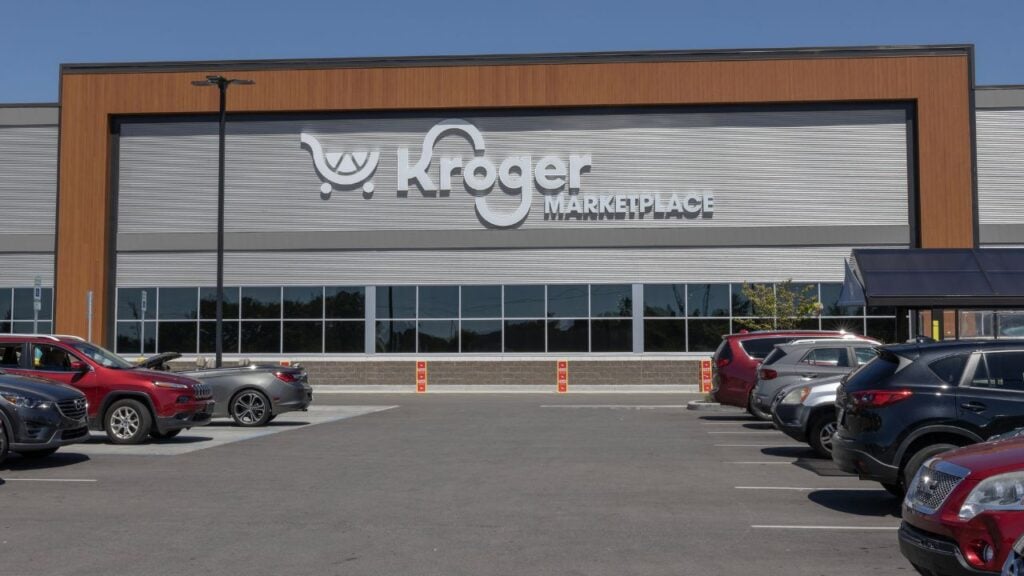
Grocery tags aren't the only line on a Tennessee budget that can run over the sticker price without a shopper noticing.
A Consumer Reports check of Kroger-owned stores found shoppers paying an average of 18.4% more than the advertised sale price, and many walked out without ever catching it.
