

8 Golf Cart Rules Floridians Break in Their Neighborhoods

Sumter County, home to much of The Villages, logged 85 golf cart crashes in the first six months it tracked the number, according to the sheriff’s office.
A number of those carts were breaking a rule the driver never realized applied to them.
These are the golf cart rules Floridians break without ever leaving their street.
Note: This is general information, not legal advice. Golf cart and low-speed vehicle rules can vary by city and county and are subject to change, so confirm the current requirements with the Florida Department of Highway Safety and Motor Vehicles.
1. Letting a 13-Year-Old Drive
Florida’s golf cart law sets a hard age floor, and many families cross it without realizing.
The state used to let a 14-year-old drive a golf cart on a public road with no permit at all.
Not anymore.
Lawmakers raised that floor in 2023, and anyone under 18 now needs at least a learner’s permit to take the wheel, which Florida doesn’t issue before age 15.
A lot of Florida households still let the youngest kid in the house run the cart down to a friend’s driveway.
That’s still against the law.
2. Missing the Learner’s Permit
Florida separates a 15-year-old from a 16-year-old at the wheel of a golf cart, and the two ages don’t carry the same paperwork.
A 15-year-old can drive with a learner’s permit, but a supervising adult has to ride along, similar to the supervision Florida expects of a teen still learning in a car.
A 16- or 17-year-old can take the cart out solo once they hold a full driver’s license.
That’s a big difference.
A common shortcut in golf-cart neighborhoods is handing a 15-year-old the keys for a solo grocery run and assuming the permit alone covers it.
It doesn’t, not without someone licensed in the seat next to them.
3. Riding an Undesignated Street
On any public road in Florida, a golf cart starts out banned until a local government says otherwise.
The county or city has to study that stretch of road, designate it for golf carts, and post a sign before anyone can legally drive one there.
No sign, no ride.
Local governments weigh a road’s traffic speed and volume before approving it, and many subdivision streets never make that list at all.
Floridians who’ve puttered down the same street for years often assume a slow, residential road is automatic territory.
It usually isn’t.
4. Crossing the Road That Splits the Community
Florida writes one crossing rule just for a golf-cart community split by a road, and it only protects the people who live there.
State law lets a golf cart cross a street or highway that divides a single mobile home park in two, provided the government agency that oversees that road reviews and approves the crossing point first.
That agency also gets to add whatever traffic controls it thinks the crossing needs, signs and all, before anyone can legally use it.
It’s not automatic.
The exception is narrower than it looks: It covers only the residents and guests of that one park, not every golf cart in a nearby subdivision.
A lot of Florida’s manufactured-home and 55-plus communities are built exactly this way, split by the road that connects them to the highway. It’s easy for someone driving over to a neighbor’s carport to assume the crossing is automatically fair game.
It isn’t, not without that governing agency signing off on the crossing point and any traffic controls it requires first.
5. Ignoring the City’s Permit Sticker
Florida cities can stack their own rules on top of the state’s, and Mount Dora is a clear example.
The city’s Ordinance No. 2023-06 requires a driver be at least 16 with a full license, register the cart, and carry proof of insurance before it ever leaves the driveway.
That’s stricter than the state.
A resident who registers a cart once and never renews the permit is driving without local authorization, even if the cart itself meets every state requirement.
Homeowners associations can add a further layer on private streets, beyond whatever the city already requires.
6. Driving After Dark Unequipped
Florida golf carts can only operate between sunrise and sunset by default.
A local government has to authorize nighttime driving on its own, and even then, the cart needs headlights, brake lights, turn signals, and a windshield before it can legally run after dark.
That’s a high bar.
Many golf carts on Florida streets don’t carry that equipment, so an after-dark trip is already illegal for them by default.
Some families keep making the evening ice cream run once the sun goes down anyway, headlights or not.
7. Leaving off the Mirror and Reflectors
Every golf cart on a Florida public road has to carry a set list of safety gear, day or night.
That means working brakes, reliable steering, safe tires, a rearview mirror, and red reflectors mounted on both the front and the back.
It’s required around the clock.
A cart missing its mirror or its reflectors is a common sight in older Florida neighborhoods, especially carts bought secondhand off a golf course fleet.
The equipment requirement applies the moment the cart is on a public street, however it’s used at home.
Psst! How much do you know about Florida’s golf cart laws? Tap each card and see how many you get right.
8. Souping up the Motor
Florida defines a golf cart by its top speed, not by its shape.
State law caps a true golf cart at 20 mph, and the instant a cart can go faster than that, it becomes a low-speed vehicle instead.
One mile matters.
Aftermarket motor and controller kits that push a cart past 20 mph are easy to buy and popular in golf-cart-heavy Florida communities.
Many owners upgrade the motor for a faster ride around the neighborhood and never register the cart as a low-speed vehicle afterward.
What Turns a Florida Golf Cart Into an LSV
Once a Florida golf cart crosses into low-speed vehicle (LSV) territory, it needs a title, a license plate, and insurance, the same as a car.
It also needs seatbelts, a windshield, mirrors, and turn signals.
The driver behind the wheel needs a full driver’s license too, not just a learner’s permit.
What a Citation Costs
Florida treats a golf cart violation much like a driving violation, points and all.
Breaking the rules on where or when a cart can operate counts as a moving violation under state law, the same category as speeding in a car.
Points count too.
Sumter County’s sheriff’s office counted 85 golf cart crashes in the first six months it ever tracked the number.
Missing safety equipment or letting an unlicensed rider take the wheel falls under a separate nonmoving violation, still a citation with its own fine.
Local police in golf-cart-heavy Florida towns pull carts over for the same reasons they pull over cars, a blown stop sign, no turn signal, a driver who looks well under 15.
A cart sitting in the garage all winter doesn’t need a permit, a mirror, or a plate, but the moment its tires touch a public street, an officer can stop it exactly like a car.
7 Florida HOA Fees That Have Doubled for Many Since 2020

One Seminole County homeowners association (HOA) paid $91,000 for its building insurance in 2023.
The next year, that same bill came to $233,000, and insurance is only one piece of what’s driven Florida HOA fees up since 2020.
7 Florida HOA Fees That Have Doubled for Many Since 2020
9 Florida Metal-Detecting Laws That Limit Where Treasure Hunters Can Search
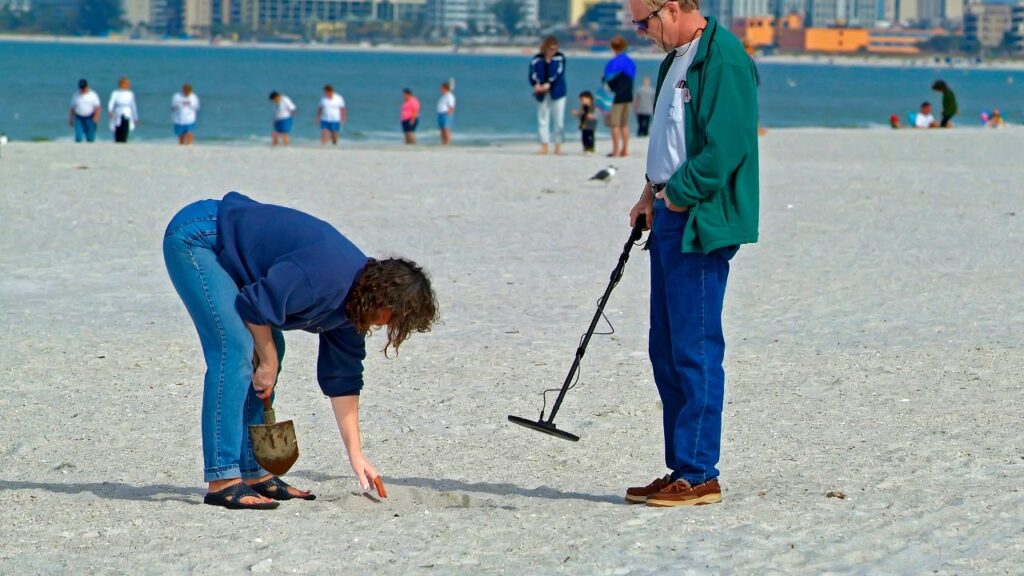
Owning a metal detector doesn’t buy access to whatever sits beneath it, whether that’s a state park, a national forest, or a protected river bottom.
Florida draws a hard line between a weekend hobby and a felony charge, and many detectorists cross it without realizing.
9 Florida Metal-Detecting Laws That Limit Where Treasure Hunters Can Search
