
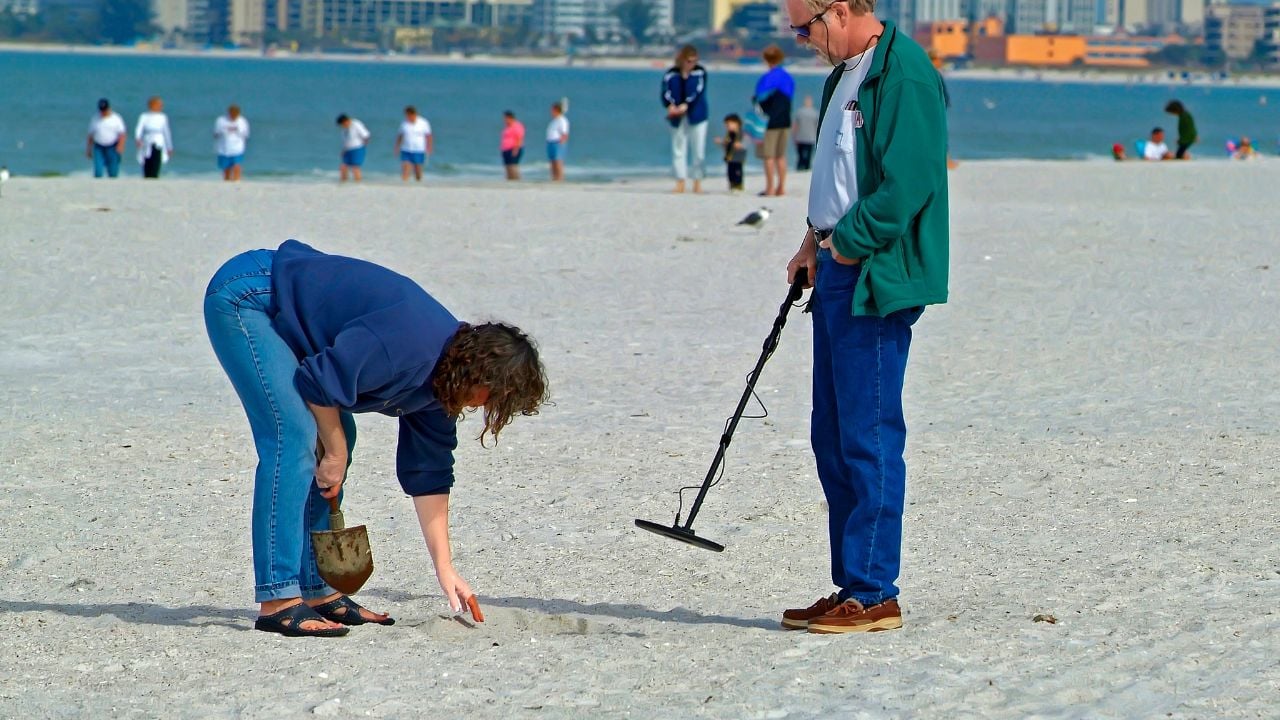
9 Florida Metal-Detecting Laws That Limit Where Treasure Hunters Can Search

Owning a metal detector doesn’t buy access to whatever sits beneath it, whether that’s a state park, a national forest, or a protected river bottom.
Florida is strict about that.
These are the Florida laws that draw the line between a hobby and a felony.
Note: This is general information, not legal advice. Rules on where metal detecting is allowed vary by agency and land manager and are subject to change.
1. State Waters Claim Every Wreck Inside Them
Florida’s underwater border reaches far past where the sand ends.
State jurisdiction runs roughly 9 nautical miles into the Gulf of Mexico and 3 nautical miles into the Atlantic, a real, mapped boundary set by the federal Submerged Lands Act.
Everything embedded in the seabed inside that line, a centuries-old Spanish wreck included, belongs to Florida under the federal Abandoned Shipwreck Act, not to whoever finds it.
Disturb one without written authorization from the Division of Historical Resources, and the excavation itself is a third-degree felony, not just a fine.
Take only photographs.
2. State Parks Limit You to One Strip of Sand
Florida’s state park system treats a metal detector as a trespasser almost everywhere on its land.
Metal detecting is prohibited across every Florida state park, with one carve-out.
Coastal parks may allow it in a strip between the dune and the high-water line, and a park manager has to approve it first.
Ask first.
Not every park handles it the same way.
Whether digging is allowed in that strip changes park by park, so calling ahead beats guessing at the gate.
3. State-Owned Land Covers Far More Than Parks
Florida’s dig-first-ask-later rule reaches well past parks and shipwrecks.
Statute 267.13 covers any land the state owns or controls statewide, plus land inside a designated archaeological landmark, like the mounds at Crystal River Archaeological State Park.
That’s millions of acres beyond the parks covered above, from state forests to wildlife management areas to highway right-of-way.
Anything recovered there that crosses 50 years old counts as a protected archaeological artifact under Florida law, owned by the state, not whoever dug it up.
Investigating there without a permit is already a first-degree misdemeanor.
Excavate instead of just investigating, and the charge jumps to a third-degree felony, plus forfeiture of everything found and the equipment used to find it.
That includes the detector.
What Counts as “Historic” on Florida’s State Land
Florida draws the line for a protected artifact at 50 years old.
An object recovered on state-owned land that crosses that age counts as an archaeological artifact.
It belongs to the Florida Department of State’s Division of Historical Resources, not to the person who dug it up.
Florida treats a 1970s beer can and a Spanish coin very differently under that same rule.
4. National Seashores Ban the Detector Itself
National Park Service (NPS) sites in Florida take restrictions a step further than the rest of the state.
That reaches Canaveral National Seashore, Gulf Islands National Seashore, Castillo de San Marcos, Fort Matanzas, Biscayne, Dry Tortugas, and every other Florida site the Park Service manages.
Federal regulation 36 CFR 2.1, part of the Code of Federal Regulations (CFR), bans possessing or using a metal detector inside any of them, not just digging with one.
The rule also bans digging, defacing, or removing anything NPS classifies as a cultural or archaeological resource, coin included.
Leave the detector home.
5. Wildlife Refuges Close the Whole Property
Florida’s national wildlife refuges don’t carve out any exception for a beach strip or a back trail.
Lake Woodruff National Wildlife Refuge near DeLand spells it out plainly: Metal detecting, or the removal or disturbance of artifacts, is prohibited.
Refuges across Florida, including Merritt Island National Wildlife Refuge wrapped around Kennedy Space Center, follow this same U.S. Fish and Wildlife Service (USFWS) rule.
Refuge staff make exceptions for fish and game taken during authorized hunting and fishing.
A detector doesn’t qualify.
Psst! How much do you know about Florida’s shipwrecks and treasure fleets? Take our quiz and see if you can ace it.
Quiz
Florida Treasure Hunt IQ
Answer these questions on Florida’s shipwrecks and treasure fleets. We bet you can’t get them all right. Prove us wrong?
What nickname does Florida’s east-central coast carry because of a 1715 shipwreck disaster?
6. Apalachicola National Forest Closes One Site Entirely
Florida's national forests carry at least one spot where a metal detector can't go at all, not just dig.
Prospect Bluff Historic Site, the War of 1812-era fort site on the Apalachicola Ranger District of Apalachicola National Forest, sits closed under Forest Service order CO 08-05-FL-24-177, which bars entering the site at all.
The order cites 36 CFR 261.53(c) and covers the site "for the preservation of objects or areas of historical, archaeological, geological, or paleontological interest."
Anyone caught inside that closed boundary risks a fine of up to $5,000, up to six months in jail, or both.
The same federal authority lets Forest Service supervisors close any spot in Ocala, Apalachicola, or Osceola National Forest to metal detecting itself the moment archaeological resources turn up.
No digging required.
7. Marked Graves Are Off-Limits Anywhere in Florida
Cemeteries and family plots in Florida get the same protection whether they sit on public land or a private farm.
Florida Statute 872.02 makes disturbing the contents of a marked grave or tomb a second-degree felony.
Damaging the tombstone or monument itself carries its own third-degree charge.
Both counts are serious.
Old rings, buttons, and coin drops near historic cemeteries tempt many treasure hunters.
The statute applies no matter how old the grave is or who owns the land.
8. Unmarked Burial Mounds Carry a Felony Charge
Hundreds of unmarked Native American burial mounds sit along Florida's coast and river banks, and the state protects every one of them.
Florida Statute 872.05 covers any burial mound or earthen and shell monument, wherever it sits.
Public land, private land, and submerged land all fall under it.
Ownership doesn't change that.
Willfully disturbing a burial mound is a third-degree felony, and knowing about a disturbance without reporting it is a separate misdemeanor.
Even a private landowner can't wave that protection away.
9. Water Management District Land Adds Its Own Layer
Florida's five water management districts control millions of acres of conservation land, and many treasure hunters never think to check their rules separately from the state's.
Same idea, different agency.
St. Johns River Water Management District's own code, Rule 40C-9.220, bans removing, altering, or destroying an archaeological or cultural resource anywhere on district land.
A Special Use Authorization can allow it.
Without one, a find has to go back in the ground exactly where it came from.
South Florida, Southwest Florida, and the state's other water management districts run parallel rules on their own conservation tracts.
Where Metal Detecting Is Still Allowed
Florida isn't one giant no-detecting zone.
Private property is open with the owner's permission, no state permit required for an ordinary, non-archaeological find.
Permission is the key.
Beaches run by a city or county, rather than the state park system, generally allow it too, though a local ordinance can still say otherwise.
Calling the city or county before a trip beats finding out from a park ranger.
A lost class ring or a set of car keys in the sand is fair game almost anywhere, park rules included, once a manager knows what is being searched for.
Florida's state parks even carve out one exception inside their own ban: A visitor can search for one clearly identified lost item, like a wedding ring dropped near the shoreline, with a park manager's approval and a staff member standing by.
That search ends the moment the ring turns up, and nothing else pulled from the sand along the way goes home with the finder.
9 Things Florida Beachgoers Do That Instantly Mark Them as Locals, Not Tourists
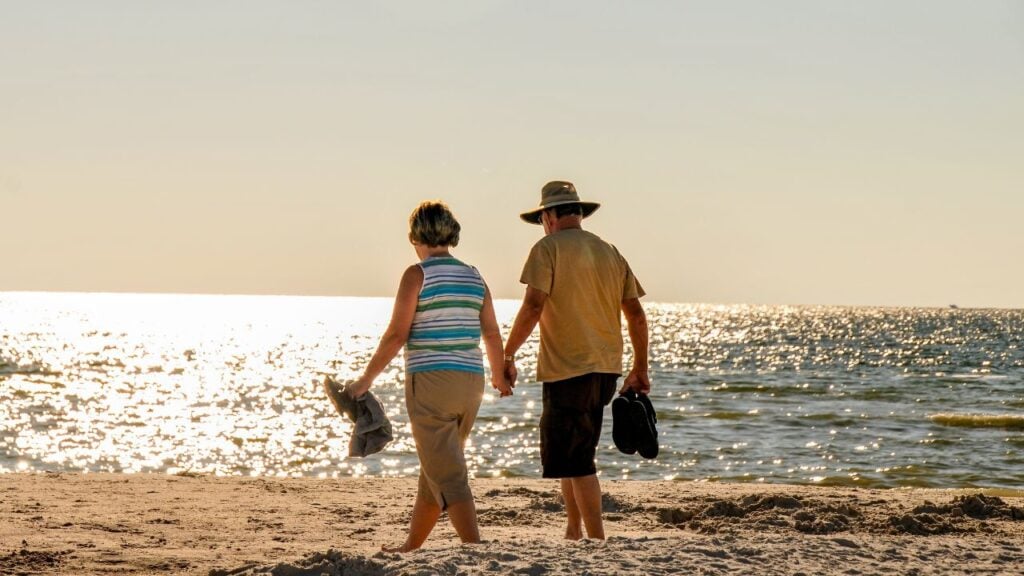
A regular at Fort Lauderdale Beach walks straight to one patch of sand and sets up without a second look.
A tourist a few feet away circles the same stretch three times, phone in hand, still picking a spot.
9 Things Florida Beachgoers Do That Instantly Mark Them as Locals, Not Tourists
9 Things Florida Homeowners Get Wrong About Amendment 3 as We Head Towards November
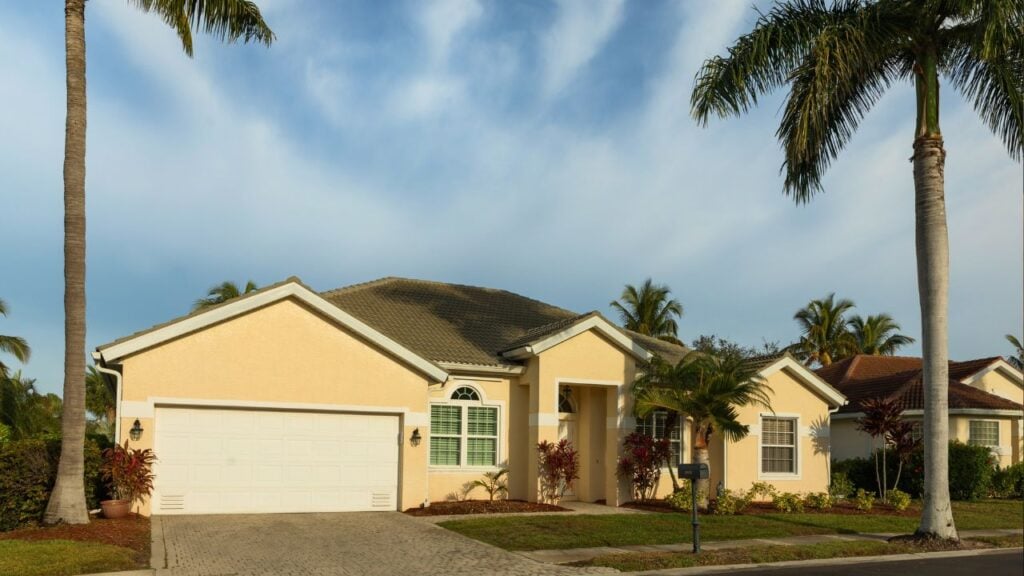
The Florida property tax amendment on your November ballot borrows its name from a law you already have.
That's the least of the confusion, since homeowners keep reading a $250,000 headline and doing math the fine print doesn't support.
9 Things Florida Homeowners Get Wrong About Amendment 3 as We Head Towards November
