
8 Homeowners Insurance Changes North Carolinians Discover at Renewal

A renewal notice doesn’t always mean an insurer is offering the same protection for another year.
Paying the new bill can lock in changes a homeowner wasn’t expecting.
These are the homeowners insurance changes North Carolinians discover at renewal.
Note: This is general information, not insurance or legal advice. Terms and rates are subject to change, so check the specifics with your insurer or agent.
1. Paying More Near the Coast
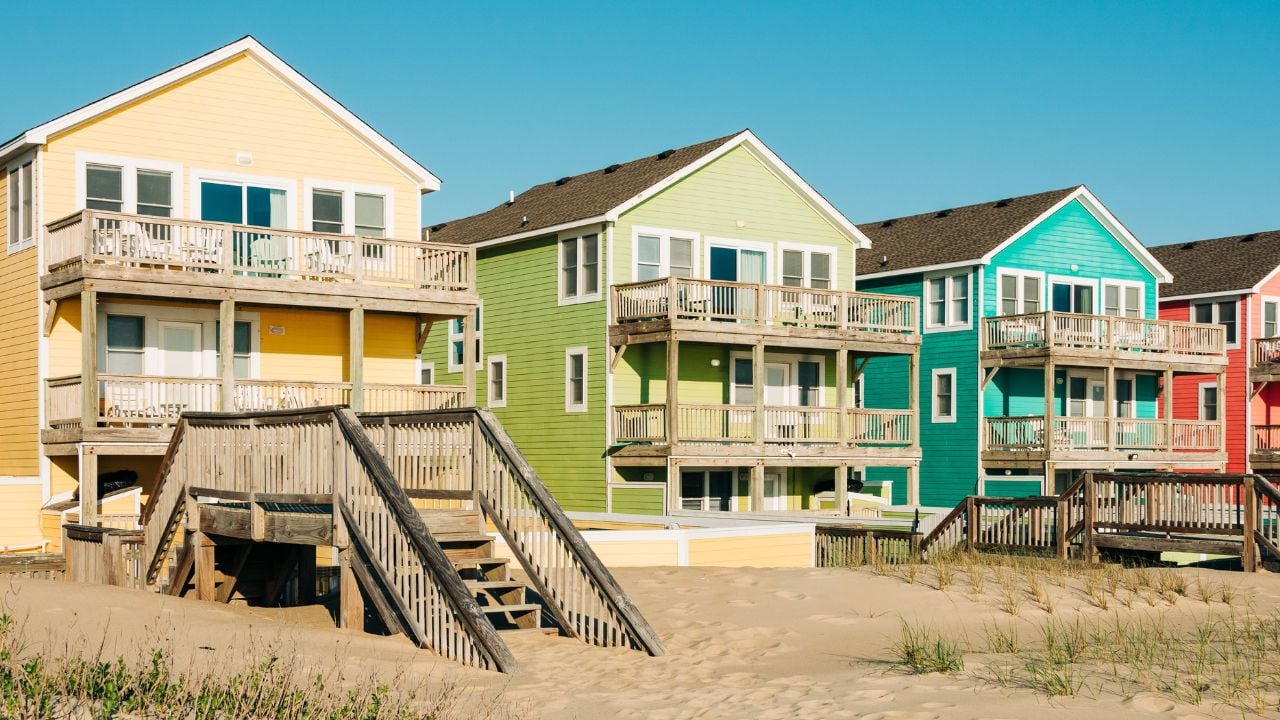
Homeowners near North Carolina’s coast are paying for a far bigger settlement than the statewide numbers suggest.
The statewide base rate rose 7.5% in 2025 and rises another 7.5% this year.
In Territory 120, the beach areas of Brunswick, Carteret, New Hanover, Onslow and Pender counties, base rates rose 16% in 2025 and rise another 15.9% in 2026.
The settlement set 35% as the most any single territory could rise over the two years.
North Carolina’s insurance commissioner announced that ceiling when the deal closed, and it isn’t a straight sum of the two annual figures above.
Other coastal territories saw far smaller increases.
Territory 110, the beach areas of Currituck, Dare and Hyde counties, rose 5.1% in 2025 and 4.8% in 2026.
Territory 130’s mainland stretch of those same counties rose 2.8% both years.
Territory 150, the northeastern coastal counties around Albemarle Sound, rose just 1% in 2025 and 0.9% in 2026, per state data.
Every territory faces the same two-step 7.5% hike on paper.
Coastal territories just start the math from a steeper number.
It’s not the same math.
2. Taking a Downgrade on Short Notice
North Carolina law lets an insurer keep a homeowner on the books while changing what the policy covers.
Under state law, a company can lower coverage limits or raise a deductible or premium with just 30 days’ written notice.
No signature is required.
The homeowner doesn’t have to agree to any of it.
A renewal packet that looks routine can carry a smaller dwelling limit or a bigger deductible buried a few pages in.
Thirty days is all the warning the law demands.
Reading the whole packet, not just the premium line, is the only way to catch it.
3. Meeting the Second Rate Hike
North Carolina’s Rate Bureau agreed to a moratorium as part of the settlement: No new statewide base-rate filing before June 2027.
That moratorium is the back half of a two-part deal already under way.
The first 7.5% increase applied to policies renewing on or after June 1, 2025.
The second 7.5% applies to every policy renewing on or after June 1, 2026, whether that’s this month or next spring.
The Rate Bureau originally asked for a 42.2% statewide increase in January 2024.
The settlement cut that request by nearly two-thirds.
Ouch, either way.
A homeowner whose bill keeps rising after this second phase is looking at something other than a new base rate, like a higher dwelling limit or a lost discount.
4. Renewing Without a Signature
North Carolina is unusually heavy on what the industry calls consent-to-rate, a legal way for an insurer to charge more than the Rate Bureau’s approved price.
North Carolina dropped the signature requirement for consent to rate in 2019, when lawmakers rewrote the statute.
A homeowner’s consent now comes from paying the premium, not from signing a form.
What does show up every renewal is a disclosure, printed on the declarations page or right before it.
It spells out, in bold capital letters, exactly how much higher the premium runs than the Bureau’s approved rate.
The share of North Carolina homeowners policies written under consent to rate has kept rising since the law changed.
That share went from about 41% in 2018 to 55% by 2024, per state data.
Skim past that disclosure once, and a homeowner can go years without noticing the gap between the approved rate and their actual rate.
Psst! How much do you know about how North Carolina regulates homeowners insurance? Take our quiz and see how many you can get right.
Quiz
North Carolina Insurance IQ
Answer these questions on how North Carolina regulates home insurance. We bet you can’t get them all right. Prove us wrong?
About how much did the 2025 settlement save North Carolina homeowners compared to what the Rate Bureau originally asked for?
5. Losing Coverage With 45 Days' Notice
North Carolina gives homeowners more warning before a full nonrenewal than before a coverage downgrade.
State law requires an insurer that won't renew a policy at all to mail written notice at least 45 days before the expiration date.
That notice has to state the precise reason for nonrenewal, not a vague line about risk.
A copy goes to the mortgage company too, if there's one.
That's the law.
Forty-five days sounds generous until a homeowner remembers what it takes to find, apply for, and bind a new policy.
Some insurers have pulled back from wildfire- and flood-prone counties altogether.
6. Splitting off Your Wind Coverage
Six of North Carolina's coastal rating territories let insurers price wind and hail coverage separately from the rest of a standard homeowners policy.
The insurer applies a windstorm-or-hail exclusion credit, which lowers the base premium because that risk is no longer covered.
To stay covered for wind, the homeowner then has to buy a separate policy through the Beach Plan, run by the North Carolina Insurance Underwriting Association.
The Beach Plan's eligibility area is wider than those six pricing territories: It covers homeowners across 18 coastal counties.
The Rate Bureau's six territories are a narrower pricing tool layered on top of that footprint.
That's two bills, two deductibles.
A homeowner who assumes one renewal notice covers the whole house can miss that the Beach Plan policy renews on a separate schedule and changes price on a separate timeline.
7. Watching Your Deductible Grow With Coverage
North Carolina's named storm and windstorm-or-hail deductibles aren't flat dollar amounts.
Per the state Department of Insurance, both deductibles are set as a percentage of the dwelling coverage amount printed on the declarations page.
Raise that dwelling limit at renewal to keep up with rebuilding costs, and the dollar deductible rises right along with it.
The percentage printed on the page never has to change for that to happen.
It's the same percentage, just a bigger number.
Nobody mails a separate notice for that kind of increase.
The Math Behind a Percentage Deductible
A North Carolina windstorm, hail, or named storm deductible is a percentage of the Coverage A dwelling limit, not a flat number, per the state Department of Insurance.
A 2% deductible on a home insured for $300,000 comes to $6,000 out of pocket before the policy pays anything.
Raise that dwelling limit to $400,000 at renewal, and the same 2% deductible grows to $8,000, even though the printed percentage never changed.
8. Repricing the Storm-Proofing Discount
North Carolina homeowners who fortified their roof against wind expect a discount, and the Rate Bureau does hand out mitigation credits for it.
The same settlement that raised the base rate also revised those credit amounts.
The Rate Bureau's mitigation credit table, covering the FORTIFIED program along with simpler wind-resistant features, changed for policies renewing on or after June 1, 2026, right alongside the base-rate increase.
A bigger credit sounds like good news, and it partly is.
The math moved too.
A homeowner comparing this year's bill to last year's can't just subtract the base-rate hike and call the math done because the discount underneath it changed as well.
Homeowners who paid to certify a roof under the FORTIFIED program have every reason to ask their agent for the current credit table at renewal.
That's a different figure than the number quoted when the work was done.
A credit that grows on paper only helps if it lands on the bill.
8 Reasons North Carolina Homeowners Get Dropped by Their Insurance Company
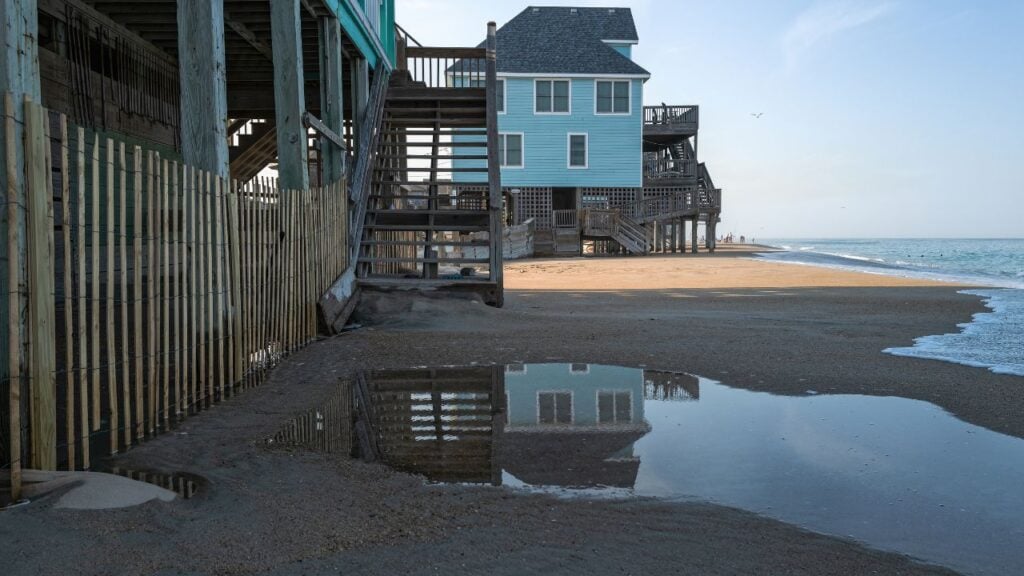
Six months after Hurricane Helene tore through the mountains, wildfires broke out on the same slopes.
Insurers took notice of both, and a home doesn't have to burn or flood before a company's risk model flags it for nonrenewal.
8 Reasons North Carolina Homeowners Get Dropped by Their Insurance Company
8 Heating Mistakes That Show Up on a North Carolina Homeowner's First Pre-Winter Bill
North Carolina's average residential electricity rate has risen above 15 cents per kilowatt-hour, per the U.S. Energy Information Administration.
That same number multiplies every mistake in this list the moment the heat kicks on for the season.
8 Heating Mistakes That Show Up on a North Carolina Homeowner's First Pre-Winter Bill
