
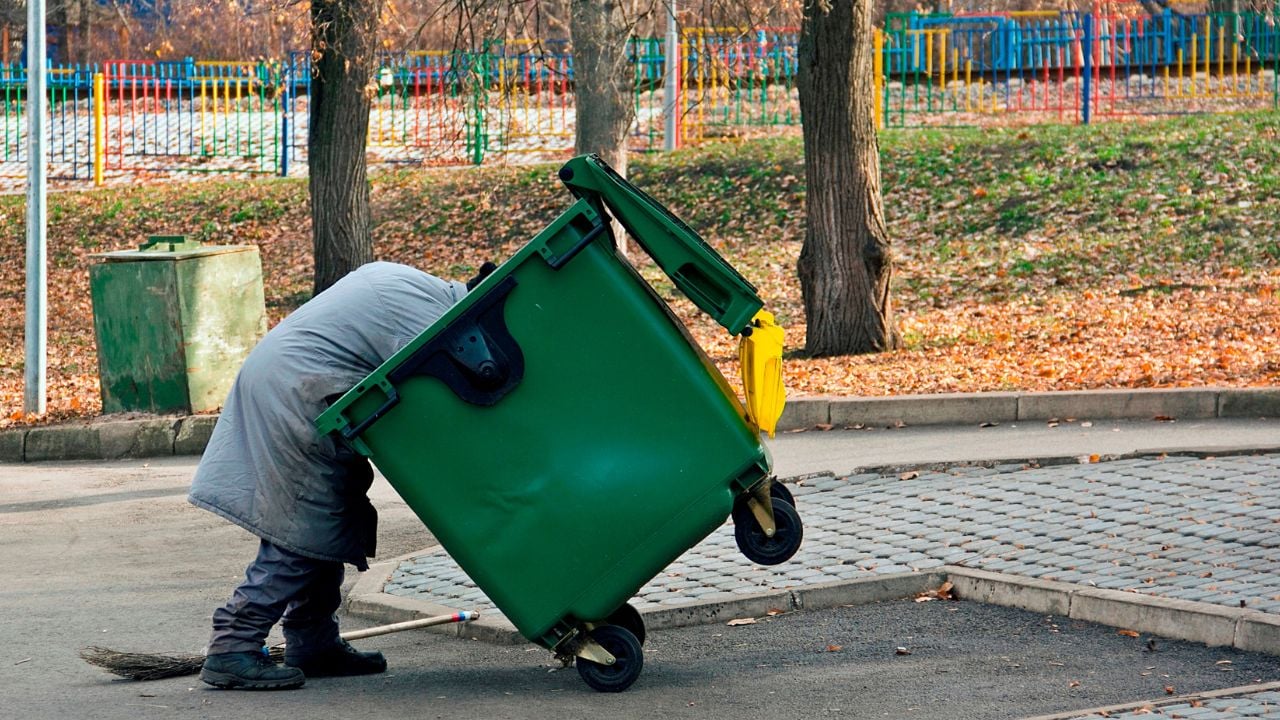
8 New York Dumpster Diving Laws That Change Depending on What You Take

Think every item in a New York dumpster answers to the same set of rules?
It doesn’t.
A broken lamp, a stray envelope, and a half-full pill bottle can sit in the exact same garbage pile and answer to three completely different sets of law.
Here’s how New York’s dumpster diving laws change depending on what you take.
Note: This is general information, not legal advice. New York’s trespassing, sanitation, and recycling rules vary by city, county, and even block, and they’re subject to change.
1. Deposit Bottles and Cans
A nickel deposit rides on every can or bottle sold in New York.
The state’s Bottle Bill lets whoever is physically holding a container redeem that deposit, no receipt or proof of purchase required.
That part isn’t what makes hauling off someone else’s recycling bin risky.
A separate law creates the risk instead.
Once someone sets deposit containers out in a labeled recycling bin for city pickup, New York City’s sanitation code treats that material as the Department of Sanitation’s own property, not first-come property for a passerby.
Hauling it off, especially with a vehicle, can bring a civil penalty up to $2,000.
Two thousand dollars.
For cans.
New York’s Returnable Container Act still backs the statewide deposit system.
The Department of Environmental Conservation can field complaints about missing containers, too.
Neither one has anything to do with the $2,000 figure.
That number comes straight out of New York City’s own sanitation code.
Why New York’s Recycling Bins Differ From the Trash Beside Them
A hard legal line separates two containers sitting on the very same curb in New York City.
A labeled recycling bin holds cans, bottles, paper, and metal set out for the Department of Sanitation.
Once that bin is out, the city treats its contents as its own material, not free property for the next passerby.
A bag of regular household trash sitting one foot away carries none of that same protection.
2. Bagged Household Trash
Once trash bags sit at the curb in New York, courts have long treated them as abandoned property.
No state or city law bans a passerby from taking an ordinary bag or a single item out of one.
The bigger risk in New York City isn’t the taking.
It’s the mess.
Residential setout rules require a household’s trash to sit in secured bins with tight lids.
It’s the property owner, not a passerby digging through the bag, who can face a fine up to $200 per violation for spilled, uncontained waste.
Leave the bin the way it was found.
3. Furniture Left at the Curb
New Yorkers have turned curbside furniture into its own economy, a habit locals call stooping.
A couch, a lamp, or a dresser set out for bulk pickup reads as abandoned the moment it hits the sidewalk, and nobody’s filing a report over a free end table.
That’s the whole point.
New York City’s own Department of Sanitation runs a scheduled bulk pickup system for exactly this kind of item, and nothing in that program claims ownership over furniture the way the sanitation code does over recyclables.
Grab the chair.
Leave the neighbor’s recycling bin alone.
4. Dumpsters Behind a Fence
Once a fence, a locked gate, or a wall meant to keep people out surrounds a dumpster, what’s inside no longer matters under New York law.
Criminal trespass in the third degree covers exactly this: Knowingly entering property that’s fenced or enclosed to exclude intruders, under New York’s Penal Law.
It’s a class B misdemeanor.
Up to three months in jail.
A dumpster sitting out in the open on a public sidewalk carries none of that risk, so the exact same busted lamp or broken toaster changes its legal weight depending on whether a fence stands between a person and the trash.
Psst! How much do you know about New York’s dumpster diving rules? Take our myth-or-fact challenge and see how many you get right.
5. Old Laptops and TVs
Electronics have been banned from New York’s regular trash since 2015, under the state’s Electronic Equipment Recycling and Reuse Act.
A decade-old ban.
A laptop, a monitor, or an old TV sitting in a curbside trash pile technically shouldn’t be there at all.
That puts the legal risk on whoever set it out, not on whoever picks it up.
A resident who bags one up that way is the one breaking state law, not the person who carries it home.
New York City’s Department of Sanitation won’t even collect electronics curbside, which means the recycling-removal fine that covers cans and bottles never reaches a discarded laptop in the first place.
Taking it home reads closer to rescuing it than stealing it.
6. Mail With Your Information
Two pieces of mail can sit in the exact same trash bag in New York: A blank, already-discarded envelope, and one still printed with a bank statement or account number.
They answer to two completely different sets of law.
The blank envelope is abandoned property, plain and simple.
New York doesn’t ban picking it up any more than it bans pulling out an empty pizza box.
The envelope with personal information on it is a different item entirely.
The moment somebody uses a name, an account number, or a Social Security number printed on it to get money or services, New York’s identity theft law applies, a class A misdemeanor at the lowest tier.
That’s the crime.
Businesses carry their own exposure here, too.
New York’s General Business Law requires a company to shred or destroy records with personal information before disposal.
Skipping that step can cost the business up to $5,000, regardless of who ends up finding the paperwork.
7. Scrap Metal and Converters
New York treats a bent bike frame and a car’s catalytic converter as two completely different problems for anyone hoping to cash them in.
Scrap a broken toaster or an old radiator, and a junkyard can weigh it and pay out with minimal paperwork.
A catalytic converter is different.
Under a law Gov. Kathy Hochul signed in 2022, scrap and junk dealers can’t buy a detached catalytic converter without proof the seller owns it.
No proof, no sale.
That single part turns an ordinary dumpster find into paperwork other scrap metal never needs.
8. Leftover Prescription Pills
New York’s abandonment rule, the one that protects everyday curbside trash-taking, stops working the moment the item is a controlled substance.
Property law doesn’t apply to a pill bottle the way it applies to a lamp or an old phone.
Simple possession is its own crime under New York’s Penal Law, a class A misdemeanor that carries up to a year in jail, and it doesn’t matter that the pills came out of someone’s trash instead of a locked cabinet.
No exceptions.
Finding it doesn’t excuse having it.
That’s the one item on this list where “it was already thrown away” offers zero legal cover.
New York’s Drug Take Back Act gives residents another option entirely: Pharmacies with ten or more locations statewide are required to collect unused prescriptions for safe disposal, no dumpster involved.
A pill bottle that skips that kiosk and lands in a curbside trash bag instead is the one piece of garbage on a New York sidewalk where finding it and keeping it are two completely different legal problems.
9 Things New Yorkers Do Without Realizing It’s Not Normal Anywhere Else
A New Yorker drives two states over for a weekend trip, and the cashier at the first gas station already knows they’re not from around there.
These are the everyday habits that mark someone as a New Yorker before they ever open their mouth.
9 Things New Yorkers Do Without Realizing It’s Not Normal Anywhere Else
9 Wegmans Foods New York Shoppers Grab Instead of Cooking

Wegmans put $36 million into a research kitchen in Rochester, and none of it teaches shoppers to cook.
It funds the heat-and-eat meals filling the store’s prepared foods case instead.
