
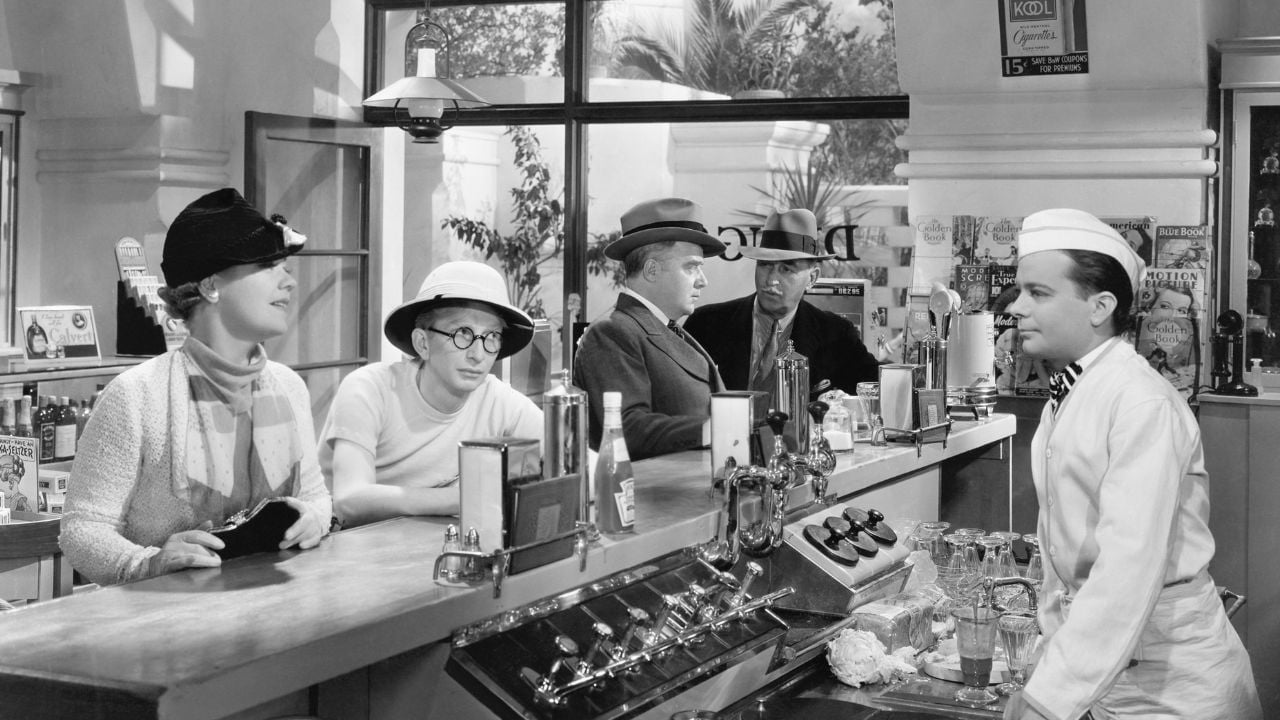
8 Normal Things From the 1950s That Are Banned in North Carolina Today

In the 1950s, cigarette companies sponsored some of TV’s most popular shows, including I Love Lucy.
North Carolinians who grew up then saw a lot that’s banned or restricted today.
Here are the normal things from the 1950s that are banned in North Carolina today, and why.
Note: This is general information, not legal advice. Laws are subject to change.
1. Shoe-Store X-Ray Machines
Plummer’s Department Store in Brevard had a shoe-store X-ray machine in the early 1950s.
You stood at the machine and looked through a viewing porthole at the bones of your feet inside your shoes.
Stores promoted the machine as a way to get the best fit and the longest-lasting shoes.
It didn’t help with the fit.
The machines leaked radiation, too.
Most states had banned the machines by the late 1950s.
North Carolina’s radiation rules still say that shoe-fitting fluoroscopic devices “shall not be used.”
2. Cigarette Ads on Your TV
Tobacco companies sponsored popular programs on every national network by the 1950s.
The most popular show, I Love Lucy, was sponsored by Philip Morris, with commercials woven right into the plot.
It’s unlawful under federal law to advertise cigarettes and little cigars on “any medium of electronic communication” under the Federal Communications Commission’s jurisdiction.
That has applied since 1971.
A cigarette commercial can’t run during your favorite show.
3. Leaded Gas in Your Car
In the 1950s and 1960s, the industry averaged about 2.4 grams of lead per gallon of gasoline.
By 1995, leaded fuel had fallen to 0.6% of gasoline sales.
Since 1996, the Clean Air Act has banned the sale of leaded fuel for use in on-road vehicles.
When you fill up your car, the gas station can’t sell you leaded gasoline.
4. Smoking in Restaurants
Cigarette smoking was widespread in 1955, when 54% of U.S. men and 24% of U.S. women smoked.
North Carolina’s smoke-free law now prohibits smoking in the enclosed areas of restaurants and bars, with a few exceptions.
That means your table inside a restaurant is covered.
The law took effect on January 2, 2010.
North Carolina was the first southeastern state to completely prohibit smoking in restaurants and bars.
Where North Carolina’s Smoke-Free Law Allows Smoking
North Carolina’s smoke-free law makes exceptions for private clubs, cigar bars and lodging rooms.
A private club can allow smoking.
A cigar bar can too, if it meets the law’s conditions, including keeping its smoke out of enclosed areas where smoking is prohibited.
A hotel, motel or inn can designate up to 20% of its guest rooms for smoking.
5. Lead House Paint
Before 1955, a significant amount of white house paint was 50% lead.
In the late 1970s, federal rules limited lead in most paint to 0.06%.
Today, the federal Consumer Product Safety Commission bans consumer paint with 0.009% or more lead by weight.
Paint sold for your home’s walls has to stay under that limit.
Psst! How much do you know about mid-century America? Take our quiz and see how many you can get right.
Quiz
1950s America Quiz
Answer these questions on 1950s America, from health and smoking to highways and seat belts. We bet you can’t get them all right. Prove us wrong?
How many viewing scopes did the typical shoe-store X-ray machine have?
6. DDT Around the House
Use of the insecticide DDT in the United States peaked in 1959, when Americans used nearly 80 million pounds of it.
It was used around homes and gardens, too.
In November 1969, the U.S. Department of Agriculture (USDA) began canceling DDT registrations for house and garden use.
In June 1972, the Environmental Protection Agency (EPA) ordered nearly all remaining registrations canceled, effective December 31 of that year.
The order excepted public health and quarantine uses.
Today there's no U.S. registration for DDT, which means it can't legally be sold or distributed in the United States.
7. Voter Literacy Tests
North Carolina's voter literacy test required you to read and write any section of the state constitution in English before you could register.
The test came from a 1900 amendment.
The white officials who ran the test often chose passages for Black applicants that even legal scholars had difficulty interpreting.
White applicants were often given far easier questions.
The Voting Rights Act of 1965 began to end the test.
Congress barred such tests nationwide in 1970.
Under federal law today, no citizen can be denied the right to vote for failing a "test or device."
That includes any requirement to show you can read, write, understand or interpret any matter.
8. Segregated Lunch Counters
Segregated lunch counters were part of everyday life in North Carolina.
The Woolworth store on Elm Street in Greensboro served Black customers only at a stand-up counter.
On February 1, 1960, four students from what is now North Carolina A&T State University began a sit-in at that store.
In July 1960, the Greensboro Woolworth's lunch counter was integrated.
The Civil Rights Act, signed on July 2, 1964, outlawed segregation in restaurants across the country.
Restaurants, cafeterias, lunchrooms, lunch counters and soda fountains that affect commerce now can't discriminate by race, color, religion or national origin.
The Literacy Clause That Stayed
North Carolina's voter literacy test is gone from the polls, but its wording is still in the state constitution.
If you read the voting article, it still says anyone registering to vote must be able to read and write any section of the constitution in English.
State lawmakers proposed an amendment to remove that wording in 1970, but voters chose to keep it.
Leaded Fuel Exceptions
After the 1996 on-road ban, leaded fuel could still be sold for off-road uses.
Those uses included aircraft, racing cars, farm equipment and marine engines.
Most aircraft that still run on leaded fuel are piston-engine planes.
The Federal Aviation Administration and aviation partners aim to safely eliminate leaded aviation fuel in piston-engine aircraft by the end of 2030.
In October 2023, EPA found that lead emissions from aircraft engines running on leaded fuel may reasonably be anticipated to endanger public health and welfare.
If you fly on a commercial jet, your plane doesn't run on fuel containing lead.
9 Food Lion Secrets Employees Wish North Carolina Shoppers Knew

Food Lion employees have a few things they wish you knew.
Much of it lives in store policies and loyalty programs, not on the weekly flyer.
9 Food Lion Secrets Employees Wish North Carolina Shoppers Knew
North Carolina Diners Can Check If IHOP Prices Jumped 82%
Ever study the receipt from your last pancake breakfast?
Here's how to compare IHOP's menu against your receipts.
North Carolina Diners Can Check If IHOP Prices Really Jumped 82%
