
8 Pennsylvania Diner Habits That Instantly Mark You as a Local

Pennsylvania’s true landmarks sit off highway exits, glowing neon, with laminated menus eight pages long.
But not everyone knows how to read them right.
Here’s how Pennsylvania’s diner staff sort residents from visitors, one order at a time.
Scrapple, No Questions Asked
Locals order scrapple at a Pennsylvania diner the way other Americans order toast.
No hesitation, no follow-up questions about what’s in it.
The Pennsylvania Dutch invented scrapple as a thrifty pork-and-cornmeal loaf, and the state never let go of it.
You’ll find it on griddles from Reading to Altoona, sliced thin and fried hard.
Habbersett boxes stack in grocery freezers across the Delaware Valley, and diners fry the same slabs.
The local tell is the follow-up request: Crispy edges, please.
Then comes the topping split. Some locals reach for ketchup, others for syrup, and the argument outlives breakfast.
Visitors ask what’s in it. Locals know better than to ask.
Dippy Eggs
Nobody raised in Pennsylvania says “over easy” when “dippy eggs” sits right there.
Dippy eggs are eggs with runny yolks, made for dunking toast, and the term is pure Pennsylvania Dutch country.
Kids across the state learn the phrase before they learn the word yolk.
Some central Pennsylvania menus even print it, no quotation marks, right under the omelets.
Order dippy eggs and buttered rye, and the server stops wondering where you’re from.
Say it in a Denver diner, and you’ll get a crayon and a kids’ menu.
Birch Beer Over Cola
A Pennsylvania diner regular scans past the cola logos to the birch beer line on the menu.
Birch beer is root beer’s sharper cousin, made with birch sap, and Pennsylvania Dutch country keeps it flowing.
It comes red, white, or brown, and locals hold a firm position on which color belongs in a frosted mug.
Floats still happen, but locals build them on birch beer, never root beer.
Kutztown festival stands pour it by the gallon every summer.
Diners around Lancaster and Berks counties stock cans when the fountain doesn’t carry it, and regulars know which is which.
Ask for birch beer outside the region, and the counter offers you a Barq’s and a shrug.
Where You Stand on Pork Roll
Diners near the New Jersey line serve a breakfast meat that starts arguments, and Pennsylvania locals know the rules cold.
The product was born in Trenton in 1856, and North Jersey calls it Taylor ham while South Jersey and Philadelphia say pork roll.
In Bucks County booths, a local orders pork roll, egg, and cheese without glancing at the menu.
Locals also slit the edges of each slice so it lies flat on the griddle instead of cupping.
A visitor asks what the difference is and gets three answers from three booths.
The safest move? Order it, salt it, and pepper it. Debate later.
Asking for Wooder
In a Philadelphia-area diner, the glass on the table holds wooder, and no local apologizes for it.
University of Pennsylvania linguists have tracked the famous Philly accent for decades, recording speakers born as far back as 1888.
The researchers say the sound is fading among younger Philadelphians.
That makes a proud, unbothered “wooder” the mark of a lifer.
Pair it with a hoagie order at lunch, and nobody at the counter asks further questions.
Say it flat and quick, though. Overdo it, and you sound like an impressionist, not a local.
Breakfast at 9 P.M.
Pennsylvania diner regulars treat the breakfast menu as a round-the-clock right.
Eggs after a night shift at the warehouse.
Home fries after the late movie lets out in Scranton.
Pancakes after the school board meeting runs long.
The kitchen keeps the griddle going all day, and locals plan around that fact.
Turnpike travelers order meatloaf at meatloaf hours.
Half the pleasure is ordering hash browns while the next booth cuts into a hot roast beef sandwich under gravy.
Locals order two dippy eggs at 9 p.m., and nobody blinks.
The Silent Coffee Refill
Locals at a Pennsylvania diner never ask for a coffee refill.
They don’t have to.
Regulars nudge the mug toward the table’s edge for more and cover the rim when they’re done.
The whole system runs on eye contact and geometry.
The server makes a loop with the pot every few minutes, and the whole exchange happens without a word.
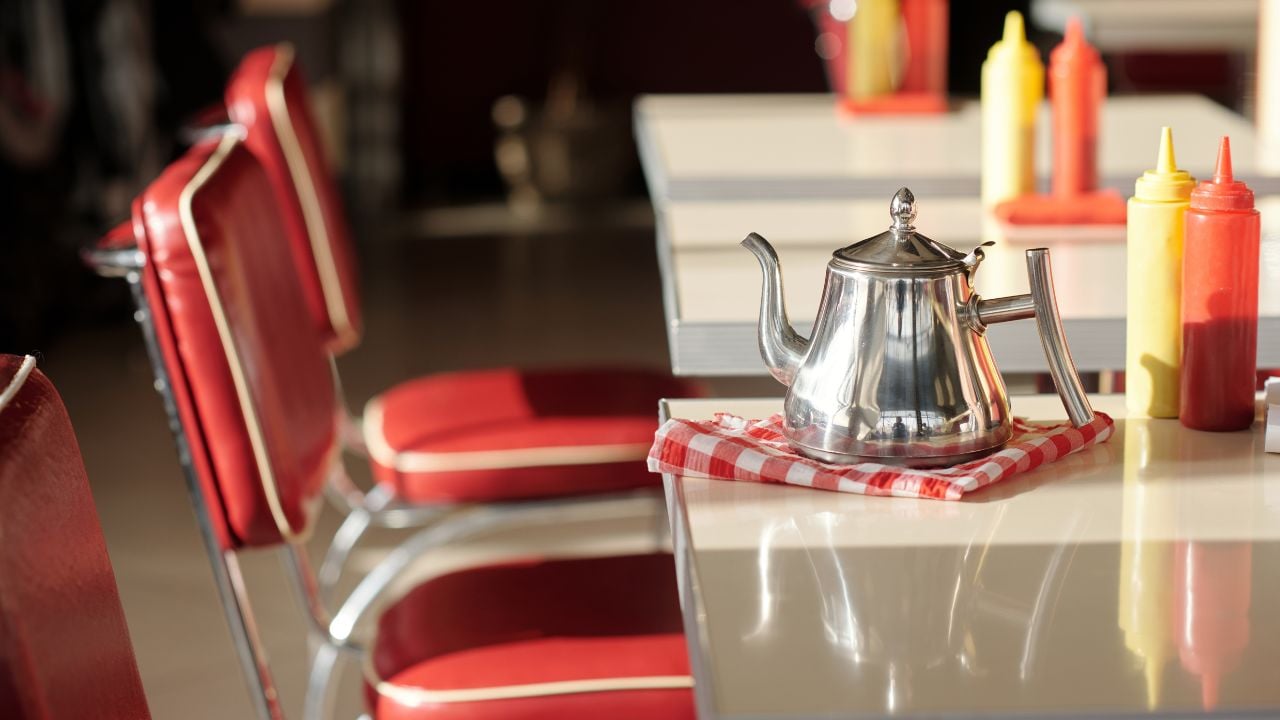
The orange-handled pot means decaf, and regulars track it across the room.
A counter seat comes with rights: First refill and the best seat for the gossip.
Newcomers flag someone down and point at the cup.
Locals just slide the mug an inch and keep talking.
Psst! How much do you know about where diners came from? Take our quiz and see if you can get every answer right.
Quiz
Diner History IQ
Answer these questions on classic American diner history. We bet at least one stumps you. Prove us wrong?
Shoofly Pie From the Case
A Pennsylvania local reads the rotating dessert case before the server reaches the table, and shoofly pie gets the nod.
Shoofly pie is a Pennsylvania Dutch molasses crumb pie, wet-bottom or dry-bottom depending on where your grandmother grew up.
The story goes that bakers had to shoo flies away from the molasses cooling on the sill, and the name stuck.
Wet-bottom rules the Lancaster County diners, and locals order it with coffee, never ice cream.
Dry-bottom fans argue their crumbier version holds together better. Wet-bottom fans don't argue. They point at the fork marks.
Shoofly pie never took over the rest of the country, so transplanted Pennsylvanians either go without or learn to bake.
Order a slice and a cup at the counter some evening, and count how many people the server greets by name before your check arrives.
Around Pennsylvania, that number runs high.
10 Things You Can't Say About Pennsylvania Around a Local

Order a cheesesteak with Swiss in Philadelphia, and watch how fast the line goes silent.
Pennsylvania runs on unwritten rules, and out-of-staters break them within an hour of crossing the state line.
10 Things You Can't Say About Pennsylvania Around a Local
10 Things Only Wegmans Shoppers Understand
There are grocery stores, and then there's Wegmans.
If you grew up in the Northeast, you understand the difference in a way that's hard to explain to the rest of the country.
10 Things Only Wegmans Shoppers From the Northeast Understand. Do You Agree, Pennsylvanians?
