
8 Roof Problems That End a Florida Homeowner’s Insurance Policy

A Florida roof can lose its insurance over one blank line on a form: The date of its last roofing permit.
That’s just one paperwork problem a roof can carry into a renewal.
These are the roof problems that can end a Florida homeowner’s insurance policy in 2026.
Note: This is general information, not insurance advice. Underwriting rules and roof-age thresholds vary by carrier and are subject to change, so check the specifics with your insurer or agent.
1. Crossing the 15-Year Line
At 15 years, not 20 and not 25, a Florida shingle roof crosses its most watched birthday.
Palm Beach County insurance underwriter Robert Norberg, president of Arden Insurance Associates, recently told CBS12 that 15 years has become the standard age cap many Florida carriers use for a shingle roof.
Florida Statute 627.7011 protects a roof up until that point, blocking an insurer from refusing to issue or renew a policy solely because a roof is under 15 years old.
That protection expires the day the roof turns 15.
Fifteen is the number.
An insurer can require an inspection then, and the report decides what happens to the policy next.
Pass, and coverage renews without a hitch.
Fail, and a homeowner starts shopping for a new carrier, sometimes over a roof with no visible leak at all.
Citizens Property Insurance Corporation draws its own line at 25 years for a shingle roof.
But an inspection can still save the policy: A report showing at least five years of remaining useful life extends coverage for up to five more years, re-verified when that period runs out.
Fall under that five-year mark instead, and Citizens requires proof of a full roof replacement before it will bind or renew the policy.
Tile roofs get more room, since Citizens accepts them up to 50 years old before either rule applies.
2. Running Out of Useful Life
Florida Statute 627.7011 ties a roof’s fate to a number that has nothing to do with its birthday: Remaining useful life.
An inspection at 15 years or older that shows at least five years of remaining useful life (RUL) forces the insurer to keep the policy in place.
Fall under that five-year mark, and the same statute lets the insurer refuse to renew or issue coverage over roof age alone, even with no leak in sight.
Remaining useful life is its own number, separate from a roof’s age.
An inspector can rate a roof barely into its teens with less remaining life than a roof twice its age, depending on how much sun and storm damage it’s carried.
Remaining life is what counts.
Age gives a homeowner a rough guess.
The remaining-useful-life number on an inspector’s report is what ends or keeps the policy.
What “Remaining Useful Life” Means for a Florida Roof
A Florida roof’s remaining useful life, or RUL, isn’t the same number as its calendar age.
A licensed inspector estimates it by walking the roof and reading its wear, not from a fixed formula tied to the installation date.
That’s why a shingle roof with heavy sun and hail damage can test out with only two or three years of remaining life while a well-maintained roof twice its age still clears five.
Ask an agent for that number in writing before a renewal notice arrives, not after.
3. Two Layers, One Roof
Hiding a second layer of shingles under the first can fail a Florida roof’s inspection before the surface ever tells the story.
Citizens Property Insurance Corporation’s own inspection form includes a separate line for a “Secondary Roof,” built for exactly this situation.
That happens when a new layer of shingles goes down over an old layer instead of a full tear-off, a faster and cheaper job for a contractor to book.
It’s also a fast path to an outright decline instead of just a higher price, since an inspector can’t fully verify what condition the buried layer is hiding.
Many carriers just say no.
A Florida homeowner planning a re-roof is usually better off with a full tear-off, even when a layover costs less upfront.
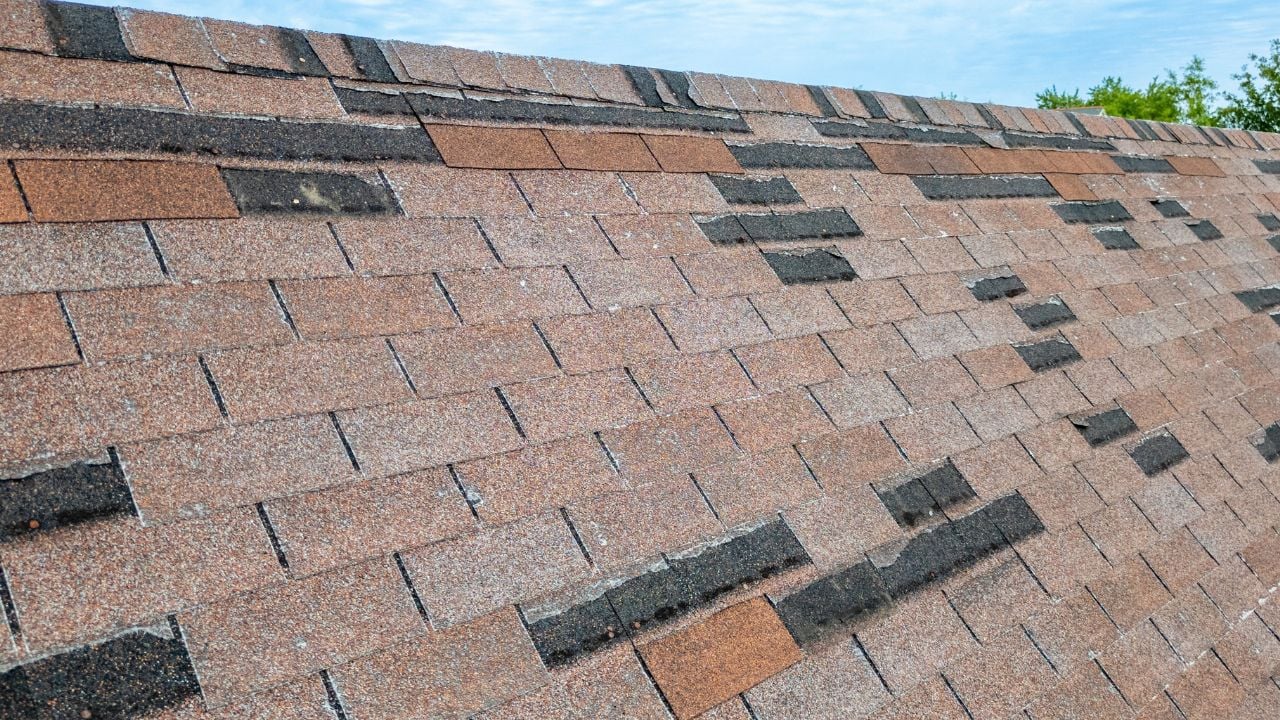
4. Bare Deck Showing Through
A missing patch of shingles worries a Florida inspector more than a roof that simply looks old.
The same inspection form checks for two exact lines, “exposed asphalt” and “exposed felt,” the layers that sit between the shingles and the wooden deck underneath.
Either box checked marks the roof’s overall condition unsatisfactory on the report, and an unsatisfactory roof section can sink the whole application, not just that one line item.
It doesn’t take much of an opening for wind-driven rain to reach a Florida roof’s plywood deck.
A patch of missing granules or a lifted shingle edge is often all it takes.
Insurers notice fast.
A homeowner who patches the spot before the inspector arrives usually keeps the policy, and a homeowner who waits usually doesn’t.
Psst! How insurance-ready is your Florida roof? Run through this checklist and see where you stand.
5. Soft Spots in the Decking
Underfoot, a Florida roof’s decking, the wood layer beneath the shingles, has to hold an inspector’s weight and the state’s weather without giving.
The inspection form has its own checkbox for “soft spots in decking,” a finding inspectors treat as structural, not cosmetic.
Rot works from the inside, so a roof can look fine from the driveway with a deck that’s already spongy underfoot.
A soft spot usually means water has been getting in for a while, not just since the last storm.
Nothing about that is quick.
Many carriers require a section of decking replacement, sometimes the whole roof, before they’ll bind or renew a policy over a soft spot.
6. Shingles or Tiles Gone Missing
Missing shingles or cracked tiles are an easy problem for an inspector to catch on a Florida roof, from the ground and up close alike.
The inspection form flags “missing/loose/cracked tabs or tiles” as its own category, separate from the roof’s age or its remaining life.
A few missing shingles after a summer storm might only need a quick repair.
A cracked run of tiles across a whole slope reads differently to an underwriter.
Underwriters treat a scattered pattern of damage as a preview of the next claim, and that reading alone is grounds for a decline or a non-renewal.
No leak required.
A homeowner who calls a roofer before the renewal notice arrives usually has more options than a homeowner who waits for the inspector to find it first.
7. No Permit on File
A blank line on a Florida roof’s permit history can end a policy that has nothing else wrong with it.
The same renewal inspection that checks a roof’s age and its remaining useful life also asks for the date of its last roofing permit, and an insurer treats a blank answer as a red flag on its own.
Work done without a permit can’t be checked against the Florida Building Code, so an insurer has no way to confirm it was done right.
That gap alone is enough for many carriers to non-renew a policy at the inspection stage, whether the roof looks fine from the ground or not.
Paperwork alone can end it.
A full re-roof and a smaller repair job carry the same risk alike, whenever the work should have been permitted and wasn’t.
Pulling permit records from the county building department before a renewal notice arrives is the only way to catch a gap before an inspector does.
8. Water Stains in the Attic
Inside a Florida homeowner’s attic, water stains tell an inspector more than the shingles ever will.
The inspection form asks a direct yes-or-no question: Does the attic decking or the interior ceilings below show any visible signs of leaks?
A yes on either line documents an active problem, not a maybe.
Even a small brown ring on a ceiling tile counts, whether the leak is still running or dried up months ago.
Proof beats guesswork.
Once that box is checked yes, many insurers want the leak’s source fixed and the damage repaired before they’ll bind or renew coverage, not just a fresh coat of ceiling paint.
Repairs Don’t Always Mean a New Roof
Storm damage across a Florida roof doesn’t automatically total it, even after the list above.
Repair often beats replace.
Senate Bill 4-D, effective May 26, 2022, eliminated Florida’s old 25% rule for a roof built, repaired, or replaced to the 2007 Florida Building Code or any later edition.
Before that law, storm damage across just a quarter of a code-compliant roof could trigger a full tear-off and rebuild.
Now only the repaired portion has to meet current code, regardless of how much of the roof needs work.
That means a homeowner with storm damage on a code-compliant roof can often get the damaged section repaired, not torn off and rebuilt.
A roof permitted before March 1, 2009, the date the 2007 code took hold, still falls under the original 25% rule, so a quarter of storm damage there can force a full replacement even when a newer roof next door would only need a patch.
Pulling a roof’s permit history from the county is the fastest way for a homeowner to find out which rule applies to their own address.
9 Florida Insurance Discounts Homeowners Qualify For and Never Ask About
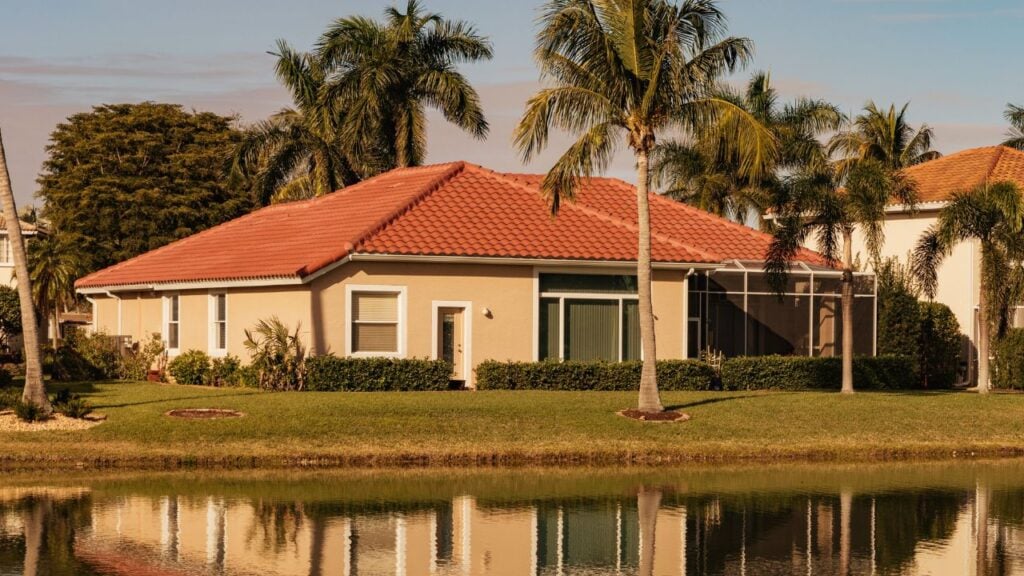
A Cape Coral homeowner replaces a roof, hangs a full set of shutters, and installs a water sensor by the water heater, then never calls the insurance agent about any of it.
Florida insurers offer dollar-value credit for exactly those upgrades, and it only shows up on a bill after someone asks.
9 Florida Insurance Discounts Homeowners Qualify For and Never Ask About
9 Homestead Exemption Errors That Cost Florida Homeowners Their Savings
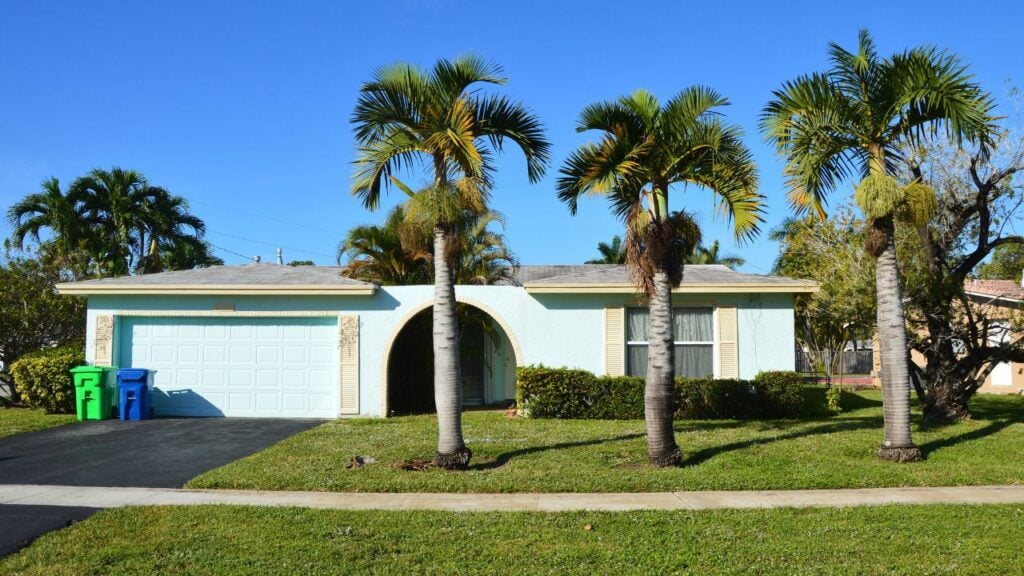
A Florida homeowner’s tax bill can run double a neighbor’s on a nearly identical house, and it usually isn’t luck.
One of them filed every homestead form on time, and the other lost thousands of dollars in Save Our Homes protection without ever knowing it.
9 Homestead Exemption Errors That Cost Florida Homeowners Their Savings
