
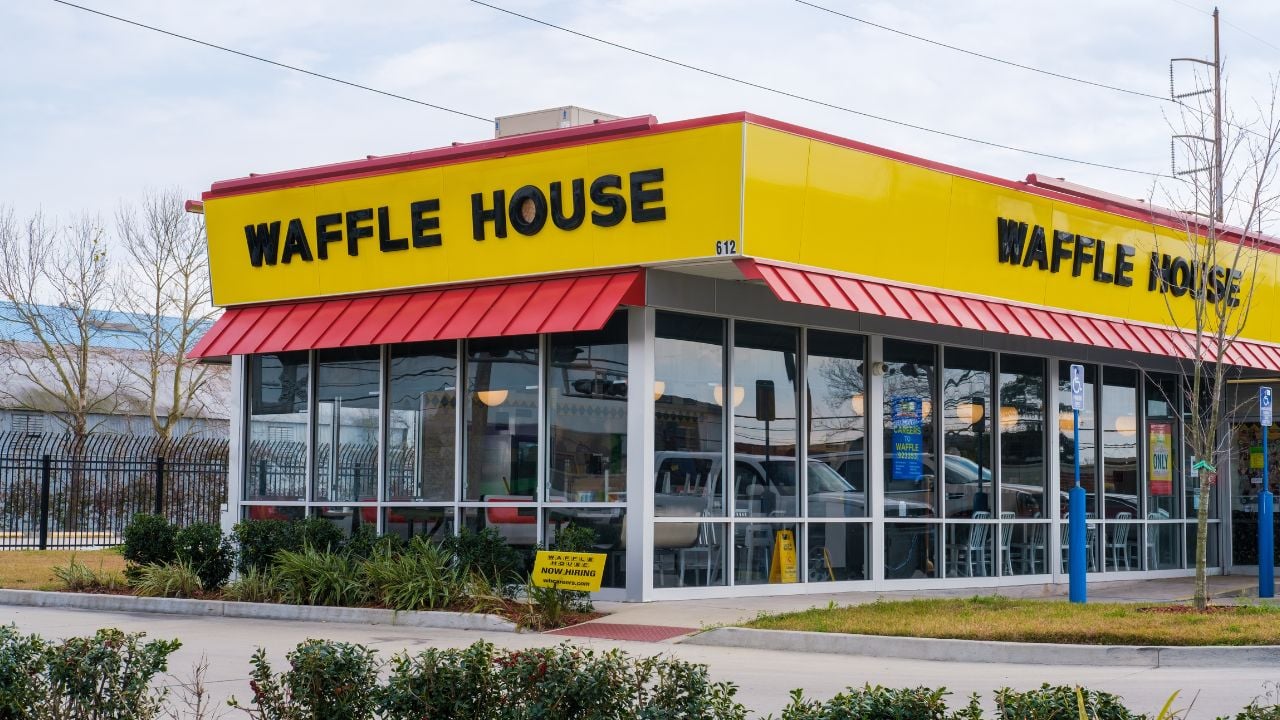
8 Things a Closed Waffle House Means for Virginians Before a Storm

A rumor spread on a Charlottesville subreddit in January that the local Waffle House was closing ahead of a winter storm.
An employee laughed it off when a reporter called to check.
Waffle House stays open through storms across Georgia, the Carolinas, and Virginia, right up until the moment it can’t.
Here’s what Virginians are seeing when that sign finally goes dark before a storm.
Note: This is general information, not advice. Evacuation curfews and flood-driving ordinances vary by locality and are subject to change.
1. Waffle House’s Code Red
Waffle House built its reputation on staying open through disasters, so Virginians notice fast when a location shuts down.
That’s not by accident.
Former FEMA administrator Craig Fugate coined the name in 2004, watching which Waffle House stores stayed open in Florida during Hurricane Charley while he ran the state’s own emergency management division.
The idea got its widest audience when NPR profiled it in 2011, describing the same color-coded system Fugate’s own staff still leaned on after a storm.
Green means a full menu and the power is on.
Yellow means a shortened menu, usually a generator, and thin supplies.
Red means the doors are locked.
Fugate told The Wall Street Journal that a closed Waffle House points rescue crews straight to where the damage is worst.
Virginia’s 69 Waffle House locations answer to that same scale as the stores in Georgia or the Carolinas.
2. Generator Already Lost
Waffle House doesn’t wait for a storm to buy generators.
After Hurricane Katrina, the company started stocking portable generators and mobile command centers so a location could keep cooking on gas alone if the grid went down.
That’s the whole point of yellow status: a shortened menu running on a generator and whatever food is still cold.
A closed sign means that plan already failed, whether from flooding, structural damage, or conditions too unsafe for a skeleton crew to stay.
That’s not a power blip.
What Separates Yellow From Red at Waffle House
Waffle House treats yellow and red as two different signals, not two shades of the same problem.
Yellow can mean the power is out completely, as long as gas, a generator, or bottled water keeps the grill running and the crew safe.
Red means one of those pieces failed outright: Water inside the building, a missing roof, or a road nobody can safely reach.
FEMA has never made the scale official. It’s an internal habit the agency still finds useful enough to watch.
3. Corporate Called It Days Out
A closed Waffle House in Virginia can be an early warning: The sign sometimes goes dark three or four days before a storm even reaches the state, well before local forecasts have narrowed down where the worst will land.
That timing comes out of a storm center Waffle House runs from a converted conference room at its headquarters in Norcross, Georgia.
Staff there track weather models across a hurricane’s entire path and decide which stores in its way should close.
A closed sign in Hampton Roads or the Shenandoah Valley this early isn’t a manager panicking that morning.
The call came early.
4. It’s Following Your Evacuation Order
Waffle House closes when local governments order a mandatory evacuation.
It’s no different from any other business on that street.
Virginia Beach, Hampton, and the rest of Hampton Roads sort properties into lettered zones through Know Your Zone, with Zone A carrying the highest flood risk.
Sandbridge sits entirely in Zone A.
Zone A goes first.
When officials order Zone A out, Waffle House goes with everyone else, including the employees who live there.
A closed location in your zone confirms the order applies to you too.
Psst! How storm-ready is your Virginia home right now? Run through this checklist and see where you stand.
5. Getting There May Be Illegal
Waffle House being closed sometimes has less to do with the restaurant and more to do with the road out front.
Hampton’s own hurricane guidance notes that curfews and stepped-up police patrols cover evacuated areas during a storm, a practice the city used during Hurricane Irene in 2011.
Virginia law lets a locality ban driving on a flooded road in a way that pushes water into nearby homes.
Many localities enforce it, storm or not.
So a dark Waffle House near an evacuation zone can mean the trip carries legal risk before it’s even inconvenient.
Stay home.
6. It’s Rare Enough to Make News
Waffle House operates just 69 locations across Virginia, compared with 443 in Georgia, 186 in North Carolina, and 178 in South Carolina.
That’s a small footprint for a chain built on outlasting storms, so a Virginia closure carries more weight than the same red status somewhere with hundreds of stores to spare.
Every store counts more here.
After Hurricane Irene knocked out power to 22 Waffle House restaurants across North Carolina, Virginia, Maryland, and Delaware in 2011, every one of them reopened by Wednesday night except a single store on Virginia’s hard-hit coast.
7. Cleanup Crews Lose a Meal
Waffle House keeps stores open so first responders and utility crews have somewhere hot to eat while they’re working a disaster.
Florida Gov. Ron DeSantis once grabbed an apron and helped cook breakfast for the linemen and first responders crowded into a Punta Gorda Waffle House after Hurricane Ian.
The company flew close to two hundred employees into storm-hit communities after Hurricane Florence just to keep the grills running for that same reason.
When a Virginia location goes dark instead, the utility crews working to get the lights back on lose one of the few guaranteed hot meals nearby.
That’s one less stop.
8. It’s Not Just a Coastline Problem
Waffle House runs 24-hour locations well past the coast, including stores in Wytheville and Abingdon, deep in Southwest Virginia.
Remnants of Hurricane Helene tore through that part of the state in September 2024, and a federal disaster declaration eventually covered nine localities in Southwest Virginia, including Wythe and Washington counties.
At least two Virginians died in the flooding, and hundreds of homes took damage far from any beach.
A closed Waffle House sign means the same thing in Wytheville as it does in Virginia Beach.
Mountains flood too.
Psst! How much do you know about Waffle House’s own history? Take our quiz and see how many you can get right.
Quiz
Waffle House IQ
Answer these questions on Waffle House history and hash brown lingo. We bet you can’t get them all right. Prove us wrong?
Ordering hash browns “smothered” adds what to the plate?
Hurricane Season Isn't Over Yet
Virginia's Waffle House locations answer to a hurricane season that runs through November 30, with NOAA putting the peak around September 10.
It's not finished yet.
Mid-August through mid-October alone accounts for 78 percent of the country's tropical storm days and 96 percent of its major hurricane days.
A Waffle House sign that's still green in early September doesn't mean the season is over.
Hurricane Isabel, Virginia's most damaging storm on record, didn't make landfall until September 18, eight days after that peak.
It knocked out power to roughly 4 million Virginians, the largest outage in the state's history.
Hurricane Sandy reached the Virginia coast even later, in late October, more than six weeks past the peak NOAA marks each year.
A Waffle House sign might read red for a day or two after a bad storm, then flip back to green long before the power crews finish the rest of the block.
8 Vanishing Diner Foods Virginians Still Talk About
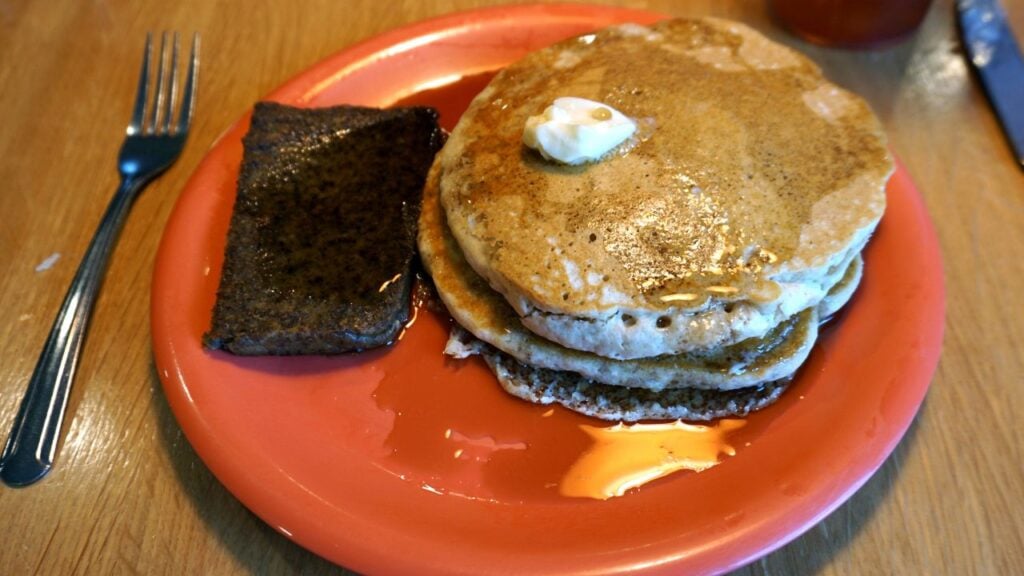
The stools at Skeeter's in Wytheville have held Virginians since 1925, and the chili recipe hasn't budged since.
Diners and lunch counters from the coast to the coalfields built that same loyalty, even as many of the actual buildings disappeared.
8 Vanishing Diner Foods Virginians Still Talk About
10 Things Virginia Grandparents Did That Their Kids Would Never Allow Now
Nearly half of American kids walked or biked to school alone in 1969, a number that had fallen to just 13 percent by 2009.
Letting kids roam the neighborhood without a phone was only the beginning of what Virginia's grandparent generation got away with.
10 Things Virginia Grandparents Did That Their Kids Would Never Allow Now
