
10 Things Virginia Grandparents Did That Their Kids Would Never Allow Now

Nearly half of American kids walked or biked to school on their own in 1969.
By 2009, that number had fallen to just 13 percent.
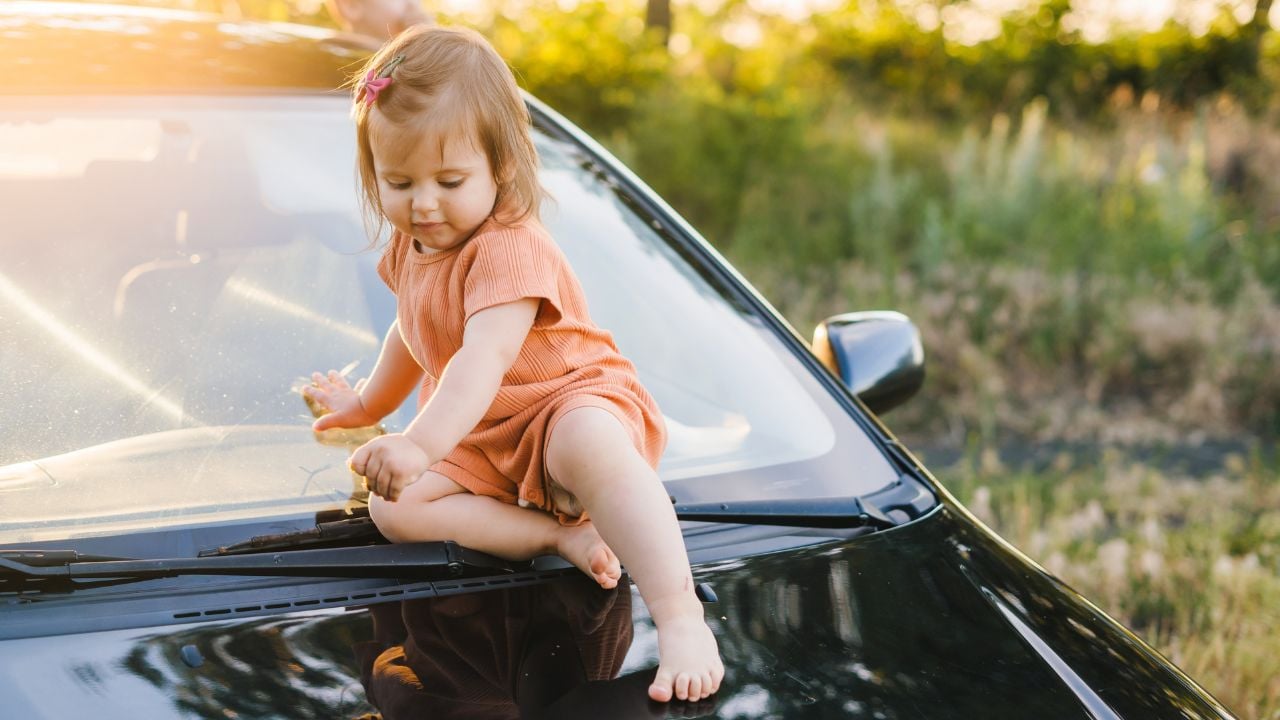
Letting kids roam the neighborhood alone was just the start for Virginia’s grandparent generation.
These are the things grandparents did that their now-grown kids would never allow their sons and daughters to do today.
1. Skipped the Car Seat
Virginia parents driving home from the hospital with a newborn in the early 1970s skipped the car seat because nothing in state law asked them to buy a car seat.
Tennessee passed the country’s first child car seat law in 1977.
Virginia passed its own child restraint law in 1982, five years after Tennessee became the first state to require any restraint at all.
By 1985, every state, Virginia included, required some kind of child restraint, according to the National Highway Traffic Safety Administration.
Before that, a parent’s lap or a blanket on the front seat counted as good enough.
Not close.
Ask a Virginia parent raising a baby before the mid-1980s about their first car seat, and many will admit they didn’t own a car seat until their second or third child came along.
A Virginia parent today won’t leave the hospital parking lot until a car seat passes inspection.
2. Belted Only in Front
Virginia’s first seatbelt law only covered the driver and the front seat.
The General Assembly passed it in 1987, and it took effect the following year, in 1988.
Kids riding in the back seat weren’t covered by that law at all.
Nobody checked.
A station wagon full of kids could legally roll down I-64 with nobody in the far back belted in.
Virginia widened the requirement to cover every seat and every age over the years that followed, and enforcement got tougher along with it.
Their own kids buckle a booster seat in the third row before the car even leaves the driveway.
3. Let Kids Ride in Truck Beds
Farm roads across Virginia carried kids riding loose in the open bed of a pickup truck for years, and nothing in state law said otherwise.
That changed in 2000, when Virginia banned transporting anyone under 16 in a pickup truck’s cargo area.
A late arrival.
The Two Exceptions to Virginia’s Truck-Bed Law
Virginia’s law banning kids from truck beds still carves out two exceptions today.
The parade exception covers a route approved by a locality or the Department of Transportation.
The farm exception covers a truck moving between fields on the same property.
Outside those two situations, anyone under 16 has to ride inside the cab, seatbelt buckled, every time.
Grandparents who let a kid ride in the truck bed for a quick trip to the mailbox weren’t breaking any Virginia law when they did it.
Their own kids won’t let a teenager sit in an open truck bed even parked in the driveway.
4. Paddled Kids at School
Virginia public schools could legally paddle a student for talking back or skipping homework.
The Virginia General Assembly banned corporal punishment in public schools in 1989, closing out a practice that had been routine in principals’ offices statewide.
A parent who got a call about a paddling rarely called the school back angry.
Some signed a permission slip at the start of the year allowing it.
Just another Tuesday.
A parent who got that call today would have the child out of that school by the end of the afternoon.
5. Smoked With Kids in the Car
Cigarette smoke filled many Virginia cars with kids buckled, or unbuckled, in the back seat.
No state law said they couldn’t.
That stayed true until July 2016, when Virginia made smoking in a vehicle with a child 8 or younger a $100 civil offense.
A generation of Virginia kids grew up breathing secondhand smoke on the way to school, church, and every road trip in between.
That was normal.
Their own kids won’t smoke within twenty feet of a stroller.
Psst! How much do you know about Virginia history? Take our quiz and see how many you can get right.
Quiz
Virginia History IQ
Answer these questions on Virginia’s history and famous firsts. We bet you can’t get them all right. Prove us wrong?
In 1619, Jamestown colonists created what body, the first of its kind in America?
6. Rode Bikes With No Helmet
Kids across Virginia pedaled to the pool, the store, and each other's houses without a helmet in sight.
Virginia never passed a statewide helmet mandate. The General Assembly instead passed enabling legislation in 1993 that let individual localities require a helmet for riders 14 and younger.
Not automatic.
At least 29 Virginia communities have adopted a helmet ordinance since, county by county and city by city, rather than through a single statewide law.
A ten-year-old could ride bare-headed down a Fairfax County street or a rural Southside road until a local government said otherwise.
A Virginia mom today won't let her own child coast down the driveway without a helmet strapped on.
7. Put Babies Down Face-First
Doctors told Virginia parents for decades to put babies to sleep on their stomachs.
The federal Back to Sleep campaign flipped that guidance in 1994, when health officials began warning that stomach sleeping raised a baby's risk of Sudden Infant Death Syndrome (SIDS).
The overall U.S. SIDS rate dropped by more than 50 percent between 1994 and 1999, in the years right after the campaign launched.
That's not a small shift.
Sleep-related infant death still ranks as the leading cause of non-natural infant death in Virginia. The state recorded 119 of them in 2009 alone, close to one every three days, according to the Virginia Department of Health.
A parent today checks the nursery for an empty crib and a fitted sheet before any nap starts.
8. Let Kids Walk to School Alone
Virginia kids in the 1960s and '70s often walked or biked to school on their own, no adult in sight.
Nobody organized a program to make those walks safer.
Virginia didn't take that on formally until the state was picked as one of ten founding project jurisdictions for the national Safe Routes to School effort in January 2007.
Decades later.
A ten-year-old crossing three intersections alone raised no eyebrows on a Tuesday morning in Roanoke or Richmond.
Their own kids walk a child to the bus stop, in sight of the front porch, until middle school.
9. Skipped Breastfeeding for Formula
New mothers in Virginia heard from their own doctors in the early 1970s that formula was the modern, medically preferred way to feed a baby.
U.S. breastfeeding rates bottomed out at just 22 percent in 1972.
That means fewer than one in four new mothers left the hospital nursing.
Doctors pushed it.
Formula companies mailed samples straight to new parents, and pediatricians handed out feeding schedules built around the bottle.
Virginia's own public health system didn't organize formal breastfeeding support until decades later.
The Department of Health's Women, Infants, and Children (WIC) nutrition program launched its peer-counselor program in 2004, more than 30 years after that generation of mothers had already gone home with formula.
Their own kids field questions from a lactation consultant before they leave the hospital.
10. Left Medicine Bottles Unlocked
A bathroom cabinet in many Virginia homes held the aspirin, the vitamins, and the blood pressure pills behind a cap any curious toddler could twist off.
Virginia had already opened the state's first poison center in 1958, more than a decade before Congress required a single child-resistant cap, and a caller still reached a person on the phone for advice on a bad swallow.
Congress passed the Poison Prevention Packaging Act in 1970, requiring child-resistant caps on medicine for the first time.
Even after it passed, 216 children still died from accidental poisoning in 1972 alone.
Still too many.
That number has dropped 80 percent since.
A grandparent who grew up with an unlocked medicine cabinet still has to be reminded, every visit, which drawer in their own kid's kitchen holds the child locks.
The cabinet in that kitchen locks with a magnetic key that lives on top of the refrigerator, out of reach of every kid in the house.
12 Things Virginians Brag About That Confuse Everyone Else
Ask a Virginian to explain Staunton, and they'll correct your pronunciation before they answer the question.
Every state has its own private language, but Virginia hands newcomers a whole quiz before they've even unpacked the moving truck.
12 Things Virginians Brag About That Confuse Everyone Else
13 Costly Retirement Mistakes Virginians Make in Their First Year on a Fixed Income

A retired shipyard worker in Newport News opens his mailbox in March to a Social Security letter that doesn't match a single number he'd budgeted for.
The first year on a fixed income catches many Virginians the same way, one overlooked line item at a time.
13 Costly Retirement Mistakes Virginians Make in Their First Year on a Fixed Income
