

8 Things Californians Get Wrong About Keeping Animals in a City Backyard

California has more than 480 incorporated cities. The state doesn’t tell any of them how to regulate a backyard coop, hive, or pen.
Each city has its own rulebook, and the results rarely match the city next door.
These are the backyard animal rules Californians get wrong, city by city.
Note: This is general information, not legal advice. Animal-keeping ordinances vary by city and are subject to change.
1. Assuming Hens Need No Permit
Sacramento treats a backyard hen almost like a licensed pet.
The city requires an actual permit before a single coop goes up, plus a yearly license for every bird inside it.
That’s a $47 annual coop permit plus a $20 annual license per hen, on a cap of three hens total on a residential lot.
Roosters aren’t included in that cap.
None are allowed, at any price.
Los Angeles and Long Beach ask for neither a permit nor a license on a similar-sized flock, which is exactly why so many Californians assume no city bothers with paperwork.
2. Believing One Hen Cap Fits All
San Diego doesn’t hand every backyard the same chicken limit.
The legal number depends on exactly where the coop sits in the yard.
Keep it inside the standard setbacks, and the cap is five birds.
Push the coop 15 feet from every property line, and the limit jumps to 15.
Fifty feet from any building used as a home, and it goes up again, to 25.
It’s the same address.
That’s three different legal flocks.
Check Whether You’re Even Inside City Limits
San Diego’s tiered chicken rule only applies inside the city of San Diego itself, not the wider San Diego County.
Many addresses with a San Diego mailing address sit on unincorporated county land, governed by a completely separate animal code.
The same split shows up almost everywhere in California: A city’s chicken, goat, or bee rules stop at the city line, and the surrounding county picks up from there.
Check with the city or county planning office before assuming which rulebook covers a given address.
3. Thinking Every Rooster Is Fine
Los Angeles caps every backyard at one rooster, full stop.
Add a second, and the code doesn’t call it a fine.
It’s a misdemeanor, a criminal charge rather than a citation.
San Francisco, Sacramento, San Diego, and Santa Barbara skip the one-rooster compromise entirely.
Each of those cities bans roosters outright, no matter how calm the bird or how big the yard.
There are no exceptions.
4. Figuring Ducks Dodge the Cap
San Francisco doesn’t treat a backyard duck as some separate category from a chicken.
The city’s health code caps residential households at four total animals, counting any combination of chickens, ducks, geese, turkeys, rabbits, and a handful of other small pets together.
A household with two hens and two rabbits is already at the limit.
Adding a duck on top of that breaks the cap, even though nobody in the house owns more than one of anything.
It’s one shared ceiling.
The cap is four animals, no matter the species.
5. Guessing Backyard Bees Are Banned
Los Angeles banned backyard beehives for more than a century before finally reversing course.
In 2015, the city council voted to overturn that ban and legalize hobby beekeeping citywide.
One hive is allowed per 2,500 square feet of lot, tucked in the back yard, never the front.
Beekeepers also have to register their hives with the Los Angeles County Agricultural Commissioner.
Beekeeping is registered now, not outlawed.
Californians still believe it’s banned, years after the ordinance that ended the ban.
6. Presuming Goats Are Always Banned
San Diego treats a backyard goat as a manageable pet, not forbidden livestock.
The city’s 2012 ordinance change lets residents keep goats with a shed set back 5 feet from the side property line and 13 feet from the rear, inside a secured pen of at least 400 square feet.
Santa Barbara draws the line somewhere else entirely.
Its code requires 1.5 acres of land before any hoofed animal, goat included, is allowed on the property at all.
That’s not the average backyard.
A typical city lot in Santa Barbara runs a small fraction of that.
7. Picturing Rabbits With No Limit
Santa Barbara puts a cap on how many pet rabbits a backyard can hold.
Keep two or fewer purely as pets, and the code leaves them alone.
Go beyond that, and the count folds rabbits in with chickens and other fowl under one shared ceiling, 15 total on a typical residential lot.
A household with ten chickens can only add five rabbits before hitting that same wall.
Species doesn’t matter.
The number does.
8. Expecting One Setback Rule Statewide
Long Beach, Sacramento, and Santa Barbara don’t agree on how far a backyard coop has to sit from a house.
Long Beach sets tiered distances that apply only to chickens: 10 feet from a home for one to four birds, 35 feet for five to ten, and 50 feet for eleven to twenty.
Sacramento asks for just 20 feet from a neighboring dwelling, regardless of how many hens are inside the coop.
Santa Barbara sets its coops back 35 feet from a neighboring home and 100 feet from a school, park, or hospital.
A coop built to Sacramento’s 20-foot rule could still fall short of Santa Barbara’s 35.
Three cities use three different yardsticks.
Psst! California backyards run on rules many owners have never read. Flip these cards and see how many you’d get right.
10 Things California Neighbors Report You for That Are Perfectly Legal

A neighbor can file a complaint over almost anything, and a surprising number of those calls go nowhere once someone checks the actual ordinance.
This list rounds up the everyday habits that keep drawing a report, even though the state and local code both say they’re allowed.
10 Things California Neighbors Report You For That Are Perfectly Legal
9 Yard Sale Rules California Sellers Break Without Realizing
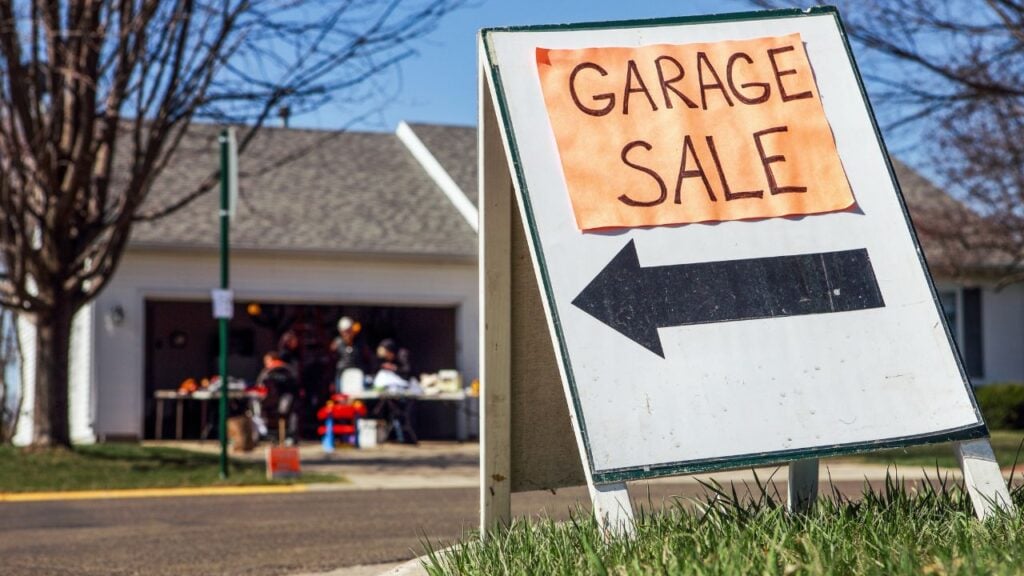
A folding table of old clothes and a hand-lettered sign look harmless enough, but many California cities regulate a yard sale down to the permit and the calendar.
This rundown covers the rules sellers break again and again, the kind of mistake that can turn a Saturday driveway sale into a citation.
9 Yard Sale Rules California Sellers Break Without Realizing
