
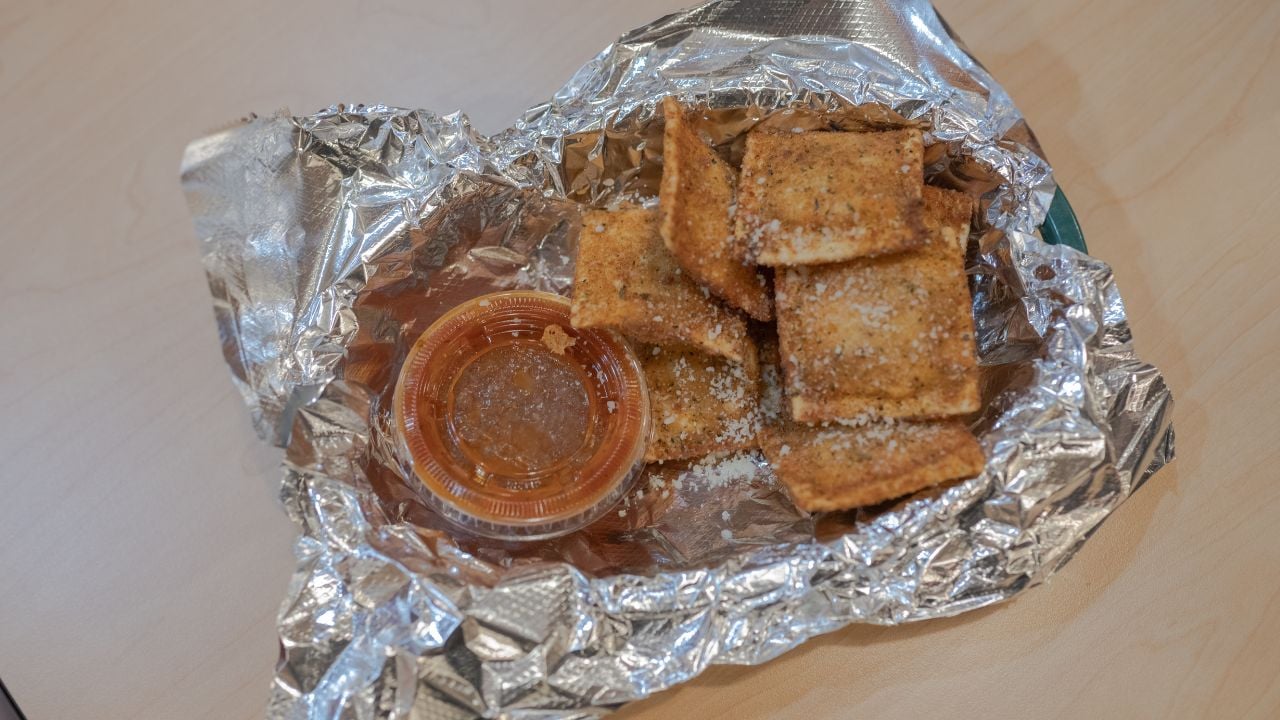
8 Things Missourians Do That Confuse Everyone Who Moves There

Your first set of directions in Missouri ends with a letter.
Take Z to MM, then watch for the outer road.
The person telling you that assumes you already know what a letter on a road sign means.
These are the things Missourians do that confuse everyone who moves there.
1. Asking Where You Went to High School
Shake hands with somebody in St. Louis, and the second question is where you went to high school.
College never comes up.
That question arrives within seconds of hello.
From your answer, they place your neighborhood, your parish, and your side of town.
St. Louisans ask it of each other too, which is the part outsiders miss.
Name a school 900 miles away, and the person asking has to start the whole thing over.
Transplants hear a status test. To longtime residents, it’s a shortcut.
“Where’d you go to high school?”
2. Giving Directions in Letters
A Missouri road sign can say Z, or MM, or OO.
Nobody finds that odd.
Those letters mark supplemental routes, and the state adopted thousands of miles of them between 1952 and 1962, when it set out to put a paved road within two miles of every home.
That push left Missouri with the seventh-largest highway system in the country.
The letters start over county by county.
Route WW near Columbia has nothing to do with Route WW up in Linn County, and the two roads never touch.
Missouri skips G, I, L, and Q because they look too much like numbers on a highway sign.
Then there’s the outer road, which is what Missourians call the frontage road running alongside an interstate.
Type a single letter into a map app, and you can end up aimed at a county you’ve never driven through.
Joe Sonderman, who tracks Missouri’s highway history, thinks one X is still out there in Macon County.
Psst! How much do you know about Missouri? Take our quiz and see if you can ace it.
Quiz
Missouri Firsts Quiz
Answer these questions on Missouri’s firsts, records, and origins. We bet you can’t get them all right. Prove us wrong?
Which Missouri town sold the world’s first pre-sliced loaves of bread in 1928?
3. Melting Provel on Your Pizza
Provel doesn't stretch, and that's the point.
It's a processed blend of cheddar, Swiss, and provolone, built for St. Louis pizza.
Grocery stores on The Hill sold it for years before anybody trademarked the name in 1950.
Order a pizza with a Missourian, and it comes back cut into small squares.
The crust runs cracker thin.
Locals call that a square cut, and you'll never get a stringy pull off any piece.
Newcomers call the taste smoky, or plastic, or both, and many of them say so at the table.
Ed Imo built a pizza chain around Provel in the 1960s.
Missourians who grew up on Provel don't defend it.
They order it again.
4. Calling a Stranger a Hoosier
In St. Louis, a hoosier has nothing to do with Indiana.
Around the south side of St. Louis, it means somebody sloppy, rude, and rough around the edges, and it's meant to sting.
It's still in daily use.
Somebody parks across two spaces at a Schnucks, and the word comes out before their car door shuts.
Where the insult came from is still unsettled.
One account traces it to a St. Louis strike, when factory owners recruited replacement workers out of Indiana.
Another points at the Chrysler plant that opened in Fenton in the 1960s.
Historians can't pin the date either, though scornful uses of the word turn up in St. Louis as far back as the 1800s.
Linguists have studied the St. Louis version for decades, and they treat the insult sense as a marker of the local dialect.
The word does a second job too: Using it right proves the speaker knows St. Louis, which is a large part of why it hasn't faded.
5. Paying Tax on Their Own Car
Missouri counties tax the car in your driveway, and the whole bill turns on one date.
Your county assessor values whatever you owned on January 1.
The collector mails the bill in the fall.
It comes due at the end of December.
Missouri doesn't prorate.
Sell that car on January 2, and you still owe the full year on it.
Move in the next day, and you owe nothing until the following cycle.
Skipping the bill isn't an option because the license office wants a paid tax receipt before it'll renew your plates.
Transplants find that out at the counter, holding a renewal notice and nothing else.
6. Pronouncing Nevada Their Own Way
Nevada, Missouri, comes out nev-AY-duh.
A map won't help.
Versailles is ver-SAYLZ, and Bolivar sounds closer to BALL-uh-ver than anything a Spanish teacher would recognize.
None of those came from French.
Many of the names arrived with settlers coming up from Kentucky, North Carolina, and Tennessee after the Louisiana Purchase.
They said them in their own accents from day one, and nobody has changed the pronunciation since.
Missourians don't hear a mistake when a visitor says Versailles the French way.
They hear somebody who just got here.
7. Greeting You at Full Volume
At Gates Bar-B-Q in Kansas City, somebody behind the counter shouts before you've cleared the door.
"Hi, may I help you?"
Whoever stands closest to the register says it, at full volume.
Ollie Gates has explained the greeting as a friendly way to size up whoever walked in.
Not everybody coming through the door was a nice person, he told Kansas City Magazine, so the counter greeted every one of them the same.
It's been the house greeting ever since.
First-timers freeze.
The move is to answer while you keep walking, since the people behind you would rather not wait.
He took over from his father in 1960, and staff at five restaurants around Kansas City still lead with it.
8. Handing a Passenger a Beer
Missouri never passed a statewide open container ban.
That's why the passenger beside you can crack a beer on a two-lane road, and nobody has broken a state law.
Drinking behind the wheel counts as an infraction, and the adult in the next seat isn't breaking that law.
Towns write their own rules.
Many cities across the state ban open containers in vehicles anyway, under their own local ordinances.
The Missouri Bar's plain-language guide tells residents not to assume it's legal wherever they happen to be.
So the answer changes at the city limits.
A newcomer watches the cooler come out on a county highway and spends the next ten miles waiting for flashing lights.
The Great Divorce of 1876
St. Louis and St. Louis County have run separate governments since 1876, in a split people still call the Great Divorce.
City voters wanted out of paying for the county's expansion, and an August ballot asked whether to break the two apart.
The first count said no.
City residents backed it, 11,878 to 11,525.
County residents rejected it, 2,617 to 848.
The measure came up 1,416 votes short.
Then a court ordered a recount, after election officials admitted they'd stuffed in bogus votes and sworn to false returns.
November's tally flipped the result by 1,253.
Nobody has redrawn that boundary since.
St. Louis runs its own government with no county over it.
Dozens of separate municipalities sit on the other side of that line, with their own mayors, police, and tax rates.
That's why a St. Louisan asks whether you mean the city or the county before answering almost anything about where you live.
Life on State Line Road
Kansas City grew up straddling a state border, and two cities carry the name.
In the 1870s, Kansas politicians tried to annex the Missouri side, and Missourians refused to hand over a growing city.
Neither Kansas City could expand across the line, so both grew north and south instead of east and west.
By 1961, the Missouri side had tripled in size and the Kansas side had doubled.
State Line Road runs down the middle of the metro now, with Missouri addresses along one curb and Kansas addresses along the other.
The street belongs to both.
Until 1987, the drinking age was 18 in Kansas and 21 in Missouri, so young Missourians drove across the line on Friday nights.
Many residents work on one side, sleep on the other, and file two states' worth of tax returns every April.
Kansas City, Missouri, and Kansas City, Kansas, are two cities with two mayors, and locals shorten them to KCMO and KCK to keep the conversation moving.
Newcomers mix the two up for months, and people on the Kansas side do the correcting.
20 Signs a Missourian Has Never Left the Country Before

Confusion runs both directions, and Missourians abroad for the first time give themselves away inside ten minutes.
The signs come out in the menu questions, in asking for ice, and in the moment the tap water arrives warm.
20 Signs a Missourian Has Never Left the Country Before
10 Money Mistakes That Keep Middle-Class Missourians Stuck

A decent paycheck in Missouri still runs out by the 28th for many households.
Low wages aren't usually the reason, and the habits doing the damage look harmless on any given Tuesday.

I was born and raised in SW Missouri..about 23 miles from Springfield..a little town called Billings, Missouri..and I now live in Ks not to far from Lawrence Ks (once an mu fan always a mu fan) and one thing Missourians are known for you all and youins and its Mizzouree not Mizzourah..not in SW Missouri anyway..