
8 Things That Slow Down Travelers at Florida’s Busiest Airports

Orlando International and Miami International each carried about 10 million more passengers last year than they did before the pandemic.
The buildings underneath them didn’t grow to match.
Fort Lauderdale and Tampa carry their own share of crowds, all funneling into terminals, checkpoints, and roadways built for a smaller Florida.
These are the things that slow down travelers at Florida’s busiest airports.
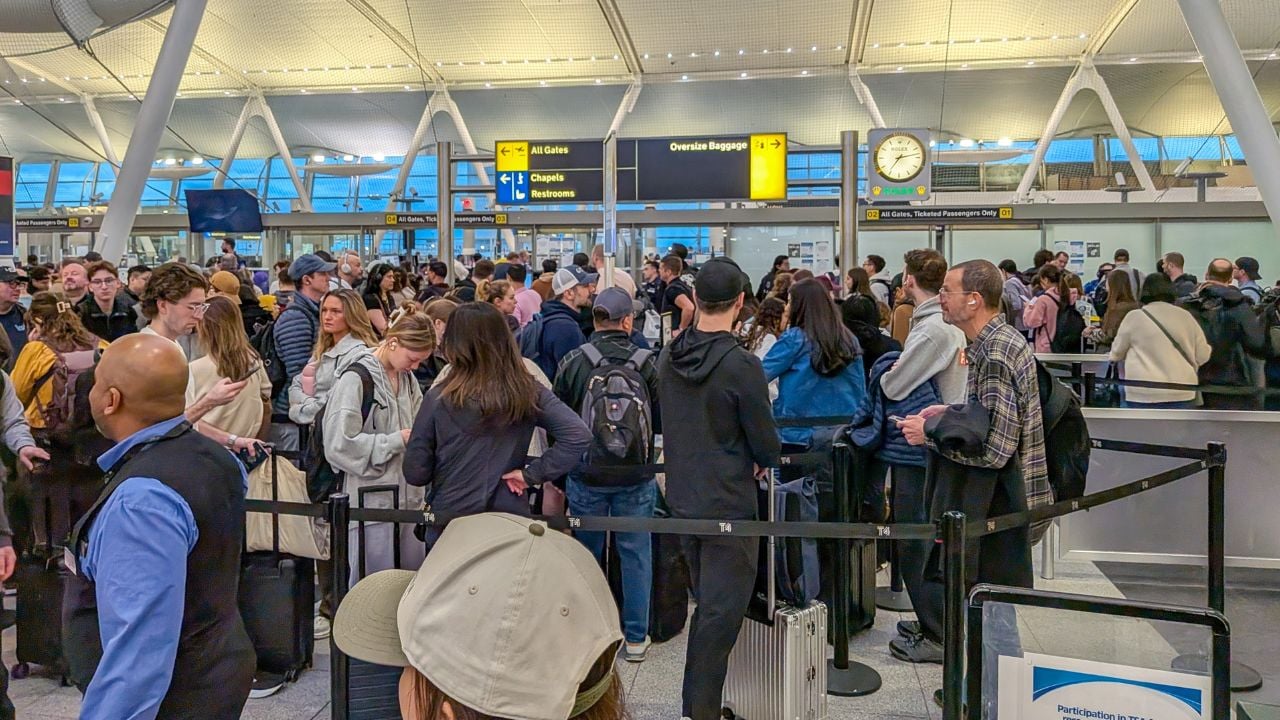
1. Security Line Surges
Orlando International Airport (MCO) moved 57 million passengers last year, more than any other airport in Florida.
Every one of them stood in the same Transportation Security Administration (TSA) line everybody else did.
Miami International (MIA), Fort Lauderdale-Hollywood (FLL), and Tampa International see the same squeeze, and their worst weeks land on the same calendar: Spring break, Thanksgiving, and the days around New Year’s.
During the 2026 spring break rush, federal staffing shortages collided with the seasonal crowds.
Orlando logged 224 flight delays in a single day, Miami logged 186, and Fort Lauderdale logged 184.
That six-week spring break stretch alone saw Tampa average up to 80,000 travelers a day.
Tampa International’s security page asks travelers to budget 20 minutes at the checkpoint on an ordinary morning.
During peak hours and holiday weeks, that wait runs closer to 45 minutes.
Arrive 45 minutes early, and the worst-case scenario still fits inside your buffer.
2. Passport Control Backups
Miami International and Fort Lauderdale-Hollywood both welcome heavy international traffic, and both make travelers pay for it at passport control.
A widely cited analysis of U.S. Customs and Border Protection data found Fort Lauderdale posts the longest average wait of any major U.S. airport studied, at close to 32 minutes.
Miami isn’t far behind.
Its average runs 23.61 minutes, the second-worst mark among the 34 major airports the study covered.
The same study found Miami’s customs booths average 44.43 passengers apiece, 18% above the typical booth’s workload.
Passenger traffic grew.
The booths didn’t.
A red-eye from South America or a cruise-season flight from the Caribbean can mean a long stand in a roped-off hallway before a single bag ever reaches the carousel.
3. MCO’s Shrinking Parking
Orlando International Airport is adding parking and taking it away at the same time.
The Greater Orlando Aviation Authority is converting about 1,500 spaces in the Terminal Top Garage into reserved spots that only pre-booked travelers can use.
Drive up without a reservation during a busy week, and those spaces are already gone.
That’s part of why the authority approved new garages at Terminal A and the newer Terminal C, chasing a goal of 8,000 additional public spaces by 2030.
Until those open, the existing garages have to handle the growth alone.
Circling for an open spot happens on many peak mornings.
Reserving a space online before you land is the only way to guarantee a spot.
MCO’s Parking Help Isn’t Everywhere Yet
Orlando International Airport turned on its new parking guidance technology in Garage C in early 2026, and nowhere else.
The rest of the airport’s garages won’t get it until summer 2027.
A driver circling the Terminal Top Garage or Garage A during a busy week gets no digital help finding what’s left until then.
That’s also where 1,500 spaces are converting to reservation-only right now.
4. MCO’s Terminal C Transfer
Orlando International Airport built Terminal C as an entirely separate building from Terminals A and B.
Reaching Terminal C from A or B means riding the Terminal Link train, catching a shuttle bus, or crossing a pedestrian bridge.
There’s no shortcut through security.
The automated train runs every 4 minutes, 24 hours a day, which sounds fast until a tight connection has you watching it pull away without you.
A shuttle bus links Terminal C only to Terminal B, not Terminal A, so check which building your gate sits in before you commit to a route.
A same-airport connection that touches Terminal C is rarely a walk-up affair.
Budget more than you think.
5. MIA’s Mile-Long Concourse
Miami International Airport stretches Concourse D nearly a mile from end to end.
American Airlines runs its biggest Florida hub out of that single concourse, moving roughly 80,000 passengers through it on a typical day.
Walking the whole thing during a tight connection isn’t realistic.
The Skytrain shortens that walk considerably, and Miami International’s own site tells travelers to budget 15 minutes just to move between terminals.
That’s before the security line.
A missed transfer at Concourse D can turn a 90-minute layover into a sprint.
6. MIA’s Rental Car Trek
Miami International Airport’s rental car counters all sit in one building, separate from the terminals.
The only way to reach it is the MIA Mover, an automated train that leaves from the third level between the Dolphin and Flamingo garages.
No shortcut exists.
None of the rental counters sit inside Miami International’s own terminals.
The Rental Car Center stays open 24 hours, but several individual operators close their own counters between 11 p.m. and 5 a.m.
Land on a late flight, and the counter you booked might already be shuttered for the night.
Check your pickup window before you book the flight, not after you land.
Psst! How much do you know about Florida’s aviation history? Take our quiz and see how many you can get right.
Quiz
Florida Airport History IQ
Test yourself on Florida’s aviation firsts, famous names, and quirky history. We bet you can’t get them all right. Prove us wrong?
Which famous aviator took off from Miami on June 1, 1937, for the first leg of her final, ill-fated flight around the world?
7. FLL's Construction Zone
Fort Lauderdale-Hollywood International Airport is in the middle of a $3.2 billion rebuild.
More than 20 separate projects are underway across all four of its terminals at once.
Terminal 1 is getting a new 12-lane security checkpoint.
A new federal inspection station for international arrivals is coming to Terminal 4.
Nobody pauses the rebuild for your flight.
Temporary signage, shifted curbside lanes, and fenced-off walkways are part of getting through Fort Lauderdale-Hollywood right now.
They'll stay part of it for years while the work continues.
The rebuild won't be finished by your next trip, or the trip after that.
8. Tampa's Mandatory Tram
Tampa International Airport (TPA) doesn't let you walk to your gate, no matter how badly you want to skip the wait.
Every one of its four airside concourses connects to the main terminal only by automated people mover.
No exceptions.
The walkway between the tracks exists for emergencies, not for passengers who'd rather stretch their legs.
Miss the platform right after a train departs, and you're standing there until the next train cycles back.
That's usually only a few minutes.
During a packed connection window, though, a few minutes is exactly what you don't have.
When Cruise Ships Flood Miami
Miami International Airport sits just a few miles from PortMiami, but their busiest days of the year rarely match up.
PortMiami counts among the world's busiest cruise terminals, and on a heavy turnaround day, seven or eight ships unload and reload at once.
That's tens of thousands of people moving between the port and the airport within a few hours of each other.
The drive between them normally takes about 15 minutes.
On the worst turnaround days, travelers have reported over four hours stuck in traffic on that same route.
That's not a typo.
The Miami-Dade Transportation Planning Organization published a 2050 Master Plan in September 2025 studying a direct rail link between the port and the airport.
The plan originally floated eight transit options and has since narrowed to two: A nine-mile MetroMover extension or a Metrorail expansion with roughly ten miles of new track and a new bridge over the Intracoastal Waterway.
MetroMover would be the cheaper build.
But its cars hold only 50 people at a time and top out around 9 miles an hour, nowhere near enough to clear a seven-ship turnaround day.
Either option carries a construction price between $600 million and $800 million, plus $9 million to $15 million a year just to run it.
9 Outdated Things Floridians Still Say Without Realizing It

Florida's road signs have said "Beachline" along State Road 528 since July 2005.
Hardly anyone driving to the beach that summer changed a word, and older Floridians still say "take the Bee Line" decades later without a pause.
9 Outdated Things Floridians Still Say Without Realizing It
9 Money Mistakes Florida Homeowners Make Every Hurricane Season
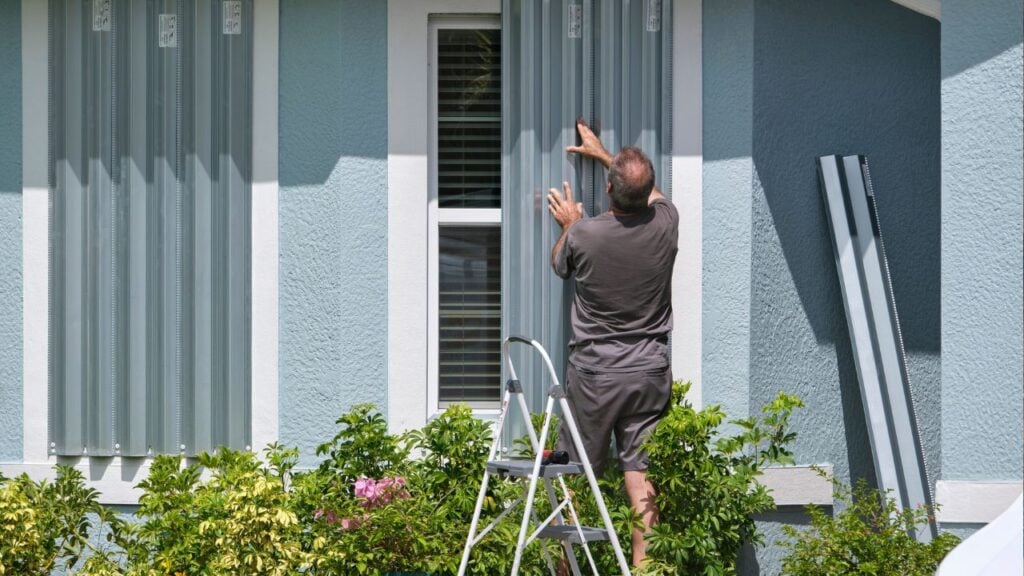
A homeowner in Punta Gorda once called her insurance company eleven months after landfall, the week her contractor finally had an opening.
Florida gives homeowners one year from the day a hurricane comes ashore to notify their insurer, and a contractor's calendar has nothing to do with that deadline.
9 Money Mistakes Florida Homeowners Make Every Hurricane Season
