
8 Things the Constitution Says That Most Californians Get Wrong

The Constitution might be the most quoted document in America and the least read.
You can probably recite a few lines from memory right now. The trouble is, some of those lines live in a different document, or no founding document at all.
Here’s what most Californians get wrong about what the Constitution says.
The Wall That Jefferson Built
You’ve heard “separation of church and state” your whole life, usually mid-argument.
Reach for it in the Constitution, though, and your hand closes on air.
The phrase isn’t there. Not in the First Amendment, not anywhere in the document.
It comes from a letter Thomas Jefferson wrote in 1802 to a group of Baptists in Danbury, Connecticut, where he described “a wall of separation between Church and State.”
What the Constitution does say is shorter and sharper.
The First Amendment opens, “Congress shall make no law respecting an establishment of religion, or prohibiting the free exercise thereof.”
That clause does the work people credit to Jefferson’s wall.
The idea is real and constitutional. The famous wording is one founding father’s private mail.
So the next time you quote the wall, you’re quoting a letter, not the law of the land.
America’s Most Famous Line Is in the Other Document
Picture the line “all men are created equal.” Now go find it in the Constitution.
You can’t, because it isn’t there.
That ringing phrase belongs to the Declaration of Independence, written by Jefferson in 1776, eleven years before the Constitution.
Same era, same founders, different document, different job.
The Declaration was a breakup letter to a king, full of soaring ideals. The Constitution was the rulebook that came later, heavy on procedure and short on poetry.
“Life, liberty, and the pursuit of happiness” lives in the Declaration too.
The Constitution’s version, tucked in the Fifth Amendment, reads “life, liberty, or property,” which is a lot less likely to end up on a coffee mug.
Mix the two documents up, and you’re in excellent company. Just know which one you’re holding.
Free Speech Doesn’t Cover Your Boss
Here’s the one that starts the most arguments online, fittingly.
The First Amendment protects your speech from the government. Read the first three words: “Congress shall make no law.”
It restrains Congress, and by extension, the rest of the government.
It says nothing about your employer, your homeowners association, or the company that runs your favorite website.
When a private business shows you the door over something you said, that’s no First Amendment violation, however much it stings.
The Amendment was built to stop the government from jailing you for your opinions, not to force a company to keep you on the payroll.
You hold enormous free-speech rights against the state.
You hold far fewer against the people who sign your check or host your posts.
It’s the distinction half the country forgets on a daily basis.
The Right to Privacy You Won’t Find
Hunt through the Constitution for the words “right to privacy” and you’ll search a long time.
They’re not in there.
For most of American history, no court had declared a general constitutional right to privacy, because the text never names one.
That changed in 1965, when the Supreme Court decided Griswold v. Connecticut.
The justices found a right to privacy living in the “penumbras,” the shadows and implications, of several amendments taken together.
It’s one of the most consequential rights in modern life, and it rests on what the Constitution implies rather than what it states.
That foundation is also why privacy keeps landing in the headlines.
A right read between the lines can be read differently by a different Court.
So your sense that privacy is a bedrock right is half right.
The bedrock is real. The words were never carved into it.
Innocent Until Proven Guilty Isn’t a Quote
You could swear this phrase sits somewhere in the Constitution, maybe near the courtroom parts.
It doesn’t. Those exact words appear nowhere in the document.
The presumption of innocence is real and protected, make no mistake.
It flows from the Due Process clauses of the Fifth and Fourteenth Amendments, and the Supreme Court spelled it out plainly in an 1895 case called Coffin v. United States.
But the snappy phrasing you know from a thousand courtroom shows was never the Constitution’s own wording.
The principle is bedrock. The catchy sentence is closer to a well-worn summary than a direct quote.
It’s a tidy reminder that the Constitution protects ideas, and the memorable lines we hang on those ideas often come later, from judges and screenwriters.
Nobody Set the Number at Nine
Nine justices on the Supreme Court feels permanent, like it was handed down on day one.
It wasn’t.
The Constitution never sets a number. It creates the Court and leaves the size to Congress, which has changed its mind more than once.
The first Court had six justices.
The number drifted to seven, briefly five on paper, up to ten during the Civil War, and back down again.
Congress finally settled on nine in 1869, and it has held there ever since, which is why nine feels eternal.
It isn’t locked in stone. As recently as 1937, President Franklin Roosevelt tried to expand the Court with justices friendlier to his agenda.
Congress turned him down, but the attempt itself was perfectly legal.
So when you hear talk of changing the Court’s size, know that nine is a habit, not a commandment.
The Word “Democracy” Never Shows Up
Comb the entire Constitution, and you won’t find the word “democracy.”
Not once.
What you’ll find, in Article Four, is a promise that the federal government will guarantee every state “a Republican Form of Government.”
That absence gets squeezed into a tidy slogan: We’re a republic, not a democracy.
The truth is roomier than the bumper sticker.
The founders used “democracy” to mean direct, town-meeting rule, where citizens vote on every question themselves.
They built a representative system instead, the kind where you elect people to do the voting for you.
Political scientists today comfortably call that a representative democracy, a constitutional democracy, or a democratic republic.
The labels overlap far more than the argument suggests.
So the missing word is real and worth knowing.
Reading it as proof of some grand either-or usually says more about the arguer than the document.
The Right to Remain Silent Came From a Courtroom
You can probably recite it cold: “You have the right to remain silent.” You’ve heard it in every cop show since the 1960s.
But search the Constitution for that script, and you’ll come up empty.
The warning comes from a 1966 Supreme Court case, Miranda v. Arizona, which is why we call it reading someone their “Miranda rights.”
The roots do run into the Constitution.
The Fifth Amendment protects you against being forced to incriminate yourself, and the Sixth guarantees you a lawyer.
But the actual words a police officer recites, the ones burned into your memory by decades of television, were written by the Court in the 1960s, not the framers in the 1780s.
The right is old. The famous speech is younger than color TV.
10 Things U.S. Presidents Have to Pay for on Their Own That Americans Are Clueless About
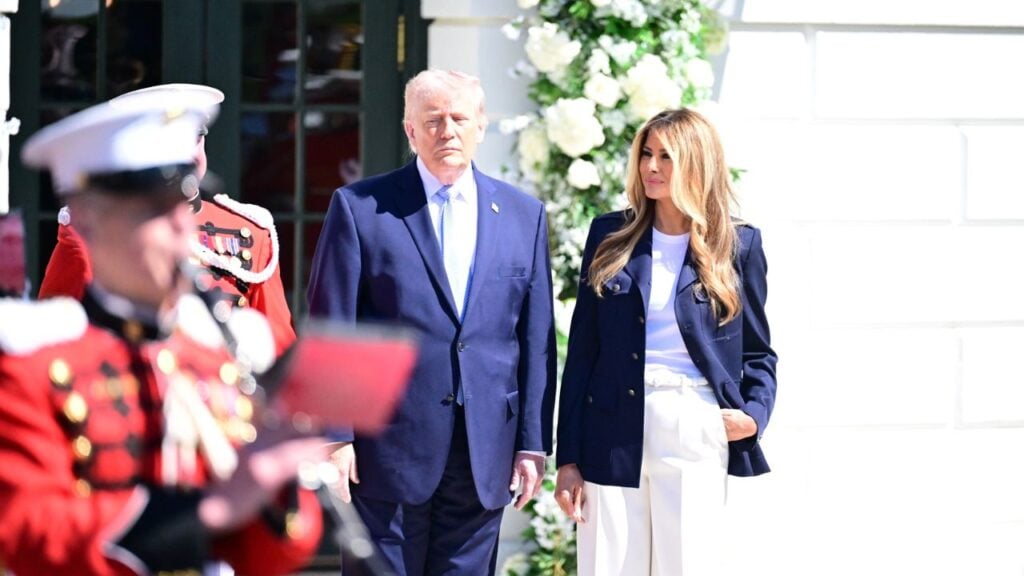
Living at 1600 Pennsylvania Avenue has obvious perks.
But the president of the United States still receives a monthly bill from the White House usher’s office, and what’s on that bill catches many Americans off guard.
10 Things U.S. Presidents Have to Pay for on Their Own That Americans Are Clueless About
7 Times Religion Almost Cost a Candidate the Presidency
Americans like to say faith is a private matter.
The voting booth tells a different story.
