
9 Bad Checkout Habits Kroger Employees Wish Ohio Shoppers Would Stop

Barney Kroger opened his first store on Pearl Street in Cincinnati in 1883 with $372 to his name and one motto: “Be particular. Never sell anything you would not want yourself.”
That rule helped build the grocer millions of Ohio families still trust with their weekly list, register after register.
But like any grocery store, a small number of customers can disrupt the experience for everyone else.
These are the bad checkout habits Kroger employees wish the small but mighty group of Ohio shoppers would stop doing.
1. Clipping Coupons at the Register
Kroger’s digital coupons live inside its app or its checkout kiosk, not in a shopper’s memory at the register.
A coupon has to be clipped before checkout starts so it has time to attach to a Kroger Plus Card account.
It can’t happen mid-scan.
A shopper who opens the app once the cashier already has three items rung up is trying to load a coupon that needs a minute to settle, and the belt keeps moving anyway.
Clip it in the parking lot, on the couch, anywhere before the cart reaches checkout, and the discount is already sitting there waiting.
2. Abandoning a Frozen Self-Checkout
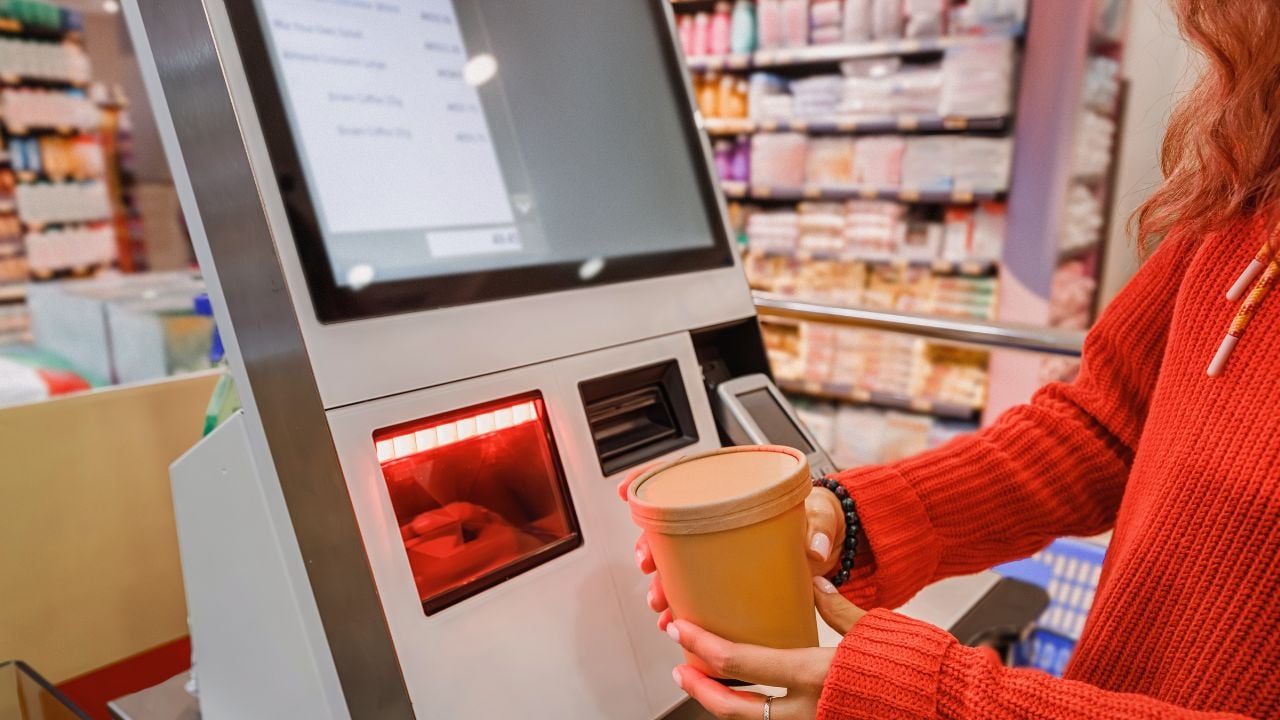
Kroger’s self-checkout terminals run on an artificial intelligence (AI) system built to catch a mismatch between what a shopper scans and what lands in the bagging area.
Kroger agreed to bring that camera system, built by an Irish firm called Everseen, to up to 2,500 of its stores starting in 2020.
The system locks the screen when it can’t confirm an item, and clearing it takes an employee, not a fresh machine.
This isn’t a fresh restart.
A shopper who walks off to a different terminal leaves the first one locked for the next customer, then trips the same freeze again on the new machine.
Kroger Already Checks Receipts in Ohio
Kroger has required a receipt check at the exit of six Columbus-area stores since May 2024, after a rise in theft at those locations.
An employee compares the receipt to what’s in the cart before a shopper leaves the building.
Those same six stores also stopped allowing suitcases, duffel bags, and rolling luggage through the door.
None of it targets one shopper over another.
Kroger calls it a standard safety step at those locations, not an accusation.
3. Stacking Multiples Without Scanning
Kroger’s self-checkout scale expects to feel one scanned item land at a time, not three identical containers set down together.
A shopper holding four cups of the same yogurt, scanning just one cup, then setting all four in the bag trips the same weight-mismatch flag the AI system was built to catch.
It fires every time.
The machine can’t tell the difference between someone in a hurry and someone trying to slip an extra item past the scale, so it treats both the same way.
Scanning each container once, even the identical ones, keeps the screen from freezing and keeps the line behind that cart moving.
4. Overloading the Express Lane
Kroger’s express lanes once posted a hard “15 items or less” limit, and the chain has since eased that sign to about 15 items instead.
Grocery chains made that change because a hard cutoff pushed shoppers to trim their cart just to qualify for the fast lane, and a smaller cart means less spent in the store, not because anyone felt singled out over one extra item.
A cart holding three weeks of groceries in the lane marked for a handful of items still undoes the entire point of having a fast lane at all.
Every shopper behind that cart in the express line loses the minutes the lane was built to save them.
5. Unready Payments
Kroger’s registers and self-checkout terminals both sit idle the moment a total appears on screen if the shopper hasn’t already pulled out a card.
Kroger built its own Kroger Pay feature to close that exact gap, bundling a shopper’s Shopper’s Card, digital coupons, and payment method into a single quick-response (QR) code that only works if it’s pulled up before the belt stops.
Unready payment ranks among the cashier pet peeves reported industry-wide, right alongside a shopper who starts digging through a purse only after hearing the final number.
Seconds add up.
A card tapped and ready before the last item scans keeps the terminal moving to the next shopper instead of holding the whole line for loose change.
Psst! How much do you know about Kroger’s history in Ohio? Take our quiz and see if you can ace it.
Quiz
Kroger History IQ
Answer these questions on Kroger’s Ohio roots and checkout tech. We bet you can’t get them all right. Prove us wrong?
In 1974, an Ohio grocery store rang up the first item ever sold using a Universal Product Code (UPC) barcode. What was the item?
6. Ditching Their Cart Mid-Line
Kroger shoppers who leave a full cart parked in line while they jog back for a forgotten item hold that spot without holding up their end of it.
The same cashier pet-peeve reporting that flags unready payment puts an abandoned cart high on the list too, whether it's blocking an aisle or parked mid-checkout.
The register in front of that cart sits empty, and everyone else in line waits on an item that was never even on the belt.
That's not fair to anyone.
A missed ingredient is worth a second trip through the store after checkout, not a five-minute pause with a cart blocking the lane.
7. Skipping the Order Divider
Kroger's checkout belts carry a plastic order divider in every lane, and many shoppers never touch it.
That same cashier pet-peeve reporting singles out a skipped divider bar as one of the more common ways one order gets tangled with the next, since the cashier is left guessing where one cart ends and another begins purely by watching hands and bags.
Guesswork isn't accuracy.
One shopper's ground beef landing on a stranger's receipt happens often enough that Kroger built the divider bar to stop it before it starts.
8. Price-Checking at Self-Checkout
Kroger built self-checkout for shoppers who are done shopping and ready to pay, not for browsing a running total.
Scanning an item just to see its price, then setting it back in the cart, freezes the terminal until an employee clears the transaction.
One tap solves it.
The Kroger app already shows the shelf price and any digital coupon attached to an item, without tying up a machine somebody else is waiting to use.
9. Grabbing Alcohol Without ID Ready
Kroger's self-checkout terminals lock the moment beer or wine crosses the scanner, no matter how ready the shopper is to bag it and go.
Ohio law makes selling to anyone under 21 a strict-liability offense, and checking a photo ID in good faith at the register is the seller's main legal defense, alongside a separate transaction-scan defense for stores that run the ID through a scanning device.
The law doesn't bend.
Kroger's Ohio Roots
Kroger's whole story starts a few miles from where many of today's Ohio stores now sit, on Pearl Street in downtown Cincinnati.
Barney Kroger opened his first grocery store there in 1883 with $372 of his own savings and one motto: "Be particular. Never sell anything you would not want yourself."
That's the whole bankroll.
More than 140 years later, Kroger still runs its corporate offices out of Cincinnati, a few miles from that same original storefront.
That original storefront is long gone today, but the Pearl Street address still shows up in Kroger's own company records as exactly where it all began.
11 Things Ohioans Are Told About Their State That Aren't True
A kid in a Dayton classroom repeats what they've heard their whole life about Ohio, word for word, and the teacher never corrects it.
That's how a wrong fact about the state outlives the person who first said it, and this list tests a few of the most repeated ones.
11 Things Ohioans Are Told About Their State That Aren't True
11 Foods Ohioans Grew Up Eating That the Rest of America Has Never Heard Of
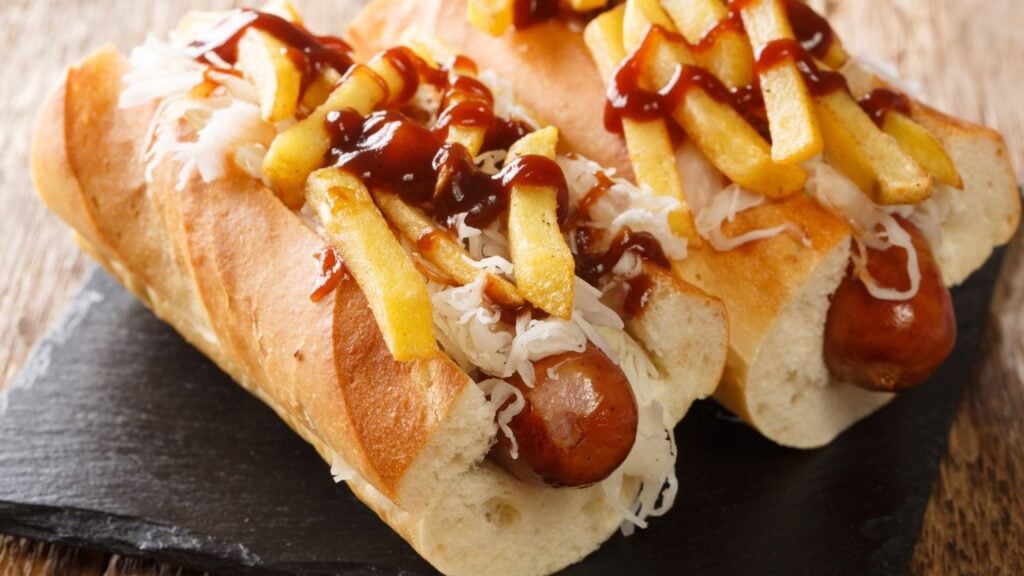
Readers of an Ohio newspaper once voted a deep-fried ball of sauerkraut their city's official food, Akron, naturally.
Foods like that never made it past the state line, so the names on an Ohio restaurant menu stop out-of-state visitors cold.
11 Foods Ohioans Grew Up Eating That the Rest of America Has Never Heard Of
