
9 California Costs That Blindside Newcomers Their First Year

Think California’s sticker shock stops once you’ve signed the lease?
It doesn’t.
The second wave lands in envelopes from agencies you’d never heard of, and on a pay stub you’ll want to read twice.
These are the costs that blindside newcomers during their first year in California.
Note: This is general information, not financial or tax advice. Tax rules and dollar amounts are subject to change.
Your Second Property Tax Bill
Buy a house in California, and the county assessor reappraises it at what you paid, not at what your neighbor paid in 1994.
The county bills you for that gap separately, in what it calls a supplemental tax bill.
It lands weeks or months after closing, long after you’ve stopped thinking about escrow.
Here’s the part that catches people: Your lender never sees it, even when your regular taxes come out of an impound account, so the bill goes straight to you, per the California State Board of Equalization.
Miss the due date, and the penalties stick.
Close escrow between January and May, and you’ll get two supplemental bills instead of one.
Two.
Registering Your Out-of-State Car
That paid-off pickup you drove out of Texas isn’t free to keep in California anymore.
New residents get 20 days to register a vehicle brought in from another state, and 10 days to swap the driver’s license.
The clock starts fast.
Registration itself runs $76, the California Highway Patrol takes $34, and the transportation improvement fee reaches $231 on a vehicle worth $60,000 or more.
Then comes the vehicle license fee, which is 0.65% of your car’s value every year, according to the Department of Motor Vehicles (DMV).
So, a $40,000 car owes about $260 on that line alone, on top of everything else.
Most cars arriving from another state need a smog check before any of it goes through.
Power at 33 Cents
Californians pay more for electricity than anyone else in the lower 48.
Residential power here averaged 33.35 cents per kilowatt-hour in March 2026, against a national average of 18.56 cents, per the U.S. Energy Information Administration (EIA).
Nearly double.
Pacific Gas and Electric, Southern California Edison, and San Diego Gas & Electric also price by the hour, so the air conditioning you run at 5 p.m. in Fresno bills higher than the same hour at 11 a.m.
Newcomers from a cheap-power state tend to learn this in August, when a Central Valley heat wave and a time-of-use rate meet on the same statement.
Ceiling fans get popular fast.
Earthquake Coverage Costs Extra
Your homeowners policy in California covers fire, theft, and a tree through the roof.
It doesn’t cover the ground moving.
Earthquake damage needs a separate policy, the California Department of Insurance says, and every new homeowner decides on that one alone.
The deductibles work differently, too. California Earthquake Authority policies carry deductibles of 5% to 25% of your dwelling coverage, not a slice of the claim.
Read that again.
On a home insured for $500,000, a 15% deductible leaves the first $75,000 of damage to you.
Renters face the same split, since a renters policy covers the burst pipe and not the shaking that caused it.
Mello-Roos on Newer Homes
Tour a newer subdivision in Roseville, Folsom, or Chino Hills, and the schools look new because somebody is paying for them.
That somebody is the homeowner.
Under the Mello-Roos law, a local agency draws a boundary around a new development, calls it a community facilities district, and levies a special tax on every parcel inside it to pay off the bonds for roads, parks, and school buildings.
It appears on your property tax bill, on top of the base rate, and it can run for decades.
Two houses on the same street can carry very different tax bills. One sits inside the district line, and the other sits outside it.
Ask before you offer.
Psst! How ready is your budget for a California move? Run through this checklist and see how many you can tick off.
Sixty-Three Cents Per Gallon
The number on the pump in Bakersfield isn’t a typo, and the oil companies aren’t the whole story.
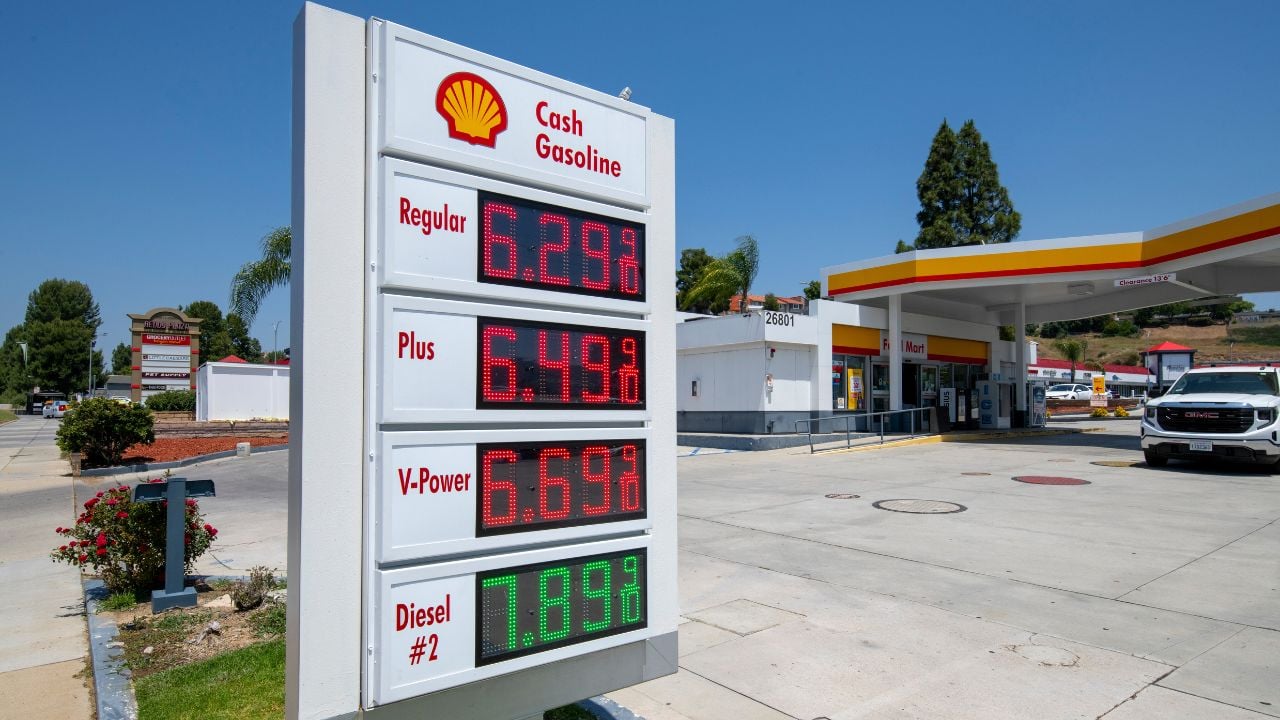
California’s state excise tax on gasoline rose to 63.4 cents a gallon on July 1, up from 61.2 cents, according to the California Department of Tax and Fee Administration (CDTFA).
The federal government adds another 18.4 cents.
Sales tax goes on top of that, and the cleaner-burning summer blend sold here costs refiners more to make than the gasoline they ship to Reno.
Fill a 15-gallon tank, and roughly $12 of what you hand over is fuel tax.
Every week.
That’s why the Costco line in Sacramento wraps around the building on a Saturday morning.
Sales Tax on Everything
California’s statewide sales tax rate is 7.25%, and the CDTFA notes that local districts stack their own taxes on top, anywhere from 0.10% to 2.00%.
That base rate is the highest of any state, per the Tax Foundation, a nonpartisan tax policy research group.
You feel it.
Buy a washer and dryer, a mattress, and a laptop in your first month, and the sales tax alone can run past $200.
Cross a city line, and the rate changes, which is why some shoppers in Los Angeles County drive one exit farther for an appliance.
SDI on Every Paycheck
Still working? Then a line you’ve never seen shows up on your first California pay stub.
State Disability Insurance (SDI) takes 1.3% of your wages in 2026, the Employment Development Department (EDD) says, and the ceiling that used to cap it is gone.
No cap at all.
On $90,000 of pay, that works out to about $1,170 a year, withheld before you see a dollar of it.
The money funds state disability benefits and paid family leave, so it buys you something.
It just doesn’t ask first.
Psst! How much do you know about the cost of living in California? Take our quiz and see if you can ace it.
Quiz
California Money Pop Quiz
Answer these questions on taxes, fees, and the fine print of living in California. We bet you can’t get them all right. Prove us wrong?
California’s top personal income tax rate is the highest of any state. What is it?
Deposits on Every Bottle
Every canned drink you buy in California carries a deposit called California Redemption Value (CRV), printed as its own line under the price.
It runs 5 cents on containers under 24 ounces and 10 cents on anything bigger, according to CalRecycle, the state's recycling agency.
Wine and liquor joined the program in 2024, and a box of wine carries a 25-cent deposit.
The nickels add up.
A household buying a case of sparkling water every week hands over more than $50 a year in deposits before anybody drinks anything.
Getting that money back means bagging the empties and hauling them to a recycling center, where an attendant weighs them and pays out in cash.
Many Californians never bother, which is what the cart-pushers working the alleys behind a Long Beach Trader Joe's are counting on.
9 Reasons Californians Say They're Done With the State
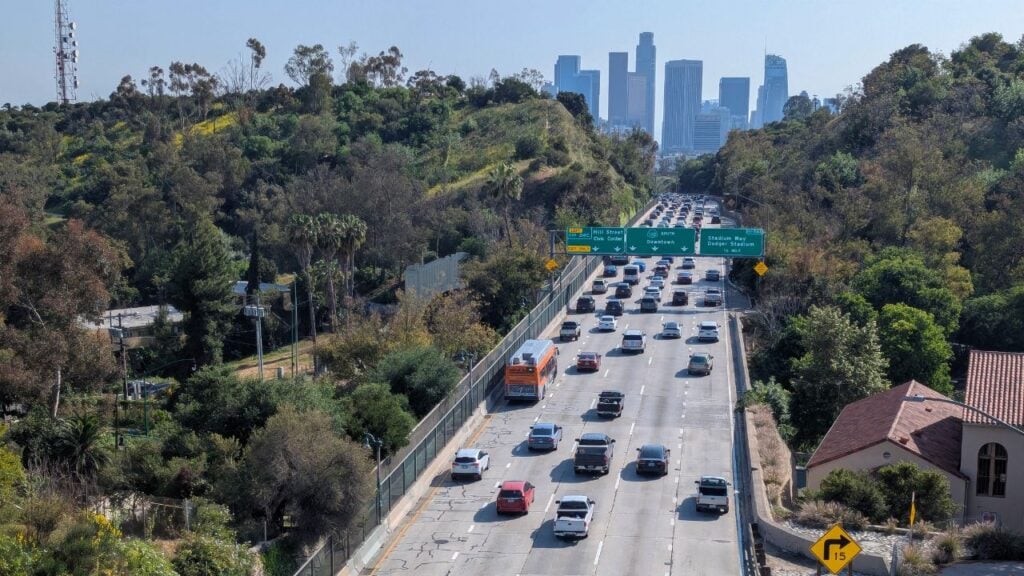
A "For Sale" sign goes up in the front yard, and the neighbors already know how the story ends.
Another family in Sacramento is trading the Golden State for somewhere a paycheck stretches further, and they can list their reasons in order.
9 Reasons Californians Say They're Done With the State
10 WinCo Quirks That Surprise First-Time California Shoppers
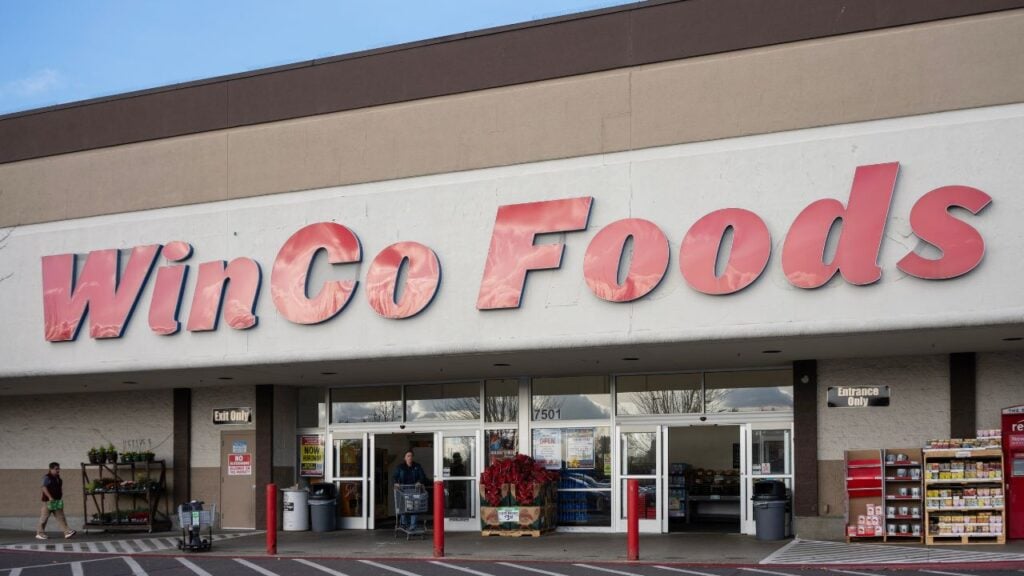
Word travels fast when a grocery store keeps its prices low, so WinCo Foods keeps pulling in shoppers from Sacramento to San Diego.
Then those shoppers walk in and find a store that does almost everything its own way, starting at the checkout.
10 WinCo Quirks That Surprise First-Time California Shoppers
