
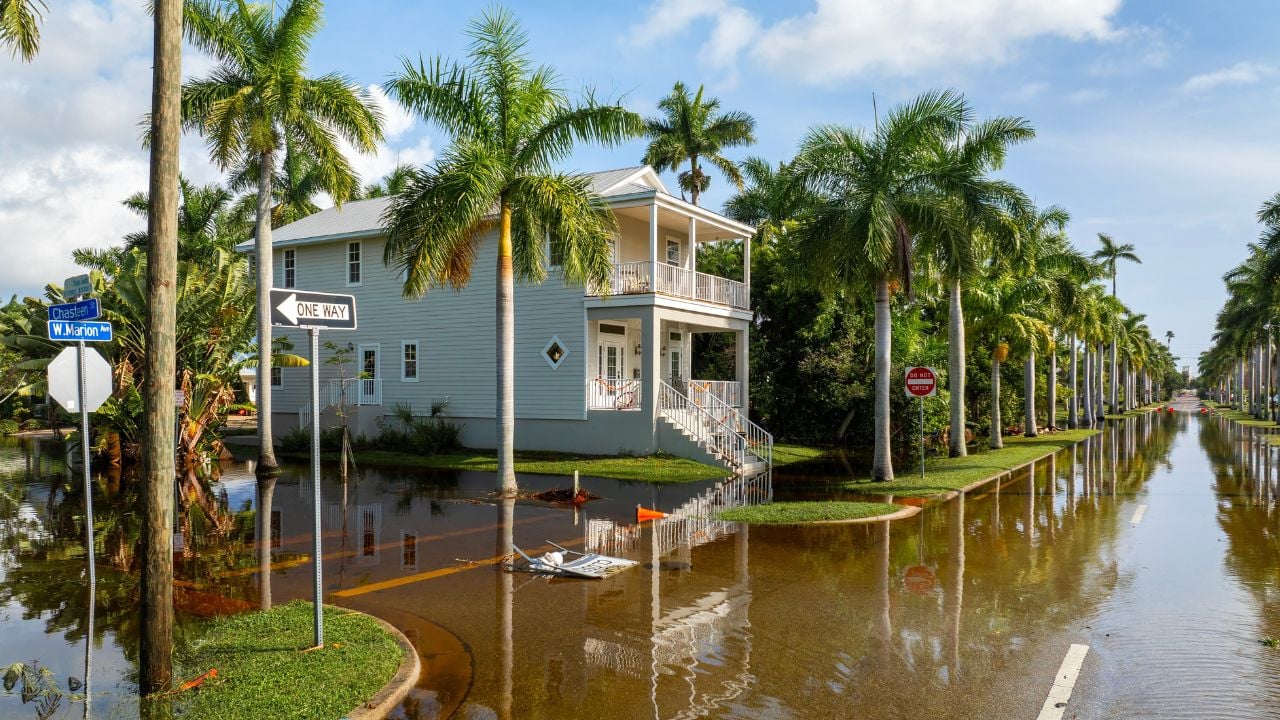
9 Flood Zone Myths That Cost Floridians Thousands

By January 1, 2027, Citizens Property Insurance will require flood coverage on every wind policy it writes in Florida, in every zone on the map.
The phase-in started in 2024, by home value.
That change says more about Florida’s flood risk than any zone letter does.
These are the flood zone myths that cost Floridians thousands.
Note: This is general information, not insurance or legal advice. Flood zone rules and premiums are subject to change, so check the specifics with your insurer or agent.
1. No Risk in Zone X
Zone X is FEMA’s moderate-to-low-risk flood zone, and homeowners who land in it often treat that letter as a clean bill of health.
It isn’t a clean bill of health.
The Federal Emergency Management Agency (FEMA) reports that 1 in 3 flood insurance claims come from areas mapped as low- or moderate-risk.
That’s not the high-risk zones many Floridians picture when they hear the word “flood.”
Zone X flooding often follows ordinary heavy rain, not just a named storm.
Skip coverage there, and a homeowner covers every dollar of the repair alone.
Neither a mortgage lender nor state law generally requires flood insurance outside a high-risk zone, though Citizens Property Insurance policyholders are becoming a fast-growing exception.
2. Your Policy’s Flood Coverage
Florida homeowners insurance, including a standard Citizens Property Insurance policy, excludes flood damage as a matter of course.
It needs separate coverage.
Citizens now requires proof of separate flood coverage under Florida Statute 627.715.
That mandate phased in by home value starting in 2024, and it reaches every remaining policy by Jan. 1, 2027.
A homeowner who skips that second policy and later floods pays the full repair cost out of pocket.
That’s on top of whatever Citizens or a private insurer already covers for wind and fire.
Two policies, two premiums, two separate claims.
3. Wind Coverage for Floods
Does wind or hurricane coverage pay for the floodwater that comes in during a storm too?
Many homeowners who ride out a hurricane assume it does.
It doesn’t.
Flood insurance and wind insurance are separate perils, and which one pays depends on what damaged the house, not which storm caused it.
Storm surge, wind-driven rain pooling on the ground, or a canal that overflows during a hurricane all count as flood, the same as an ordinary summer downpour.
A homeowner with wind coverage but no flood policy can watch an adjuster approve the roof claim and deny the four inches of water that ruined the flooring.
4. Your Zone Letter’s Price
FEMA’s Risk Rating 2.0 methodology prices every Florida flood policy individually now, weighing flood frequency, distance to water, foundation type, and the cost to rebuild.
That’s new.
The zone letter alone used to decide the price, A versus X versus V, and many homeowners still shop that way.
Two homes on the same street in a high-risk, elevation-mapped flood zone (AE) can carry very different premiums once their elevation and construction differ.
A Florida policy that hasn’t reached its full individualized rate yet can rise as much as 18% a year under the federal cap.
The increase adds hundreds of dollars to the bill annually for several years running.
None of that has anything to do with the letter on the map.
Elevation Certificate Math
An elevation certificate is the survey Florida homeowners use to prove their home’s first-floor height above Base Flood Elevation.
It commonly costs a few hundred dollars and takes about a week to schedule.
Under Risk Rating 2.0, that document can move a home into a lower rate band, since first-floor height is one of the factors FEMA weighs when it prices a policy.
Skip the survey, and FEMA rates the home on its default assumptions instead, which are rarely as generous as an actual measurement.
5. Buying Flood Coverage Anytime
A tropical system enters the forecast, and homeowners often assume there’s still time to call an agent and buy flood coverage before it makes landfall.
They don’t.
Standard National Flood Insurance Program (NFIP) policies carry a 30-day waiting period before coverage takes effect, with exceptions mainly for a new home purchase tied to a loan.
Buy a policy the week a tropical system forms, and it won’t pay a claim from that same storm.
Atlantic hurricane season runs through the end of November, which leaves weeks to close that coverage gap before the scramble starts.
6. Flood Coverage for Renters
A landlord’s flood policy in Florida covers only the structure, and it pays nothing toward a tenant’s personal belongings inside the unit.
Renters often assume that’s not their problem, since they don’t own the building.
They’re wrong.
NFIP sells renters a contents-only policy covering up to $100,000 in belongings, completely separate from whatever the landlord carries.
A renter who skips it and floods out replaces every piece of furniture, every mattress, and every box of clothes with cash from their pocket.
7. Your Ground Floor’s Coverage
Florida’s coastal homes are often built on stilts or pilings, with a garage, storage room, or bonus space enclosed underneath the main living floor.
NFIP treats that space differently.
NFIP excludes personal property kept in a basement or in the enclosed space below an elevated home’s living floor.
Finished walls, flooring, and furniture down there are excluded from both building and contents coverage, even though the same items upstairs are covered.
A homeowner who converted that space into a den or a home office often finds out about the exclusion only after the water recedes.
8. Inland Flood Safety
Flood insurance isn’t just a coastal purchase, though homeowners who live nowhere near a coast or a river often skip it on the theory that water can’t reach them.
Flooding reaches inland homes too.
The National Weather Service tracks Florida flash flooding as a hazard that isn’t limited to riverbanks or the coast.
A tropical system can dump inches of rain on a Florida community long after its wind dies down, sometimes nowhere near where it made landfall.
A subdivision built where an old drainage field used to sit can flood from rain alone, with no named storm anywhere near it.
Just one inch of water in an average-size home causes roughly $25,000 in damage, according to FEMA’s flood insurance program.
An inland homeowner without a policy pays every dollar of that out of pocket.
9. FEMA’s Disaster Assistance
Federal disaster assistance for flood damage requires a presidential disaster declaration before a dollar moves.
FEMA grants have averaged about $5,000 per household in recent years.
Flood insurance claims over that same stretch averaged closer to $69,000, and NFIP payouts never have to be repaid the way a Small Business Administration disaster loan does.
Homeowners without a policy often count on that federal aid to make them whole if the water ever comes.
It usually doesn’t.
A homeowner counting on Washington instead of a policy could face thousands of dollars in repairs while federal aid caps out at a few thousand.
That aid isn’t even guaranteed to come through.
Psst! A flood zone letter alone can span the gap between no insurance requirement at all and a mandatory policy in FEMA’s highest premium band. Compare all seven zones side by side below.
Your Changing Flood Map
Florida’s flood maps aren’t permanent, and FEMA revises them county by county as construction, drainage, and rainfall patterns shift over time.
Nobody applies automatically.
A homeowner who believes a property was mapped into the wrong zone can apply for a Letter of Map Amendment through FEMA’s online portal.
A successful one can lower both the zone and the premium.
A map update that pushes a home into a higher-risk zone works differently.
FEMA’s Newly Mapped discount lets a homeowner lock in a lower rate by buying or renewing within the first 12 months after the change.
After that, future increases are capped at 18% a year until the policy reaches its full-risk rate.
Congress has extended the National Flood Insurance Program’s authority only through Sept. 30, 2026.
If that deadline passes without action, FEMA can keep paying valid claims but has to stop selling and renewing policies until lawmakers act.
8 Things New Florida Retirees Wish They Had Planned for Besides Money

Florida retirees often spend years lining up the money side of retirement, from property tax bills to Medicare premiums to a 401(k) withdrawal plan.
Few plan for the Tuesday morning with nothing on the calendar, and that gap catches many new retirees off guard.
8 Things New Florida Retirees Wish They Had Planned for Besides Money
9 Florida HOA Rules That Blindside First-Time Buyers
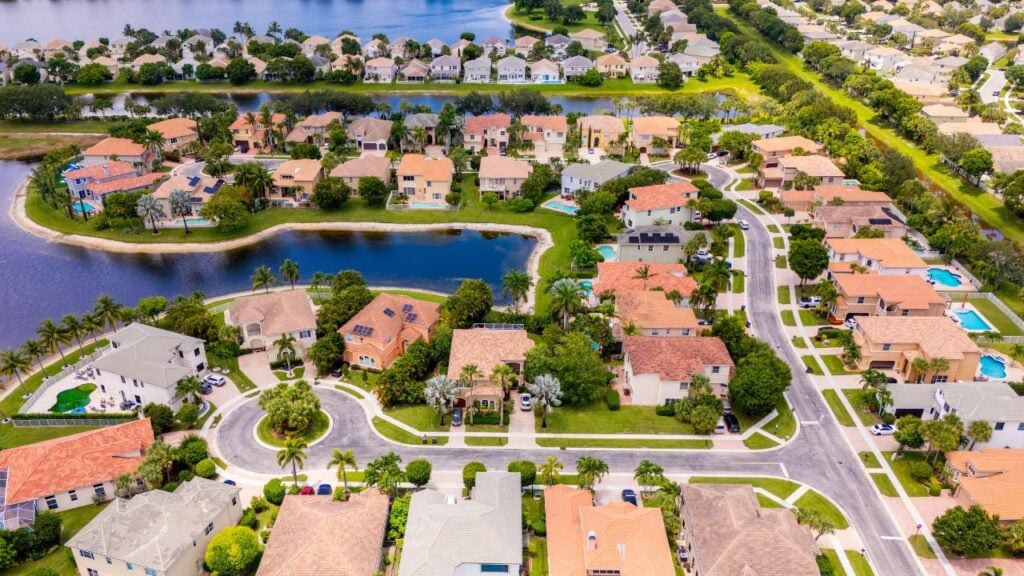
A moving truck is barely empty in a new Cape Coral driveway when a certified letter shows up in the mailbox, and it isn’t a welcome basket.
These are the Florida homeowners association rules that catch first-time buyers off guard, sometimes before every box is unpacked.
