
9 Florida Foods Northerners Have to Be Talked Into Trying

Tell a newcomer that the peanuts are boiled, and you might get a funny look.
Many Floridians will tell you some local favorites sound stranger than they taste.
Here are the Florida foods transplants may need a nudge to try.
1. Swamp Cabbage
Swamp cabbage is the bud of the sabal palm, the tree Florida picked as its state tree.
Tell a dinner guest it came out of a palm tree, and many newcomers set their fork down.
The University of Florida’s Gardening Solutions guide says the bud has a cabbage-like flavor.
The catch?
Taking the bud kills the palm, which means a plate of swamp cabbage costs you a whole tree.
A cabbage palm growing out of place is your chance to try a dish of swamp cabbage.
2. Gator Tail
Gator tail is meat from an alligator’s tail.
The name puts off many first-timers.
If you order it, The Black Hammock, a restaurant near Orlando, says gator tail is often fried.
The texture is firm and the flavor is mild, and the meat also goes into stews, soups and sausages.
Florida’s statewide alligator harvest has drawn national and international recognition as a model program since 1988, the state’s wildlife commission says.
The open period runs September 12 through November 1.
You can also find a list of licensed alligator meat processors.
3. Conch Fritters
Conch fritters are deep-fried and show up on Keys menus next to chowder and salad, according to Visit Florida Keys.
Conch is no longer harvested in the Keys but is imported.
The state’s wildlife commission says queen conch may not be commercially or recreationally harvested or sold in Florida.
So where’s it from?
Some seafood restaurants you’ll visit get their conch from farms in the Caribbean and the Bahamas, not Florida waters, Fox Weather reported in 2025.
4. Datil Peppers
A 2021 post from the University of Florida’s extension office in St. Johns County calls datil peppers an heirloom tradition there and describes the heat as intense.
Respect the heat.
Growers raise them at small farms and home gardens across the tri-county area.
Credit for the pepper’s heritage goes to the Minorcans of the St. Augustine area.
If you’re curious, sample it in a jelly or a hot sauce before you commit to the raw pepper.
Where Datil Peppers Show Up in Food
Datil peppers go into more foods than hot sauce.
Relishes, barbecue sauces, mustards and honey are made with datil peppers too.
5. Lionfish
Lionfish are an invasive species in Florida waters, and the wildlife commission’s lionfish page tells you to “Eat more lionfish!”
The harvest season is open year-round.
Divers, anglers and commercial harvesters are encouraged to remove them to limit harm to native marine life.
There’s also a list of restaurants serving lionfish, so you don’t have to spearfish for dinner.
Psst! How much do you know about these foods? Take our quiz and see if you can ace it.
Quiz
Florida Food Facts
Answer nine questions on Florida foods and the rules behind them. We bet you can’t get them all right. Prove us wrong?
What kind of offense is it to take a queen conch from the wild in Florida?
6. Boiled Peanuts
Boiled peanuts are fresh peanuts, called green peanuts, cooked in a saltwater solution instead of roasted.
Wet peanuts?
That's what many first-timers think, especially if you grew up on roasted peanuts.
A North Florida tourism post reported that the owners of Maria's Dixie Nut House in Oldtown had been serving boiled peanuts for 34 years, starting at a roadside stand.
The shop has green peanuts from May through October and sells jumbo peanuts about twice the size of normal ones.
Try one bag first, and you can decide for yourself.
A 2017 post from University of Florida extension experts in Gilchrist County called Florida a major producer of fresh market peanuts, thanks to its long growing season.
Fresh peanuts take less time to cook than dry peanuts.
7. Smoked Mullet
Smoked mullet is a whole fish butterflied down the back and smoked over hardwoods, a Gulf Coast tradition that Saveur calls "Southern Lox."
The magazine describes the flavor as rich and nutty.
If you're not sold on a whole fish, you can start with mullet dip, which blends the fish with cream cheese and sour cream.
It pointed you to smokehouses and fish markets in St. Petersburg, Sarasota, Tampa, Apollo Beach and Cortez.
In 2016, it reported that diners had drifted toward leaner, lighter-flavored fillets, which left a darker, oilier fish like mullet a harder sell.
8. Stone Crab
Stone crab means claws.
The commission's season starts October 15 and ends May 1, and only claws may be harvested.
Like other crustaceans, a stone crab can grow its claws back, though it needs a lot of food to do it.
Picture a whole crab on your tray and you're picturing the wrong dinner.
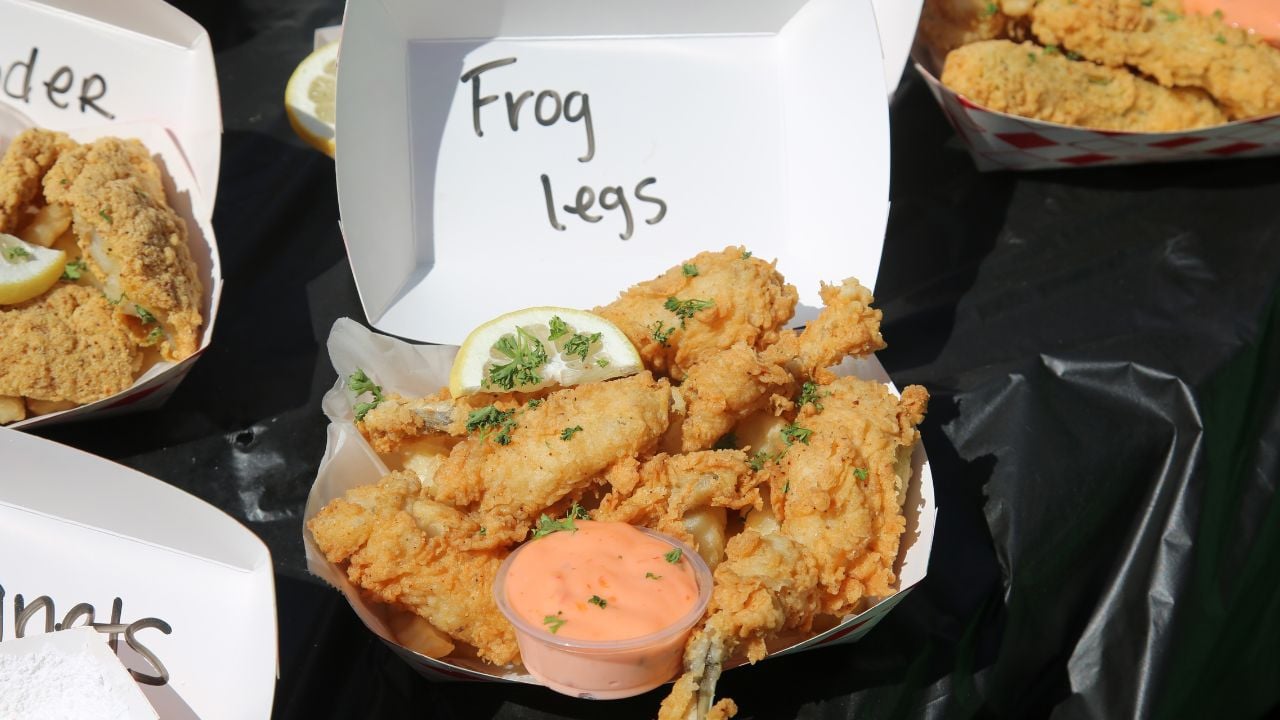
9. Frog Legs
Frog legs are the headliner at Fellsmere's Frog Leg Festival, which the festival's site bills as the 36th annual edition, held in January.
A frog leg dinner is served with grits, coleslaw and hushpuppies.
If you'd rather sample, an Indian River County tourism blog says a frog or gator pop serves up a small portion on a stick.
Florida's wildlife commission says every frog except three protected species can be taken with no season, no bag limit and no recreational license.
Selling frogs is a different story, since you need a commercial fish dealers license to sell them or to take them to sell.
8 Florida Beach Rules Locals Follow That Are Never Posted

A folding chair on wet sand can start an argument at the water's edge.
Beach etiquette often goes unposted.
8 Florida Beach Rules Locals Follow That Are Never Posted
7 Florida Roadside Attractions Floridians Assume Closed Years Ago

Think the old roadside stops disappeared along with the drive-in theaters?
Many people haven't checked in years.
7 Florida Roadside Attractions Floridians Assume Closed Years Ago
