
9 Frugal Boomer Habits Younger Tennesseans Laugh At Until They Try Them

If there’s a chest freezer in your garage packed with last summer’s sales, the grandkids probably think it’s overkill.
It could be saving you more than they’d guess, though.
Here are the frugal boomer habits younger Tennesseans laugh at until they try them.
Note: This is general information, not financial or food-safety advice. Prices and guidelines are subject to change, so check canning details with your local University of Tennessee (UT) Extension office.
1. Home Canning
Home canning green beans takes a pressure canner, UT Extension’s Bedford County office says.
The risk is botulism.
Mississippi State University Extension puts the cost of a quart of tomato sauce from home-grown tomatoes at about $2.56.
That compares with $7 to $9 for a name-brand sauce at the market.
The dial gauge on your pressure canner needs to be tested annually.
Bedford County’s Extension office does that testing free of charge.
All you carry in is the canner lid with the gauge.
The test takes only minutes.
Pressure Canner or Boiling Water Canner
Pressure canning is the only method the National Center for Home Food Preservation (NCHFP) recommends for canning meat, poultry, seafood and vegetables.
Tomato sauce works differently: NCHFP’s tomato sauce recipe gives process times for a boiling-water canner as well as pressure canners.
Tomatoes need added acid for either method, such as 1 tablespoon of bottled lemon juice per pint.
2. Chest Freezers
An Energy Star certified chest freezer costs about $30 a year to run, while an upright costs about $60.
If you fill it with a side of beef, you pay by hanging weight.
Oklahoma State University Extension says 24% to 45% of that weight is lost to cutting, trimming and boning.
In its 2016 example, $1.25 a pound of carcass weight, with cutting and wrapping included, works out to $1.78 a pound of packaged meat.
A side yields about 225 pounds of cut meat, and you need a cubic foot of freezer space for every 35 to 40 pounds of it.
That’s about six cubic feet.
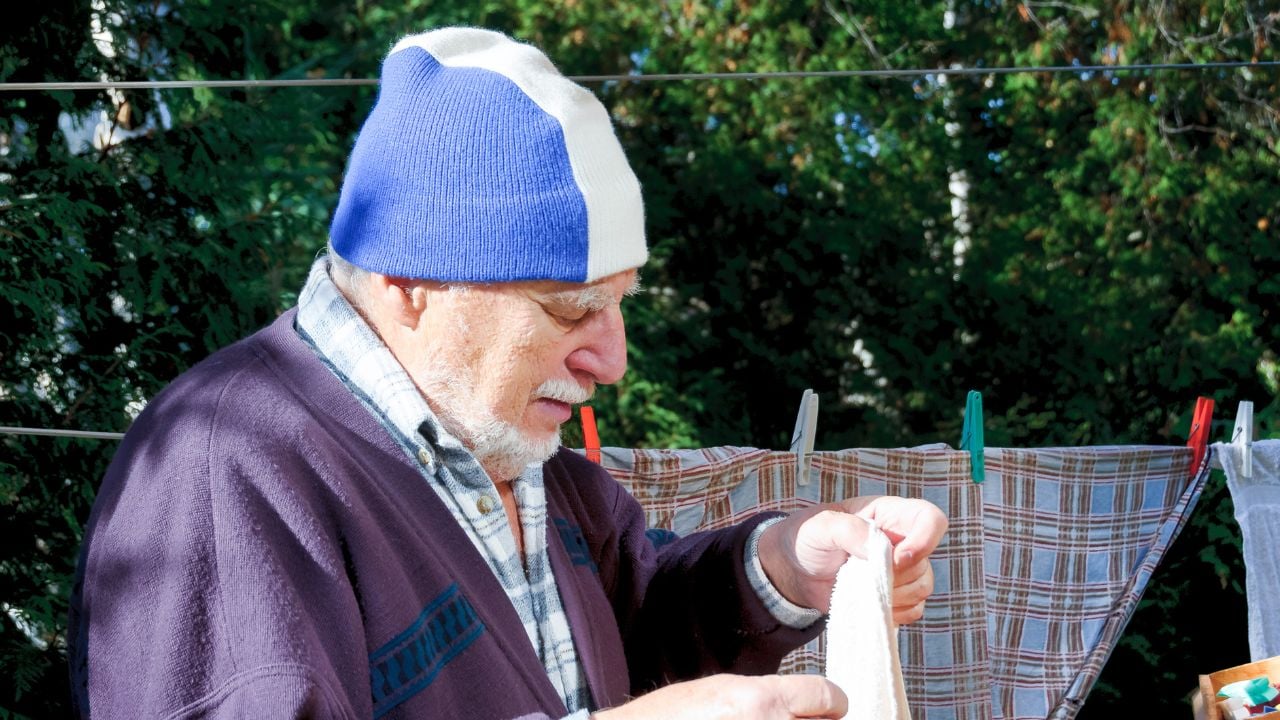
3. Hanging Laundry on the Line
University of Michigan researchers estimate that line drying every load could save a household upwards of $2,100 over a dryer’s lifetime.
Household dryers use about 3% of the nation’s residential energy, the university says.
Some younger people laugh at a clothesline until a dryer repair bill shows up.
When it rains, you can hang the same load on a drying rack indoors.
4. Turning Down the Thermostat
The Tennessee Valley Authority recommends setting your thermostat to 68.
Turn it down one degree, and you save around 3% on your electric bill.
If you’re at 72 now, that’s four degrees, or roughly 12%.
5. Cash Envelopes
Cash envelopes, as Ramsey Solutions describes them, give you a set amount of cash for each budget category every month.
If you’re paid twice a month and budget $700 for groceries, you put $350 in the grocery envelope after each paycheck.
When an envelope is empty, you stop spending in that category until next month.
Many younger people laugh at a stack of envelopes until the card statement arrives.
The Federal Reserve’s preliminary figure for the second quarter of 2026 puts the average annual rate on commercial bank credit card accounts that were charged interest at 22.15%.
If you leave the envelope at home by mistake, the guide says to turn your car around.
Psst! How much do you know about saving money the old-fashioned way? Take our quiz and see if you can ace it.
Quiz
Frugal Habits IQ
Answer these questions on frugal habits, groceries and cars. We bet you can’t get them all right. Prove us wrong?
A full freezer holds its temperature for about how long when the power goes out and the door stays shut?
6. Yard Sale Shopping
Yard sale shopping can save you the sales tax a Tennessee store would charge.
That tax can include up to 2.75% in local sales tax on top of the state rate.
Tennessee's tax rules exempt casual and isolated sales by people who aren't in the business of selling.
Yard sale shopping can turn into a road trip, too.
The 127 Yard Sale was scheduled for August 6 to 9 in 2026 along 690 miles of U.S. Highway 127, from Addison, Michigan, to Gadsden, Alabama.
Roadside sales line the way during the sale through Michigan, Ohio, Kentucky, Tennessee, Georgia and Alabama.
7. Driving the Old Truck
Your older truck has company on the road, since S&P Global Mobility put the average age of vehicles on U.S. roads at 12.8 years in 2025.
AAA's 2026 study puts the cost of owning and operating a new vehicle at $12,863 a year, based on top-selling models driven 15,000 miles a year.
In the same study, those vehicles lost an average of $4,422 in value each year.
If you're driving a truck that's several years old, it has already lost part of that value.
Some younger drivers laugh at a faded pickup until they see a new truck payment.
8. Sunday Leftovers
Sunday leftovers are a cheap fix for wasted food, which the Environmental Protection Agency (EPA) estimates costs each U.S. consumer $728 a year.
For a household of four, that comes to $2,913 a year.
The U.S. Department of Agriculture (USDA) says leftovers keep three to four days in the refrigerator.
For Sunday's dinner, that means Wednesday or Thursday is the limit.
Frozen leftovers are safe indefinitely, though they can lose moisture and flavor after three to four months.
Write the date on the container, and you won't have to guess.
9. Buying in Bulk
Buying in bulk saves you money only when the price per unit comes out lower, UT Extension says.
In its example, a 1-pound bag of carrots at $0.89 costs $0.89 a pound, and a 5-pound bag at $3.54 costs $0.71 a pound.
That makes the 5-pound bag about 20% cheaper by the pound, as long as you use it all.
Reusing Margarine Tubs
Margarine tubs can hold your leftovers safely when the tub originally held food, Utah State University Extension says in its 2009 guidance.
Yogurt containers and margarine tubs are made from polypropylene, the plastic marked with a number 5.
Bread bags are a different plastic, low-density polyethylene, which probably isn't the best choice for long-term food storage.
Old Canning Shortcuts
If you inherited a family canning method, NCHFP doesn't recommend open-kettle canning or processing freshly filled jars in a conventional oven.
Those practices don't prevent all risks of spoilage.
Canning powders don't replace heat processing, either.
8 Things a Tennessee Landlord Can't Legally Do to Renters in 2026

When a problem comes up with your landlord, it helps to know where the line is.
A few of the answers may surprise you.
8 Things a Tennessee Landlord Can't Legally Do to Renters in 2026
4 Things Tennesseans Pay More for at Kroger Than They Realize

You place a quick Kroger Pickup order on your way home.
Your receipt may tell a different story than the shelf tags did.
4 Things Tennesseans Pay More for at Kroger Than They Realize
