

9 Georgia Laws Still on the Books That Nobody Believes Are Real

Georgia rewrote its entire legal code from scratch in 1982, replacing a version that had stood since 1933.
Lawmakers meant the rewrite to clear out anything obsolete or unconstitutional.
A pile of odd laws slipped through anyway.
These are the Georgia laws almost nobody believes are real.
Note: This is general information, not legal advice. Some of these laws are rarely enforced, and interpretations can shift with new court rulings and legislative sessions, so specifics are subject to change.
1. Calling an Onion ‘Vidalia’
Georgia’s Vidalia Onion Act makes it a crime to slap that name on the wrong onion.
Not a small crime, either.
Under O.C.G.A. §§ 2-14-130 through 2-14-138, selling, labeling, or advertising onions as “Vidalia” without growing them in the state’s official 20-county production area is a felony.
A conviction can mean prison time on top of a fine up to $5,000.
Big stakes for a vegetable.
The Georgia Department of Agriculture still enforces the trademark today, chasing down mislabeled bags at farmers markets and grocery stores alike.
The Math Behind Georgia’s Onion Felony
Georgia’s Vidalia Onion Act treats a mislabeled bag as a felony, not a citation.
A conviction carries a fine of $1,000 to $5,000.
It also carries one to three years in prison.
2. Camping in the Passing Lane
Georgia treats camping in the passing lane as a jailable misdemeanor, not a simple fix-it ticket.
A conviction under O.C.G.A. § 40-6-184 can carry up to 12 months in jail on top of a $1,000 fine and three points on a license.
Driving at the speed limit doesn’t protect a driver from the charge.
Driving faster than the limit doesn’t either.
The only thing that matters is a faster car closing in from behind while a driver sits in that left lane.
Move over anyway.
There’s no radar or breath test involved.
A trooper’s own read of whether traffic behind was slowed is usually the entire case.
Georgia State Patrol wrote more than 300 of these citations in the law’s first year alone, back in 2014.
Troopers still write them along congested stretches of I-285, I-75, and I-85.
3. Underage Drinking at Home
Georgia makes it a crime everywhere in the state for a parent to hand their own child a drink.
One narrow exception cracks that open.
O.C.G.A. § 3-3-23(c) lets a parent or guardian give alcohol to their own child inside the parent’s home, but only when that same parent is physically present too.
The exception covers exactly one address: the parent’s own home.
Step outside that house, and the exception disappears completely.
If the child is at home and the parent isn’t present, the protection vanishes just the same.
4. Wearing a Mask in Public
Georgia has banned wearing a mask or hood in public to hide your identity since 1951, under O.C.G.A. § 16-11-38.
It’s a misdemeanor.
The ban also reaches beyond sidewalks and parks onto someone else’s private property, unless that property owner gives permission.
Lawmakers wrote the law squarely at the Ku Klux Klan’s hoods.
Prosecutors have used the law against masked intimidation and hate-group activity for decades.
The law already carried exemptions for holiday costumes, work and safety gear, and theatrical productions like Mardi Gras masks, in place for decades before that.
None of that covered a global pandemic.
Georgia’s governor used an emergency order in 2020 to let residents comply with coronavirus mask guidance without breaking the law.
State lawmakers made that carve-out permanent in 2021, amending the statute so health masks worn to slow the spread of illness finally had their own exemption.
The 1951 ban and the 2021 pandemic fix now live inside the same statute.
5. Wrestling Without a License
Georgia treats professional wrestling like a regulated sport, not just a Saturday-night show.
O.C.G.A. § 43-4B-50 gives the Georgia Athletic and Entertainment Commission sole authority to license the organizations that run wrestling matches and exhibitions in the state.
No paperwork, no show.
The commission can grant exemptions for smaller events, but a promoter running an unlicensed match risks fines and the loss of future permits.
Georgia still runs this commission today, and it oversees boxing and mixed martial arts under the same chapter of law.
6. Cursing Someone Into a Fight
Georgia’s own criminal code still makes it illegal to curse someone to their face in a way likely to start a fight.
O.C.G.A. § 16-11-39 bans “opprobrious or abusive words” that, as the statute puts it, “naturally tend to provoke violent resentment,” better known as fighting words.
That’s this statute’s own wording, not a general free-speech rule borrowed from somewhere else.
Ordinary name-calling doesn’t qualify.
The U.S. Supreme Court struck down Georgia’s older, broader version of this law in 1972 for being unconstitutionally vague, in a case called Gooding v. Wilson.
Prosecutors can still file the charge today.
A conviction just takes words extreme enough to clear that narrow 1972 standard, so successful cases stay rare.
Psst! How much do you know about Georgia’s statehouse and its history? Take our quiz and see if you can ace it.
Quiz
Georgia Statehouse IQ
Answer these questions on Georgia’s capitals, constitution, and legislature. We bet you can’t get them all right. Prove us wrong?
Which Georgia city held the title of state capital for 60 years before Atlanta took over in 1868?
7. Defacing Any Flag
Georgia's flag law reaches further than many people expect.
O.C.G.A. § 50-3-9 makes it unlawful to mutilate, deface, defile, or contemptuously abuse the U.S. flag, the Georgia flag, or the Confederate flag.
Three flags, one statute.
The U.S. Supreme Court ruled in 1989 that burning or defacing a flag as a form of protest is protected speech, which makes a law like this one nearly impossible to enforce against expressive conduct.
Georgia never repealed it.
It just sits on the books, unenforced against protest, technically live against straightforward vandalism.
8. Refusing to Hang Up
Georgia's harassing communications law covers a habit almost everyone has done by accident.
O.C.G.A. § 16-11-39.1 makes it a crime to call someone and intentionally refuse to hang up the phone.
That's the whole crime.
The law also covers repeated calls and texts meant to harass, threaten, or intimidate someone, and it now reaches email and other electronic messages, not just landlines.
Prosecutors use it regularly in harassment and stalking cases across the state.
9. Reading Palms for Cash
Georgia leaves fortune telling up to the county.
O.C.G.A. § 36-1-15 lets a county governing authority license, tax, or ban paid fortunetelling, phrenology, astrology, clairvoyance, or palmistry outside a city's limits.
Skip a required license.
The punishment can run up to 60 days in jail.
Not a joke.
That's an actual number, not folklore.
Enforcement swings wildly by county.
Some counties require a license and collect the tax every year.
Others have never bothered to pass the ordinance at all.
How Odd Laws Survive in Georgia
Georgia's current code didn't always look like this.
Lawmakers spent years rewriting the old 1933 Code of Georgia from scratch, and the Official Code of Georgia Annotated took effect on November 1, 1982.
That rewrite tried to clear out anything obsolete, unconstitutional, or already replaced by something newer.
It didn't catch everything.
Georgia's code still runs 53 titles deep.
Repealing even one line inside it takes a lawmaker willing to introduce a bill just for that.
Many legislators would rather spend their limited time in session on a budget fight or a school funding bill than a repeal nobody asked for.
A repeal usually starts with Georgia's own Code Revision Commission flagging a section as outdated, then it waits for a lawmaker willing to attach that fix to a much bigger bill.
9 Things Georgia Shoppers Should Never Buy Secondhand
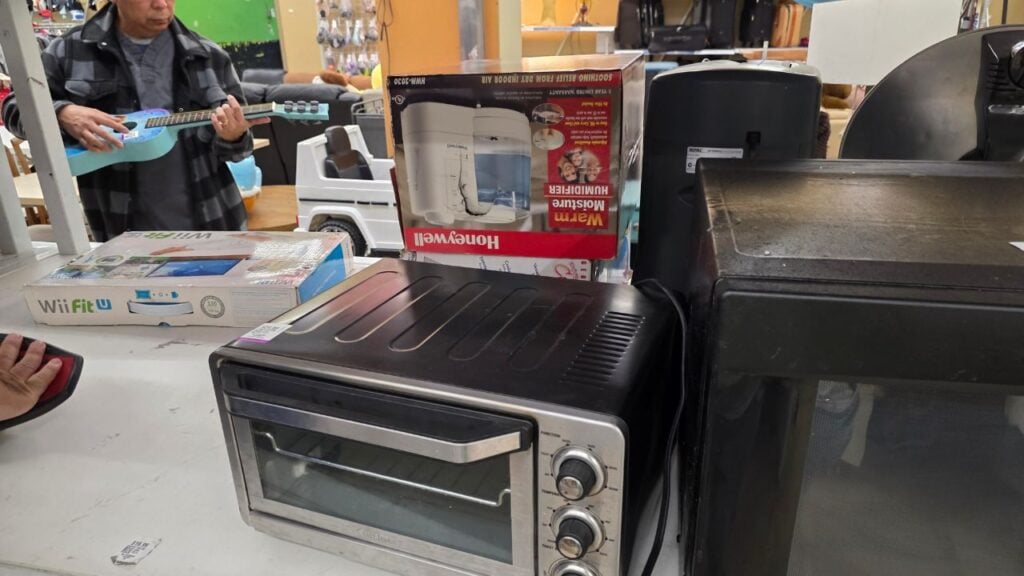
A federal recall doesn't stop applying just because a product changed hands at a Georgia yard sale.
Flea market tables across the state hide the occasional fire risk, recall, or food-safety problem the price tag never mentions.
9 Things Georgia Shoppers Should Never Buy Secondhand
7 Store Closings Hitting Georgia Shoppers Hard This Year

Twenty-six Family Dollar stores in Georgia have gone dark since last year, and that's just one chain's tally.
Nearly 7,900 stores are on pace to close nationwide by the end of 2026, and Georgia's malls and strip centers aren't spared.
