
9 Grocery Items Floridians Now Treat Like Luxuries

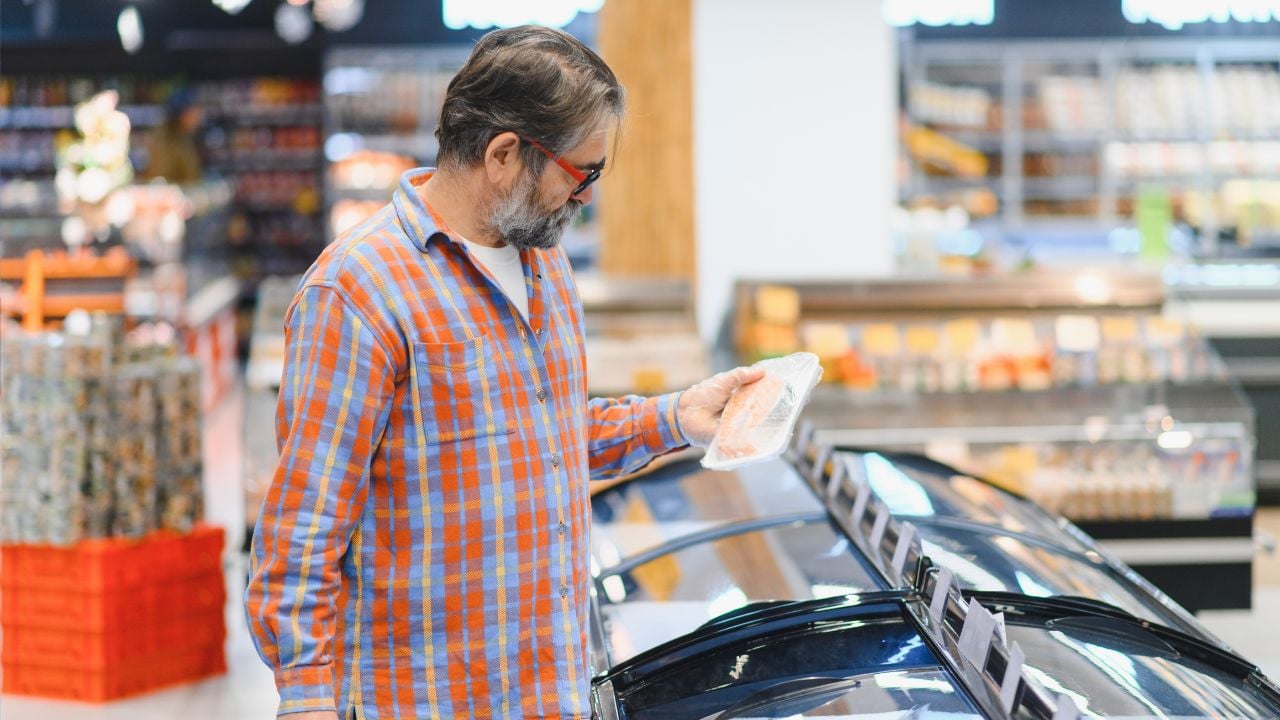
Ground beef rings up at $6.67 a pound in the average American cart.
That’s a record none of us wanted to see.
These are the grocery items Floridians now treat like luxuries instead of routine buys.
1. Orange Juice
Orange juice built its reputation as the cheap, easy way to start a Florida morning.
Not this year.
Florida growers brought in just 12.92 million boxes of oranges this past season, a state that filled more than 200 million boxes a year around the turn of the century.
Citrus greening and back-to-back hurricanes caused the damage.
Retail orange juice prices have risen more than 26% since the start of 2024, and a carton that used to be an afterthought now gets a second look at the register.
The store-brand jug next to the name brand isn’t the downgrade it used to be.
2. Ground Beef
Ground beef crossed a price line this year that it has never crossed before.
The average pound now rings up at $6.67, a record.
Blame the cattle herd, not the store.
The nation’s cattle herd has shrunk to about 85 million head, the smallest count since 1951 because years of drought and high feed costs pushed ranchers to sell off cows instead of rebuilding.
Florida ranks ninth nationally in beef cattle, and its ranchers are having the opposite year: calf prices there are running 59% higher than a year ago.
None of that shows up as savings at a Florida register.
A shopper pushing a cart through a grocery store in Tampa pays the same record price as a shopper in a state with no cattle industry at all.
3. Key Limes
Key limes put Florida’s name on pie boxes in every state in the country.
The fruit inside those pies rarely comes from Florida anymore.
A hurricane in 1926 tore through the groves Florida had only just replanted after an 1894 freeze wiped out the state’s lemon trees.
Growers replanted again, this time with the tougher Persian lime, the same fat green lime now stacked in most grocery bins.
Trade rules finished the shift decades later.
Most key limes sold in the United States today grow in Mexico, Central America, and South America, not the Keys that gave the fruit its name.
A genuine Florida-grown key lime, the small, thin-skinned fruit the original pie recipe called for, mostly turns up at farmers markets and specialty stands instead of the regular produce aisle.
That’s the fruit most “key lime” labels are borrowing, not growing.
How to Spot an Actual Florida Key Lime
A true key lime looks nothing like the fat green lime in the produce aisle.
It runs closer to the size of a golf ball, with thinner skin and a yellowish tint once ripe.
Farmers markets and specialty stands are the more reliable place to find one, not the regular grocery bin.
4. Wild Gulf Shrimp
Gulf shrimp built Florida’s coastal towns long before tourism did.
That fishery is disappearing.
Imported farm-raised shrimp now fills more than 90% of what lands on American shelves, and the Gulf fleet’s own share of the market has fallen from close to 30% in the 1980s to under 5% today.
New tariffs made 2026 worse, not better.
Washington added fresh duties of 10% to 12.5% on the top shrimp-exporting countries, right as boats from Texas to Florida struggle to stay on the water.
A pound of shrimp that came out of the Gulf, not a bag of anonymous frozen tails, now carries the price a Florida boat has to charge just to keep working.
5. Coffee
Coffee runs on its own clock in Miami, where ventanitas serve shots of Cuban espresso to regulars from morning until night.
That ritual just got pricier.
The average bag of grocery store coffee hit $9.72 a pound in April 2026, the highest level the Bureau of Labor Statistics (BLS) has tracked since it started keeping score.
That’s up 18.5% from a year earlier.
A shopper feels that jump every time the bag goes into the cart.
Tariffs on Brazilian coffee, the source of roughly a third of the world’s supply, share the blame with weather that hurt harvests in Vietnam.
A cafecito window in Little Havana still pours a shot for a dollar or two, but the beans behind the counter cost more than they ever have.
6. Avocados
Avocados grow in Florida too, in a state industry that’s been losing ground for two decades.
A fungus called laurel wilt, spread by an invasive beetle, reached commercial groves in Miami-Dade County not long after it was first found near Jacksonville in 2007.
Florida avocado, sometimes sold as the larger, greener “alligator pear,” had long been the state’s second-biggest fruit crop after citrus, and growers are still fighting to keep the disease out of what’s left of it.
That leaves Florida shoppers with no home-state discount when the imported avocado gets more expensive too.
Avocados picked up a 25% tariff at the border in 2026, and shoppers are paying it at checkout.
A bag of five Hass avocados that cost $4.99 before the tariff now rings up at $6.24, a jump of $1.25 for the exact same bag.
Mexico supplies about 80% of the avocados sold in the United States.
There’s no plan B, in Florida or anywhere else.
7. Bananas
Bananas grow in Florida, on a scale most shoppers never hear about.
Only about 500 acres of the state grow bananas commercially, worth roughly $2 million a year, mostly Thai and cooking varieties rather than the yellow Cavendish stacked at the store.
Florida still grows more bananas than any other state.
None of that homegrown fruit explains the banana most Florida shoppers buy.
Fresh Del Monte Produce, one of the biggest banana importers in the world, runs its U.S. business out of Coral Gables, a long way from the farms where the fruit gets picked.
A 10% tariff landed on banana imports in 2025, the first duty on bananas in decades, and a single bunch that cost 69 cents now rings up at 76 cents.
Seven cents isn’t much.
Multiply it across the roughly 26 pounds of bananas the average American buys in a year, and a fruit that held its price for decades finally moved.
8. Apalachicola Oysters
Apalachicola Bay oysters used to be the easy, cheap way to impress a table in Florida.
That bay collapsed.
Oyster landings in Franklin County fell 98%, and the federal government declared a fishery disaster there in 2013.
The bay once supplied more than 90% of Florida’s oyster harvest and roughly a tenth of the oysters caught nationwide.
Florida’s wildlife regulators have kept commercial harvest closed for years since, hoping the bay recovers.
A Florida seafood counter can still sell an oyster labeled Florida, but it almost never comes out of Apalachicola Bay anymore.
The wild, brinier oyster that built the bay’s reputation is the rare find now, not the everyday order it used to be.
9. Tomatoes
Tomatoes are the one crop that puts Florida at the top of a very short list.
Florida grows more fresh-market tomatoes than any other state, a $331 million crop harvested almost year-round from October through June.
That home-field advantage hasn’t kept the price down.
A pound of tomatoes cost $2.15 in grocery stores as of June 2026, up 24% from a year earlier and not far off the all-time high of $2.69 a pound set that April.
A Florida farmer harvesting outside Immokalee or Ruskin still answers to the same national commodity market as a shopper standing in a Florida produce aisle.
Being the country’s biggest grower hasn’t bought Florida’s own shoppers a discount.
The Prices That Fell Instead
Eggs, butter, bacon, and chicken prove not every Florida grocery staple joined this year’s splurge list.
Eggs dropped the hardest.
The average dozen large eggs cost $2.14 in June 2026, down 43% from the same month a year earlier, as flocks rebuilt after avian flu outbreaks eased.
Bird flu returned to a dozen states by summer, so that relief carries some risk of reversing.
Butter and bacon eased too.
Butter sat at $3.18 a pound, well off the roughly $4.80 peak it hit in mid-2025, and bacon slid to $6.56 a pound, down almost 8% from a year earlier as pork supplies caught up with demand.
Chicken followed the same downward path, with wing and thigh prices easing back well below where they sat only a couple of years ago as processors expanded flocks faster than beef or coffee supply chains could recover.
Psst! How much do you know about grocery history and Florida farming? Take our quiz and see how many you can get right.
Quiz
Florida Grocery IQ
Answer these questions on grocery history and Florida farming. We bet you can’t get them all right. Prove us wrong?
Which everyday grocery item do retail security reports name as the most shoplifted food item in the U.S.?
9 Money Mistakes Florida Homeowners Make Every Hurricane Season

A homeowner in Punta Gorda calls her insurance company eleven months after a storm made landfall, right as her contractor finally has an opening.
She's four weeks from losing the claim entirely, and her contractor's earliest opening lands after the deadline passes.
9 Money Mistakes Florida Homeowners Make Every Hurricane Season
10 Things Only People Who Grew Up in Florida Understand
A kid in Ocala looks up mid-cannonball the second the pool horn blows, out of the water before the lifeguard finishes the whistle.
Nobody has to explain what that horn means to anyone who grew up in Florida.
