
9 Habits That Instantly Reveal Someone Grew Up in California’s Central Valley

Tulare County produces so much milk that pulling its dairies from California’s total would drop the whole state behind Wisconsin in the national rankings.
Growing up in the middle of that kind of farmland leaves habits a coastal Californian would never recognize.
These are the habits that instantly reveal someone grew up in California’s Central Valley.
1. Taking Tule Fog Seriously
The Central Valley’s winters bring a fog thick enough that the road disappears completely.
Tule fog forms low to the ground across the Sacramento and San Joaquin valleys, where cold, damp air pools beneath a warmer layer above it.
It can sit on Highway 99 for hours instead of burning off by nine.
Visibility can drop to a few feet.
A 17-vehicle pileup shut down Highway 99 in January 2025, and an 86-vehicle crash south of Fresno in 2007 killed two people and injured 41.
Slow down.
That reflex survives the move: A longtime Central Valley driver still eases off the gas the instant the road turns white, even states away from Highway 99.
2. Watching for a Lake That Isn’t Supposed to Be There
California’s Central Valley sits on top of a lake that doesn’t show up on many maps anymore.
Tulare Lake once stretched up to 100 miles long and 30 miles wide, the largest freshwater lake west of the Mississippi River, according to the U.S. Geological Survey.
Farmers drained its basin and diverted its rivers for cropland by the 1920s.
The lakebed doesn’t stay dry.
A run of atmospheric river storms and heavy Sierra snowmelt refilled parts of the basin in 2023, the first time the lake had returned since 1997.
Floodwater spread across cotton, pistachio, and tomato fields around Corcoran.
Corcoran’s levee held, with about 21 feet of margin at its lowest point, county officials said at the time.
Central Valley natives from the valley’s south end still watch a big Sierra snowpack report a little warily, aware the fields around them sit in a lakebed that has come back before.
How Far Tulare Lake’s Comeback Reached Into the Central Valley
Tulare Lake’s 2023 return spread past Corcoran alone. California’s Office of Emergency Services logged flood impacts across Fresno, Kern, Kings, and Tulare counties before the water receded.
That return didn’t last. Satellite images showed the lakebed dry again by the spring of 2024, according to NASA, the U.S. space agency.
3. Defaulting to Highway 99, Not I-5
California’s Central Valley still runs on Highway 99, while Interstate 5 was built to skip right past it.
Engineers routed I-5 as a faster “Westside Freeway” decades ago, bypassing every Central Valley city on the way between Los Angeles and the Bay Area.
That leaves Fresno widely cited as the largest city in the country without a direct interstate connection.
Highway 99 still runs through Sacramento, Stockton, Modesto, Fresno, Visalia, and Bakersfield.
I-5 skirts every one of them through open farmland instead.
Locals still take 99.
Grown and gone from the Valley, a driver who learned 99’s stoplights and packing houses first still merges onto it out of instinct, even on a trip where I-5 would save twenty minutes.
4. Marking the Calendar by the Almond Bloom
The Central Valley’s orchards turn pink and white every February, and it means something different to a local than to a tourist snapping photos.
California grows about 80% of the world’s almonds, many of them from the Central Valley’s San Joaquin Valley half.
More than 1,500 beekeepers truck in billions of bees every February to pollinate those orchards, in what public radio has called the largest managed pollination event in the world.
It happens every February, without fail.
Same weeks, every year.
The bee trucks and the traffic show up on schedule every year, regardless of the weather.
Grown-up Central Valley kids notice anyway, checking the calendar for the bloom before they ever check the orchard.
5. Recognizing Tulare County by Smell
The Central Valley’s Highway 99 runs past towns a driver can smell before ever spotting the road sign.
Tulare County alone produces more than 10 billion pounds of milk a year.
Pull its dairies out of California’s total, and the state drops behind Wisconsin in the national rankings.
That’s a lot of cows.
Driving 99 through towns like Tipton, Pixley, and Hanford means rolling up the windows for a stretch, then rolling them back down a few miles later.
By age ten, the smell stops registering for a Central Valley kid.
It becomes the joke they play on out-of-town passengers instead.
6. Never Swimming in a Canal
The Central Valley’s kids get one warning more than any other: Stay out of the canals.
Irrigation canals crisscross the region carrying fast-moving water behind steep, slippery concrete walls with almost no ladders or exit points.
The Water Safety Council of Fresno County says canals accounted for about 17% of all drownings in the county between 2005 and 2020, even though the water often looks calm on the surface.
Canals post no lifeguards.
Pulling a kid back from a canal’s edge on reflex is a Central Valley habit that never goes away, the same instinct a beach town kid keeps for riptides.
7. Checking the Air Before Heading Outside
The Central Valley’s air carries dust, farm exhaust, and wildfire smoke.
Mountains ring the region on three sides and trap much of it in.
Bakersfield has ranked as the U.S. metro area with the worst pollution for year-round particles for seven straight years, according to the American Lung Association.
Bad air days are routine.
Central Valley parents still check an air quality app before letting the kids play outside, an inhaler tucked in the backpack just in case.
8. Treating the Beach as a Day Trip
California’s Central Valley sits hours from the nearest coastline, so a day at the beach means planning like a road trip.
The drive from Fresno to the closest stretch of coast, around Pismo Beach, covers about 150 miles and takes about two and a half hours each way.
That’s a full day gone before a towel ever hits the sand.
It’s not a quick trip.
A Central Valley household packs snacks, a full tank of gas, and a plan for where to stop before a beach day ever starts, the kind of prep other families save for a much longer haul.
9. Raising an Animal for the Fair
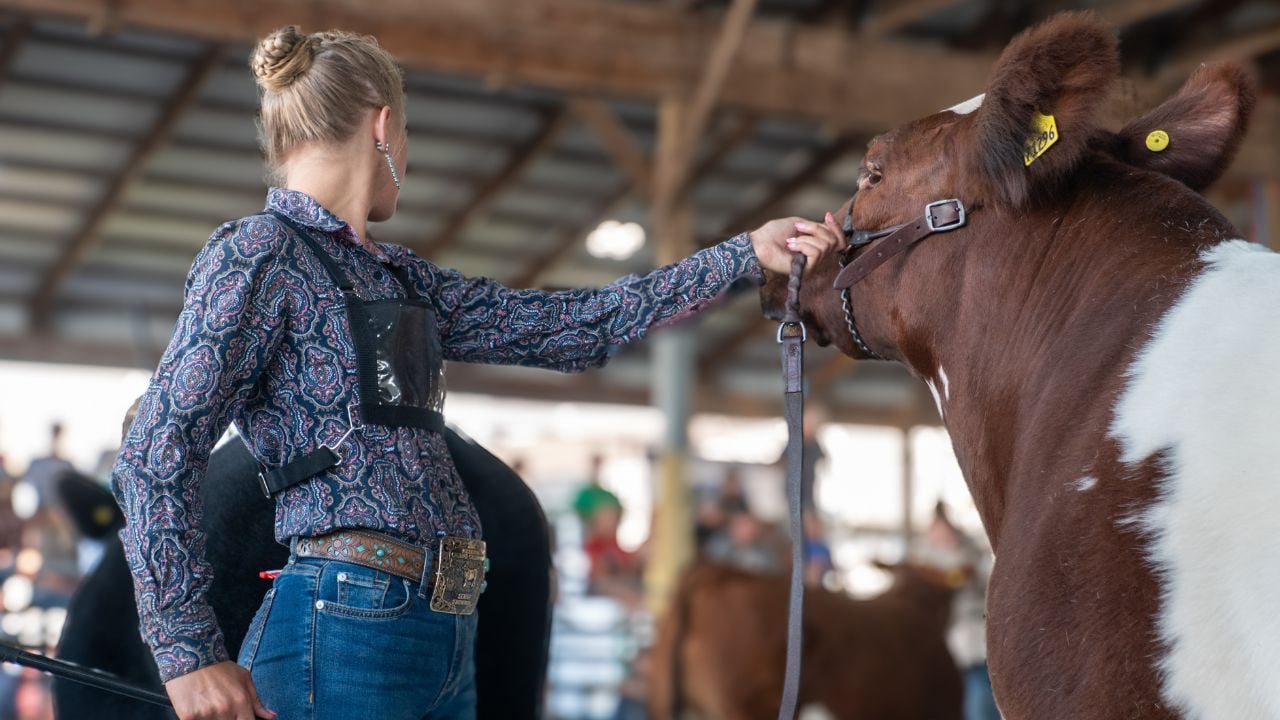
The Central Valley’s 4-H and Future Farmers of America (FFA) kids spend months raising a steer, hog, or lamb for one day every fall.
The Big Fresno Fair alone draws more than 600,000 visitors each October, and its junior livestock auction is where those 4-H and FFA families sell those animals to the highest bidder.
Kern County, San Joaquin County, and other Central Valley fairs run auctions of their own.
Buyers overpay on purpose.
Decades removed from show season, a former 4-H kid still can’t watch a livestock auction without tearing up the moment a nervous kid leads an animal into the ring.
A buyer doesn’t have to take an animal home to take part in the Big Fresno Fair’s junior livestock auction. The fair’s own add-on bid forms let anyone stack extra money onto a 4-H or FFA kid’s final sale price, with no meat or livestock changing hands.
The fair’s own buyer materials put it simply: Every add-on dollar is meant to help the kids raising the animals, whether or not the person paying it ever meets them.
Psst! How much do you know about California’s Central Valley? Take our quiz and see how many you can get right.
Quiz
Central Valley IQ
Answer these questions on Central Valley geography, history, and culture. We bet you can’t get them all right. Prove us wrong?
Which Hollywood director based the cruising scenes in American Graffiti on his own teenage years in a Central Valley city?
7 In-N-Out Mistakes That Instantly Mark You as a First-Timer in California
In-N-Out keeps six items off its printed menu completely, tucked onto a page many first-timers never think to check.
Order a plain burger and fries without knowing that page exists, and a first-timer walks out wondering what the regulars in line knew that they didn't.
7 In-N-Out Mistakes That Instantly Mark You as a First-Timer in California
9 Things That Surprise People Who Move to California

California's electricity runs about 27 cents a kilowatt-hour, the second-priciest rate in the country, and new residents rarely see that number coming until the first bill lands.
Not everything costs more once the moving truck pulls away, but many of the surprises catch newcomers off guard fast.
