
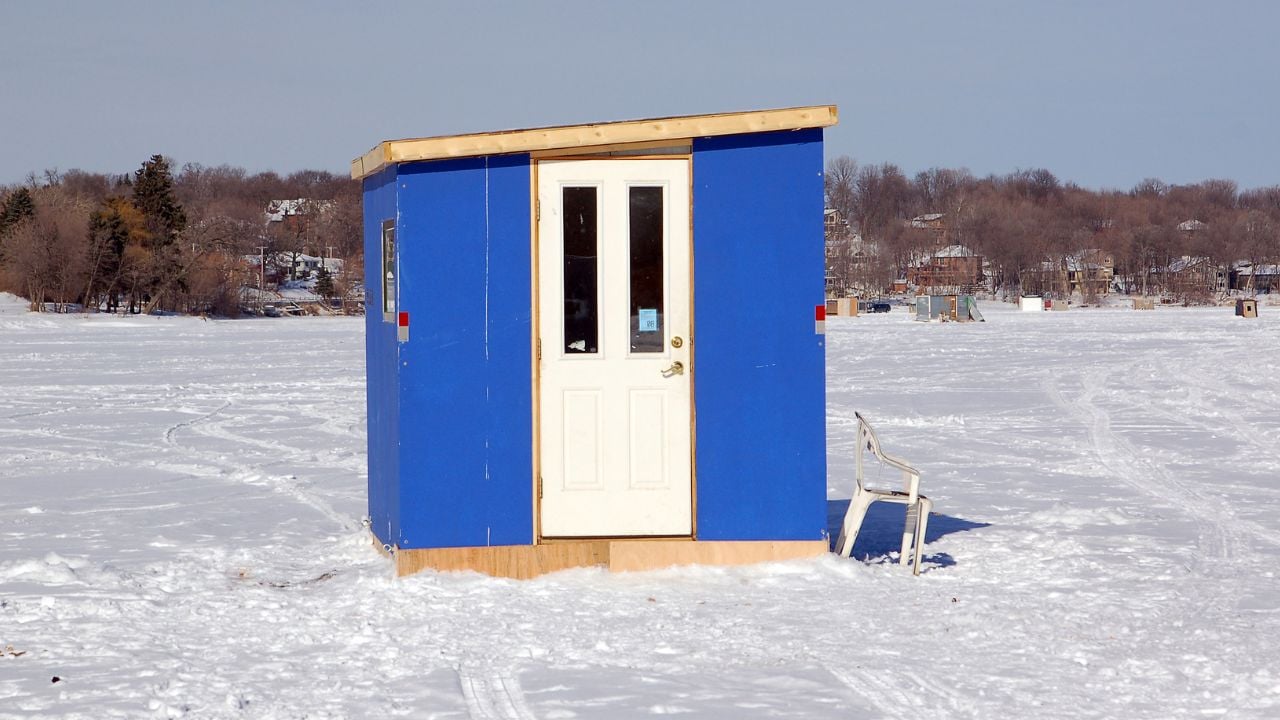
9 Ice House Rules Minnesotans Have to Follow Before Heading Out on a Lake

Leave your ice house on a Minnesota lake overnight, and it needs reflective material on each side.
It’s a small strip, but it’s an easy rule to miss in the rush to get out on the ice.
Here are the ice house rules Minnesotans have to follow before heading out on a lake.
Note: This is general information, not legal advice. Shelter rules and deadlines are subject to change, so confirm the current requirements with the Minnesota Department of Natural Resources (DNR).
1. Shelter License
Every non-portable ice house needs a state shelter license before it goes on an inland lake.
Wheeled fish houses count as non-portable, so they need a license too.
You pay $15 as a Minnesota resident and $37 as a non-resident, not counting issuing fees.
A license is valid from March 1 through April 30 of the following year.
What Counts as a Portable Ice House
A portable ice house is one that collapses, folds or comes apart for transport.
A portable ice house needs a license and identification only once you leave it unattended.
It counts as unattended when everyone who used it is more than 200 feet away.
State law also requires the license if you leave a portable ice house unattended between midnight and one hour before sunrise.
2. ID on the Outside
Whenever your ice house needs a license, it also has to show who owns it.
You can use your name and address, your driver’s license number or your DNR identification number.
The marking has to be readily visible from outside, in characters at least two inches high.
Anything smaller is out.
3. Reflective Material
If you leave your ice house on the lake overnight, it needs at least two square inches of reflective material on each side.
A one-by-two-inch strip works.
4. Doors That Open From Outside
An ice house door has to open from the outside whenever someone’s inside.
If you’re the one inside, state law still says the door must be constructed so it can be opened from the outside.
5. Ten Feet Between Houses
Your ice house can’t go up within ten feet of a dark house, fish house or other shelter.
Psst! How much do you know about lakes and ice safety? Take our quiz and see if you can ace it.
Quiz
Minnesota Lake Smarts
Answer these questions on Minnesota’s lakes and ice safety. We bet you can’t get them all right. Prove us wrong?
Which of these Minnesota counties has no natural lakes, according to the DNR?
6. Secured Trash Containers
You can't leave garbage, litter or sewage outside your ice house on the lake.
That includes cigarette filters and fireworks debris.
The only exception is trash in a container that's secured to your shelter, vehicle or other conveyance.
The state added the rule in 2023.
A violation is a petty misdemeanor with a $100 civil penalty each time.
Wooden blocking has to come off the ice when you remove your ice house, even if it's frozen in.
7. Wastewater Disposal
If your ice house has gray and black water tanks, dumping that wastewater on the ice is unlawful.
A list of public dump stations where you can drain them is linked from the state's shelter page.
8. Public Access Storage Ban
Storing or leaving an ice house at a public access is prohibited.
If your ice house sits at a state public access more than 48 hours past the deadline, a conservation officer can confiscate it.
9. Removal Deadlines
Your ice house has to be off the lake by 11:59 p.m. on removal day.
Location sets the date.
For the 2026 season, the DNR set March 2 for lakes south of a dividing line and March 16 for lakes north of it.
That line follows U.S. Highway 10, Minnesota Highway 34, Minnesota Highway 200 and U.S. Highway 2.
State law ties those dates to the first and third Mondays in March, unless they're changed by rule.
The dates are listed by year, so check the shelter page for this winter's before you head out.
After those dates, an ice house can stay on the ice between midnight and one hour before sunrise only while it's occupied or attended.
Border Waters
Your ice house follows a different removal calendar on border waters than on an inland lake.
The DNR's border list starts with Iowa on Feb. 20, then Wisconsin on March 1, North and South Dakota on March 5 and Canada on March 31.
The March 31 date for Canada includes Lake of the Woods.
On border waters shared with Wisconsin, Iowa, North Dakota and South Dakota, you don't need a shelter license.
Dangerous Ice
County sheriffs may prohibit or restrict the motorized vehicles that haul your ice house when the ice turns dangerous.
In January 2026, the Brown County Sheriff's Office restricted vehicle traffic on Sleepy Eye Lake and Lake Hanska because of unsafe ice.
A few ice houses had partially fallen through on Sleepy Eye Lake.
Both lakes were open to all traffic by 1 p.m. Friday, Jan. 23, after colder weather.
The state doesn't measure ice thickness on lakes.
That job is yours.
Check the thickness every 150 feet.
Seizure and Burning
If you leave your ice house up past the deadline, you may be cited.
Officers hold the contents of a seized ice house for 60 days.
After that, they may be retained for the division's use or sold.
The owner can also face a civil penalty under the state's litter law.
That law sets the penalty at two to five times what the government spends to clean up the waste.
Burning an ice house on the lake takes permission from the DNR commissioner.
You then have to clear the remains off the ice.
8 Things Minnesota Snowplow Drivers Wish Residents Understood
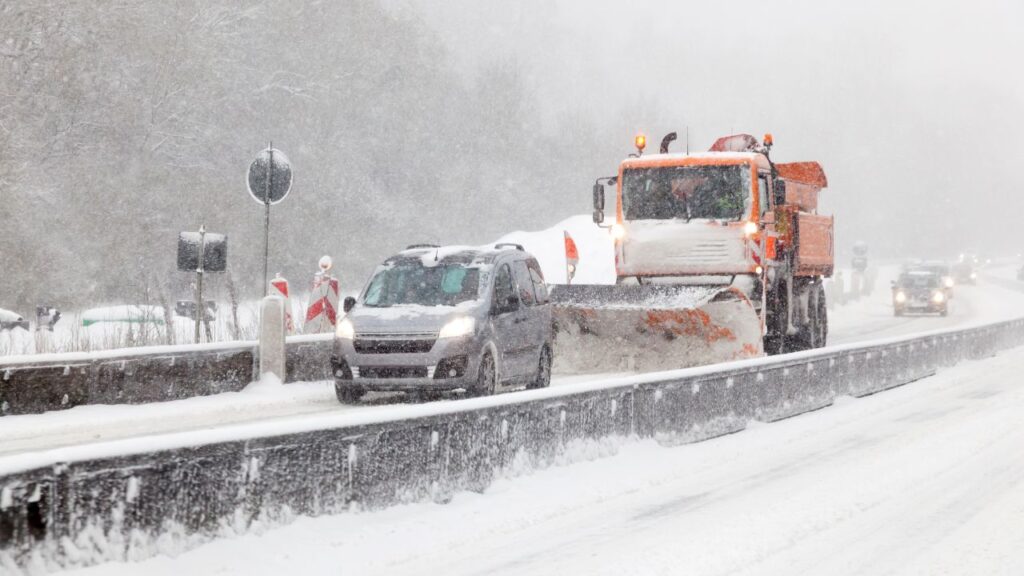
A cloud of blowing snow can hide a tailgater, even when the road ahead looks clear.
Plow drivers see it all season, and tailgating is only the start.
8 Things Minnesota Snowplow Drivers Wish Residents Understood
