
9 Maine Foods Nobody Outside Maine Makes Correctly

In 2011, Maine’s legislature debated on the floor to decide exactly what does and doesn’t count as the state’s official treat.
They spelled it out word for word in state law.
Many bakeries outside Maine have never read that law, and it shows the moment you bite into what they’re selling.
These are the Maine foods that rarely survive the trip out of state, one detail at a time.
1. Lobster Roll
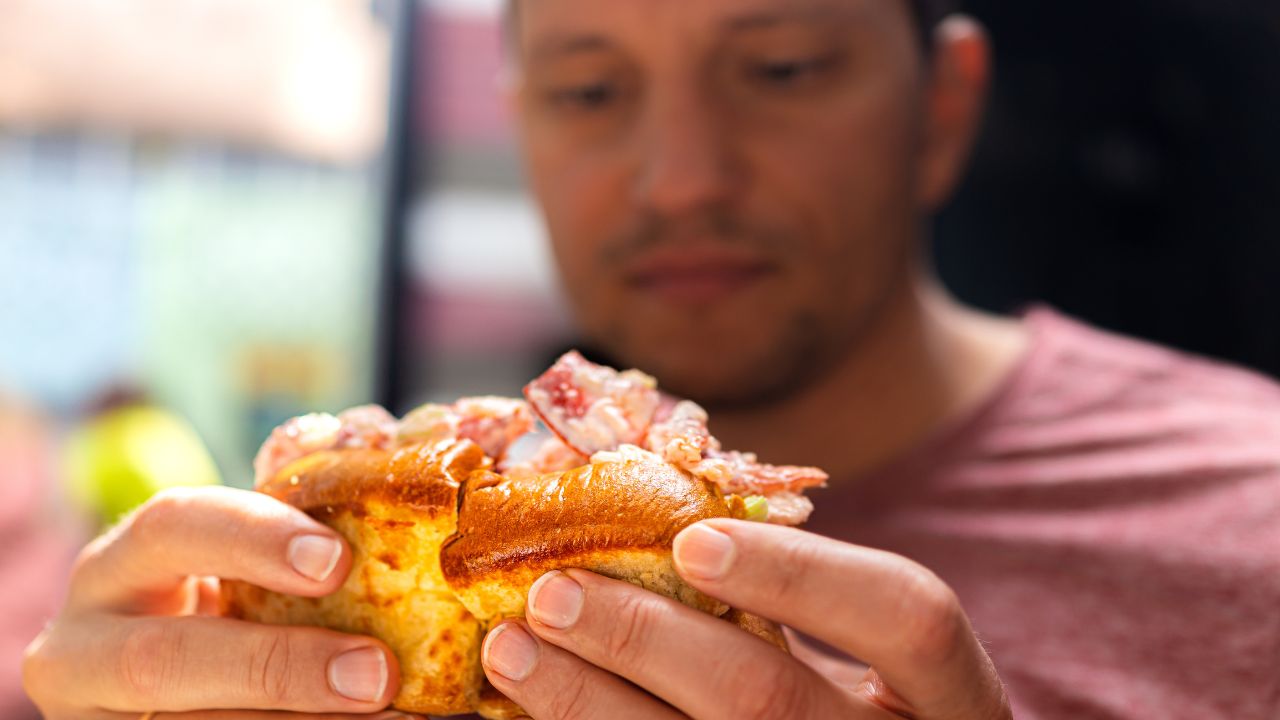
Maine’s lobster roll starts cold, with chunks of claw and knuckle meat bound in a light coat of mayonnaise and nothing else.
Connecticut claims the original hot version, first served warm and drenched in melted butter at a restaurant called Perry’s in Milford, back in 1929.
That’s nearly a hundred years of two very different sandwiches sharing one name.
They’re nothing alike.
A Maine lobster roll also skips the celery and lettuce some other regions pile in for crunch, letting the meat speak for itself on a buttered, split-top roll.
2. Whoopie Pie
Maine’s whoopie pie is built on two soft chocolate cakes squeezed around a filling that’s supposed to stay light and fluffy, not act like frosting.
Outside the state, home bakers often swap in a buttercream frosting, the same one they’d pipe onto a birthday cake.
That’s backward.
The traditional filling leans on shortening and marshmallow fluff whipped together, which is why it holds its shape without turning dense or overly sweet.
Maine’s legislature made the whoopie pie the official state treat in 2011, describing it only as two cakes with a creamy frosting between them, without specifying which frosting recipe counts.
3. Maine Italian Sandwich
The Maine Italian sandwich started at Giovanni Amato’s Portland grocery in 1899, and it still bears almost no resemblance to an Italian sub.
Order one outside Maine, and a sandwich shop usually loads it with vinegar, oregano, and shredded lettuce, treating it like a hoagie instead.
None of that touches a Maine Italian.
The Maine Italian gets ham, cheese, onion, tomato, and olives on a soft split-top roll, finished with nothing more than salt, pepper, and oil.
Corner stores from Portland to Lewiston still slice the onion into thin rings instead of dicing it, and regulars notice the difference right away.
4. Red Snapper Hot Dogs
Maine’s Red Snapper hot dogs rarely survive the trip out of state intact: Outside kitchens copy the color, but they almost never copy the snap.
A Bangor company, W.A. Bean & Sons, has made them since the 1940s, when it recruited German sausage-makers who had fled to New York after World War II to teach the family Old World hot dog-making, dyeing the casing red as a marketing trick and using natural lamb casing for the bite.
A few pockets outside Maine, including parts of North Dakota, sell their own red-dyed hot dogs, but without that natural casing, the bite never lands the same way.
The color travels. The snap doesn’t.
Maine grillers still serve them on a split-top roll with mustard, relish, and onion, nothing fancier.
5. Fiddleheads
Fiddleheads tempt cooks outside New England into the same quick sauté they’d give asparagus, and that guess is exactly backward for Maine’s spring green.
Maine’s fiddleheads show up in grocery stores and farmers markets for only a few weeks each spring, and University of Maine food scientists warn against sautéing, stir-frying, or microwaving them on their own, calling for a full boil or a full steam before they ever touch a sauté pan.
Skip that step, and the risk isn’t just a bad texture.
The Fiddlehead Boil Isn’t Optional
Maine’s fiddleheads can make you sick if they’re undercooked, not just taste worse.
Two 1994 outbreaks tied to raw and lightly cooked fiddleheads sickened dozens of people, one traced to a restaurant in Steuben County, New York, and the other across western Canada, with nausea, cramps, and diarrhea showing up anywhere from thirty minutes to twelve hours after eating them.
The fix is a full 15-minute rolling boil, or 10 to 12 minutes of steaming, with the cooking water poured out afterward instead of reused in a soup or sauce.
Psst! How much do you know about Maine’s food history? Take our myth-or-fact quiz and see how many you can get right.
6. Wild Blueberry Pie
Maine’s official state dessert is blueberry pie made with wild Maine blueberries, and the law names exactly which berry counts.
Bakers outside the state usually grab the large cultivated blueberries stacked in the produce aisle instead, the kind grown on tall bushes in neat rows.
It’s the wrong berry.
Wild lowbush blueberries grow low to the ground, run smaller than a pea, and carry a sharper, more concentrated flavor than their cultivated cousins.
A pie made with the cultivated kind turns out sweeter and softer, missing the tang that makes a Maine blueberry pie taste like Maine.
7. Fried Clams
Order Maine’s fried clams at a chain restaurant outside New England, and the basket usually holds clam strips instead, sliced from the tough foot of a much larger sea clam.
Maine’s own version is a whole soft-shell steamer clam, belly and all, dipped in milk and flour and dropped straight into the fryer.
The two aren’t the same clam.
Strips skip the belly entirely, missing the brinier, fuller flavor and soft center that make the mess worth it, and a Maine clam shack menu still draws a hard line between the two.
8. Lobster Stew
Maine lobster stew comes down to three ingredients, butter, milk, and lobster meat, simmered gently and never allowed to boil.
Restaurants outside the state often dress the same dish up with cream, sherry, and a flour-based roux, turning it into something closer to a bisque.
That’s a different dish.
A proper Maine stew skips the thickener altogether, and many cooks let it rest overnight in the refrigerator so the lobster flavor works its way through the milk.
Reheat it slowly the next day, and it tastes even better than it did the night before.
9. Baked Beans
Many cooks outside Maine swap Maine’s baked beans for a small white navy bean, the kind Boston built its own baked-bean reputation on.
The church-supper version at home starts with the state’s own yellow-eye bean, prized for its thin skin and creamy interior, then leans on salt pork, molasses, and a long, slow bake that can run all day.
That tradition traces back to lumber camps that once cooked beans in a hole dug straight into the ground, and skipping the yellow-eye bean today stops the dish from tasting like a Maine bean supper.
Bean-hole suppers still draw a crowd at grange halls and fairgrounds across Maine every summer, with cooks parboiling the beans on a stove before they ever go near the coals.
A cast-iron pot buried under two feet of dirt and hot coals for eight hours does something a slow cooker never quite manages, and regulars can tell the difference on the first bite.
13 Sodas Americans Drank Growing Up That Are Totally Extinct
Some foods travel with the state that made them, and some just vanish everywhere at once, tucked away on a shelf and forgotten.
Soda used to chase flavor over anything else, and many once-beloved brands never made it past their first decade on shelves.
13 Sodas Americans Drank Growing Up That Are Totally Extinct
