
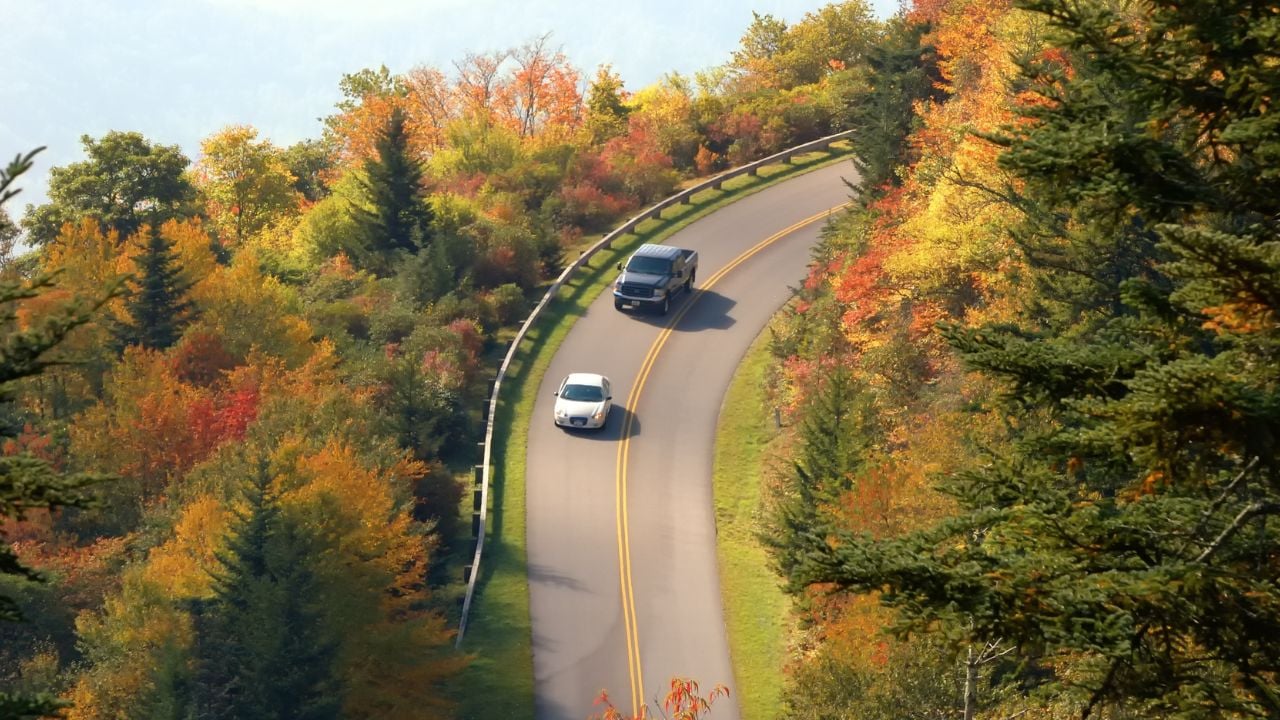
9 Mistakes First-Time Visitors Make on North Carolina’s Blue Ridge Parkway

One seven-mile stretch of North Carolina’s Blue Ridge Parkway logged 144 crashes in six years.
Many first-time drivers never see a number like that coming.
These are the mistakes first-time visitors make on North Carolina’s Blue Ridge Parkway.
1. Trusting One Speed Limit
North Carolina’s Blue Ridge Parkway posts a flat 45 mph speed limit by default.
First-time visitors lock that number in for the whole drive.
It doesn’t hold everywhere.
Through the Asheville corridor, between Highway 74A and Highway 25, the National Park Service dropped the limit to 35 mph after dozens of crashes piled up on that busier stretch.
That section carries hikers, cyclists, and runners crossing the road on top of regular traffic.
Cruise control set once at the entrance ramp is exactly the habit that catches a newcomer off guard.
2. Skipping the Gas Math
North Carolina’s Blue Ridge Parkway has no gas station anywhere along its own pavement.
First-time drivers treat the fuel gauge like it’s someone else’s problem.
It’s theirs.
Some North Carolina exits put a gas station less than a mile off the road, while others sit much farther out.
Near milepost 411.8, the nearest pump sits up to 15 miles down the mountain, with no sign at the overlook warning a driver which stretch they’re on.
Top off before turning onto the Parkway, not after the low-fuel light comes on.
3. Trusting a Phone for Directions
North Carolina’s Blue Ridge Parkway carries the route’s highest, most mountainous miles, where long stretches have no cell coverage at all.
First-time visitors still hand the whole trip over to their phone anyway.
The National Park Service says plainly that cell phones don’t work in many locations along the route.
GPS navigation can drop out right along with the signal.
There’s no backup plan.
A missed exit turns into extra miles with no map to catch the mistake.
A paper map beats hoping the bars come back.
4. Ignoring Tunnel Heights
The Blue Ridge Parkway runs through 25 tunnels on its North Carolina stretch alone.
First-time recreational-vehicle (RV) drivers rarely check a single clearance number before they commit to a tunnel.
That’s a costly habit.
Big Witch Tunnel, at milepost 461.2, clears under 12 feet at the edge line, the tightest squeeze of any tunnel on the entire route.
An RV or a trailer that clears the driveway at home doesn’t automatically clear that stone archway.
Check the whole list before the trip, not at the tunnel mouth with traffic stacking up behind the bumper.
5. Assuming the Whole Road’s Open
Hurricane Helene damage on North Carolina’s Blue Ridge Parkway still hasn’t been fully repaired.
First-time visitors plan a corner-to-corner drive without checking a single alert first.
Sections between Linville Falls and Mount Mitchell remain closed for storm recovery.
That plan falls apart fast.
A route built on a map app doesn’t know any of that.
A five-minute check of the Parkway’s own alert page the morning of the trip saves an hour of backtracking.
Which North Carolina Parkway Miles Are Closed Right Now
North Carolina’s Blue Ridge Parkway has several separate closures active right now.
Hurricane Helene recovery work closes most of the road from milepost 317.5 near Linville Falls to milepost 355.3 near Mount Mitchell, with a reopened gap from milepost 327.5 to 330.9 near the Orchard at Altapass.
A bridge repair project separately closes milepost 274.3 to 276.5 near Deep Gap, well north of Linville Falls, with a signed detour running from milepost 269.8 to 276.5.
Another project narrows travel through the Linn Cove section, from milepost 304.4 to 305.1, also north of Linville Falls.
South of Mount Mitchell, the U.S. Forest Service road at milepost 367.6 stays closed until further notice.
Crews expect the Helene repairs to wrap up by late 2026, so check the Parkway’s alert page the week of the trip, not months ahead of it.
6. Packing for the Valley’s Weather
Richland Balsam, the highest point on the entire Blue Ridge Parkway, sits inside North Carolina at 6,053 feet.
First-time visitors leave the jacket in the car because the valley felt warm that morning.
Regret sets in fast.
The air runs noticeably colder at that milepost than it does down in Asheville or Boone.
Fog rolls in fast at that elevation too.
It can cut visibility to almost nothing within minutes.
A layer that felt unnecessary at the trailhead parking lot earns its spot in the trunk by the overlook.
7. Getting Too Close to Bears
North Carolina’s Blue Ridge Parkway shut down an eight-mile section near Asheville in 2023 after visitors were caught feeding and trying to hold a young bear.
Black bears are common along the Parkway.
First-time visitors sometimes walk closer for a better photo instead of backing away.
It keeps happening.
A bear that learns a parking lot means food loses its fear of people fast.
That ends badly for the bear.
Stay in the car, keep food out of sight, and admire from a safe distance.
8. Launching a Drone for the View
North Carolina’s Blue Ridge Parkway climbs past high, treeless overlooks like Waterrock Knob and Craggy Gardens.
First-time visitors show up with a drone packed for exactly that kind of shot.
It’s not allowed.
The National Park Service prohibits launching, landing, or operating a drone anywhere within the Parkway’s boundaries.
A ranger who spots the launch can write a citation before the drone clears the treeline.
Leave the aerial view to the overlook’s own railing.
9. Picking an October Weekend Blind
The National Park Service expects about two million visitors on the full 469-mile Blue Ridge Parkway every October, a count that includes North Carolina’s stretch along with Virginia’s.
First-time visitors on North Carolina’s stretch still show up on a peak Saturday expecting an empty road.
Overlook parking fills before 10 a.m. on the busiest fall weekends.
Traffic backs up behind slow-moving leaf peepers on the two-lane stretches.
They don’t get it.
A weekday morning trip covers the same views with a fraction of the company.
Color doesn’t hit every mile of North Carolina’s Blue Ridge Parkway on the same weekend either.
The highest overlooks, places like Mount Mitchell and Waterrock Knob, turn late September into early October, while the lower stretches near Asheville and Cherokee hold their color into November.
Chasing the peak means checking the elevation of a stop, not just the calendar date.
Psst! How much do you know about the Blue Ridge Parkway’s history? Take our quiz and see how many you can get right.
Quiz
Blue Ridge Parkway IQ
Answer these questions on the Parkway’s construction, records, and firsts. We bet you can’t get them all right. Prove us wrong?
Construction on the Blue Ridge Parkway broke ground in 1935 near which North Carolina spot?
9 Plants North Carolina Gardeners Swear They'll Never Grow Again

Some of North Carolina's stubbornest yard plants started out as a nursery pot with a friendly price tag.
N.C. Cooperative Extension still publishes control instructions for several of these plants, exactly what homeowners regret ever putting in the ground.
9 Plants North Carolina Gardeners Swear They'll Never Grow Again
6 Things That Change at the North Carolina DMV in Your 60s
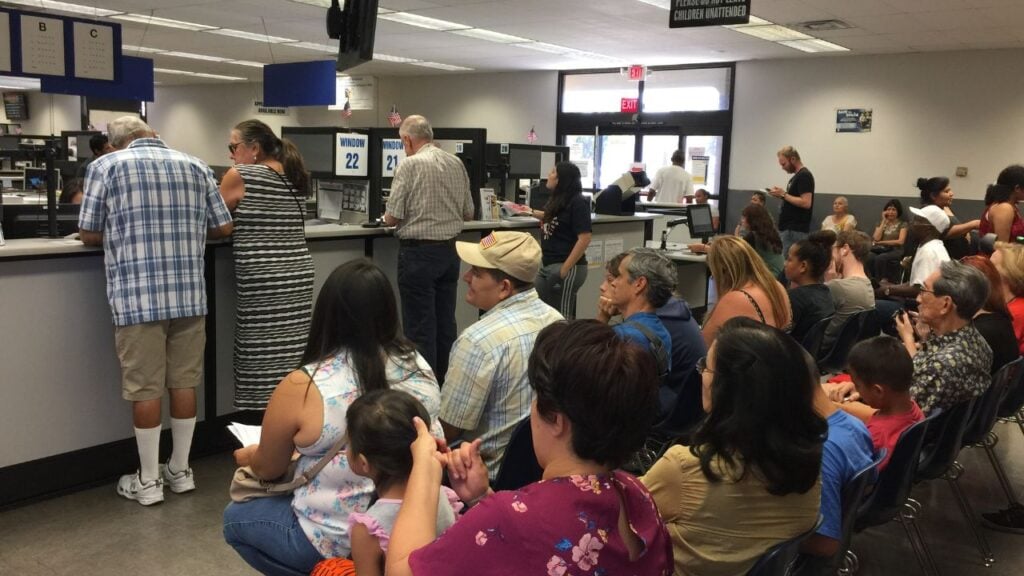
A driver in Winston-Salem walks up to the DMV counter three days after her 66th birthday, expecting the same routine she's followed for decades.
North Carolina's rulebook treats that birthday like a small reset button.
