
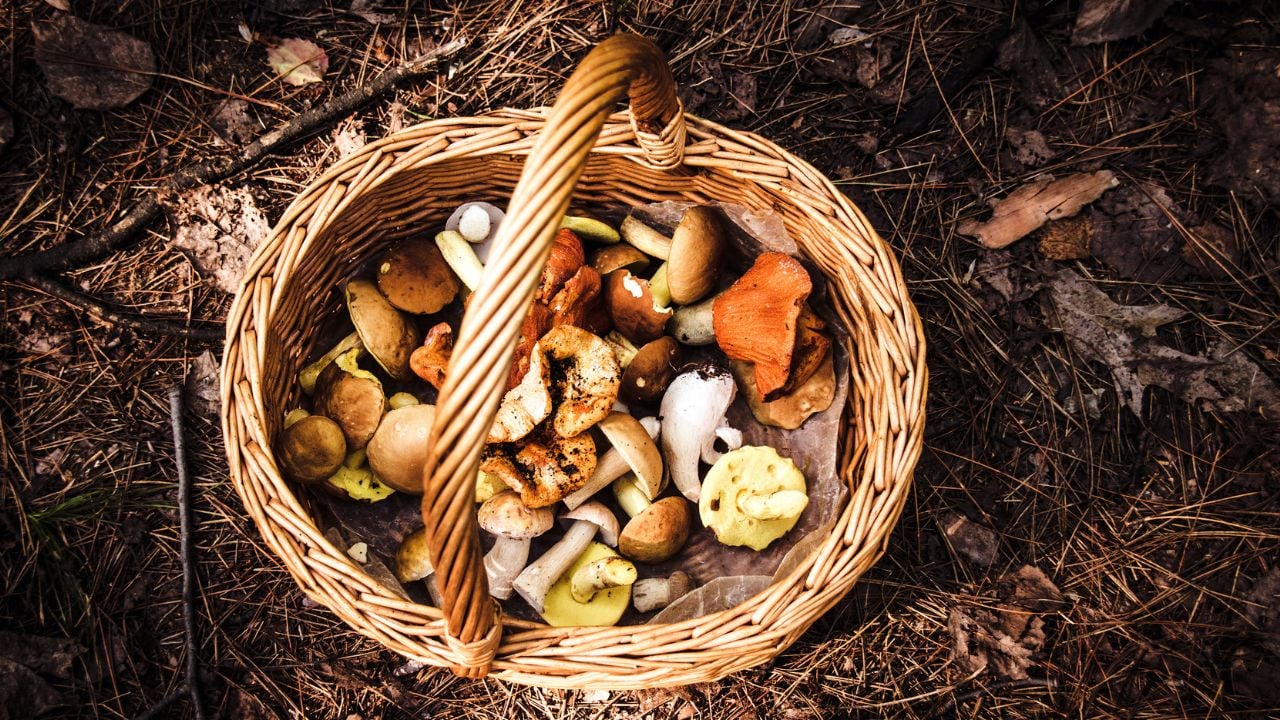
9 Oregon Foraging Rules That Could Turn a Free Meal Into a Fine

Oregon State Parks hands a forager an exact number: Five gallons of wild berries, fruit, or mushrooms a day, no more.
Step off state park land onto a stretch of national forest, a state forest, or the open coast, and the number changes, sometimes by a lot.
These are the Oregon foraging limits that catch careful pickers off guard.
Note: This is general information, not legal advice. Foraging permits, limits, and fees are subject to change.
1. Closures Can End Your Harvest With No Warning
A biotoxin bloom can shut down shellfish harvest overnight on Oregon’s coast, with no posted sign at the beach access to warn a digger first.
Domoic acid, a natural toxin that builds up in clams and mussels during certain algae blooms, is the usual trigger.
The closure takes effect the moment the state issues it, whether a digger has heard about it yet or not.
Ignorance doesn’t count as a defense.
A valid Oregon shellfish license doesn’t override a biotoxin closure.
Neither does a low tide that looks perfect for digging.
Oregon runs a statewide shellfish safety hotline.
Calling it before a trip is the only way to know a beach is open that day.
Check first. Dig second.
2. Your Seaweed Season Already Closed
Wild seaweed harvesting in Oregon runs only from March 1 through June 15 each year for anything alive, full stop.
Miss that window.
Every kind of live seaweed drops off the legal list until spring comes back around.
Even during the open months, a harvester is capped at one gallon a day and three gallons for the whole calendar year, cut by hand with a knife, never torn loose or pulled with a rake.
Three species stay off-limits no matter the date: Eelgrass, surfgrass, and sea palm.
No exceptions.
Pull any kind of live seaweed off an Oregon beach in August.
The closed season is the least of a forager’s problems.
What Oregon’s Seaweed Season Doesn’t Cover
Oregon’s March-to-June season applies only to live seaweed cut straight off the rocks.
Dead seaweed washed up on the sand can be gathered nearly year-round, under the same one-gallon daily and three-gallon annual caps.
The only exception sits inside western snowy plover nesting areas, where even that washed-up seaweed is off-limits from March 15 through September 15.
3. Oregon State Parks’ 5-Gallon Cap
Five gallons per person a day is Oregon State Parks’ cap on berries, fruit, and mushrooms combined, the generous end of the state’s rulebook.
Every other living plant works differently.
Picking, cutting, or uprooting flowers, stems, or roots inside an Oregon state park needs written permission from park staff first, not a friendly wave from another visitor doing the same thing.
Ask first.
That responsibility falls on the forager, not the plant.
Small souvenirs like driftwood, rocks, and agates get their own separate, smaller allowance, so filling a cooler with all three at once can trip more than one park limit in the same afternoon.
4. National Forests Cap Free Mushrooms Under a Gallon
Oregon’s national forests, places like the Willamette and the Siuslaw, let a forager pick wild mushrooms for free, up to a point.
The free personal-use limit runs under one gallon per person per day on many of these forests.
Cross that line.
The U.S. Forest Service expects a paid commercial permit instead, priced around $2 a day with a ten-day minimum purchase, or $100 a year.
A gallon fills fast.
Rangers can ask any forager to show a permit or empty a bag on the spot.
Telling them you didn’t know the limit doesn’t make the citation disappear.
5. Only Five Districts Skip the State Forest Permit
State forestland in Oregon isn’t governed by one blanket rule.
The Oregon Department of Forestry only waives the personal-use foraging permit automatically in five districts: Astoria, Tillamook, Forest Grove, North Cascade, and West Oregon.
Forage state forestland run by any other district.
The free pass disappears.
A permit comes first.
The mushrooms come second.
Even inside the five permit-free districts, the department can still cap how much a single forager hauls out at one time.
A posted limit at the trailhead or district office overrides any number a blog or a friend told you.
6. Marine Reserves Ban All Shellfish Digging
Inside five marine reserves along the Oregon coast, digging a single clam is illegal no matter the tide, the season, or the license in a forager’s pocket.
Cape Falcon, Cascade Head, Otter Rock, Cape Perpetua, and Redfish Rocks make up the five reserves.
State rule bans the take of any fish or wildlife species inside their boundaries.
Oregon’s Fish and Wildlife Commission’s jurisdiction covers shellfish too, so a clam, a mussel, or a crab pulled from inside the line breaks the same rule a fish would.
The tide doesn’t matter.
Otter Rock covers just 1.2 square miles, the smallest of the five and easy to wander into without noticing the line changed.
A public beach just up the coast can allow ordinary clamming under a valid license, while the reserve a few hundred yards away allows none of it.
7. One Afternoon Still Needs a License
Anyone 12 or older digging a clam or pulling a mussel off an Oregon rock needs a shellfish license first, vacation or not.
The annual resident license runs $13 in 2026, cheap enough that skipping it to save money makes little sense.
One clam still counts.
Nonresidents pay three to five times that rate for the same license, so a visiting forager pays more than a local for the identical piece of paper.
8. Razor Clams: First 15, No Do-Overs
The first 15 razor clams a digger pulls from the sand are the legal limit on Oregon’s beaches, not the best 15.
Sorting through a hole for bigger clams and tossing the small ones back is against the rule, even when every clam goes back alive.
Keep what you dig.
There’s no minimum size either, which sounds generous until a digger realizes fifteen undersized razor clams barely fill a single pan.
9. Bay Clams Cap at 20, Gapers at 12
Bay clams in Oregon share one daily limit of 20, covering softshells, littlenecks, butter clams, and cockles combined, not 20 of each.
Gaper clams live inside that same number instead of stacking on top of it.
Twenty total, not twenty each.
A digger who fills a bucket with littlenecks first and only checks the gaper sub-limit at the end can end up over the line without ever meaning to.
Oregon Department of Fish and Wildlife counts it the same either way.
Psst! How much do you know about Oregon’s forests, fungi, and foraging history? Take our quiz and see if you can ace it.
Quiz
Oregon Nature IQ
Answer these questions on Oregon’s forests, fungi, and foraging history. We bet you can’t get them all right. Prove us wrong?
Oregon is home to what’s considered the largest living organism on Earth. About how many acres does this single fungus cover in the Malheur National Forest?
Where You're Allowed to Dig
The 1967 Beach Bill settled where the public can stand on an Oregon beach.
Gov. Tom McCall signed it after a coastal hotel tried to fence off a stretch of sand for paying guests only.
The fight over that fence still shapes where a clam digger can legally set foot today.
Everything from the waterline up to the vegetation line at the top of the dry sand counts as public land, open to any digger with a valid license.
Public land, not a suggestion.
Cross into the dune grass, though.
That's someone's yard.
Beachfront homeowners still own the land past the vegetation line, so a shortcut through their dune to reach a better clam bed is trespassing, not foraging.
7 States That Won't Touch a Penny of Your Retirement Income in 2026

Alaska pays every resident a yearly dividend from its oil savings.
That's before anyone gets to taxes.
On top of that dividend, Alaska never touches a pension, a 401(k) withdrawal, or a Social Security check.
Six other states run that same hands-off policy on retirement income.
7 States That Won't Touch a Penny of Your Retirement Income in 2026
