

9 Reasons Snowbirds Are Skipping Florida for the Carolinas in 2026

Movers have a name for the retirees leaving Florida, and it’s halfbacks.
They tried the Gulf, then drifted halfway back toward home and stopped in the Carolinas.
More of them do it every winter.
These are the reasons the Blue Ridge and the Grand Strand keep catching snowbirds before they reach the Florida line.
Note: This is general information, not financial, tax, or insurance advice. Rates, tax rules, and dollar amounts are subject to change, so confirm the current details with a professional.
1. Half the Insurance Bill
Florida is the most expensive state in the country to insure a house, averaging about $7,136 a year.
For a lot of retirees, that one bill decides the whole move.
Drive that same house up I-95, and the number roughly halves.
North Carolina averages around $3,124 a year, and South Carolina around $2,974.
Both land above the national average, but nowhere near Florida’s bill.
Florida runs nearly triple that national average.
For a retiree on a fixed income, cutting that premium in half changes the whole math of where to live.
Every single year.
2. Summers You Can Stand
How hot does a Blue Ridge summer get?
Asheville sits at about 2,200 feet in the Blue Ridge, where July highs average near 85 degrees.
Up in the mountains, the air runs far drier than a muggy Gulf afternoon.
Four real seasons show up too.
Leaves turn along the parkway in October, and the piedmont gets a proper spring.
For a snowbird who fled northern winters in the first place, the mountains split the difference: Cool enough in July, mild enough in January.
No parka required.
3. Your Housing Dollar Stretches
A retiree cashing out a Florida home walks into the Carolinas with money to spare.
The typical South Carolina house runs about $351,000, roughly $44,000 under Florida’s median.
Head inland off I-26 or into eastern North Carolina, and the gap widens fast.
Towns out on the coastal plain list houses for a fraction of what a Gulf-side condo commands.
So the same nest egg buys more square footage and still leaves change for the moving truck.
That’s real money.
4. Mountains and Beaches Both
In Florida, retirees get a coastline.
In the Carolinas, they get a coastline and a mountain range.
Start on the Grand Strand, where 60 miles of sand curl around Myrtle Beach.
Point the car northwest, and a few hours up I-40 you reach the Blue Ridge and Asheville.
The Outer Banks run out to the east for anyone who wants wild dunes instead of high-rises.
A single weekend can mean waves in June and leaf season in October, no plane ticket required.
Retirees who like variety stop circling the same stretch of beach.
That’s range.
5. Your Social Security Stays Yours
Snowbirds worry that leaving Florida means handing a new state a slice of their Social Security.
It doesn’t.
Neither North Carolina nor South Carolina taxes a Social Security check.
South Carolina goes further and lets residents 65 and older deduct up to $10,000 of other retirement income, with an age-65 deduction on top of that.
North Carolina keeps its income tax flat at 3.99% for 2026 and leaves Social Security out of it entirely.
Here’s the honest caveat: Florida charges no income tax at all, so the Carolinas don’t beat it outright.
But they come close enough that the move north isn’t the tax hit retirees brace for.
Your check stays your check.
Psst! How much do you know about where America’s retirees are heading these days? Take our quiz on the great retirement migration and see if you can ace it.
Quiz
Retirement Migration IQ
Answer these on where America’s retirees are moving and the places pulling them in. We bet you can’t get them all right. Prove us wrong?
Which state has the highest share of residents aged 65 and older?
6. Lower Property Tax Bills
The Carolinas take a smaller cut of a retiree's home every year, too.
South Carolina's effective property tax rate runs about 0.49%, one of the lowest in the nation.
It assesses an owner-occupied home at only 4% of market value, which shaves the bill down further.
North Carolina sits near 0.66%, still under Florida's 0.78%.
On a $300,000 house, that spread works out to a few hundred dollars a year you keep.
That adds up.
7. Hospitals Worth the Drive
Retirees think hard about hospitals before they move.
Both states are dotted with major teaching hospitals.
Duke University Hospital in Durham ranks as North Carolina's top hospital.
In the same Research Triangle, the University of North Carolina runs another major teaching hospital.
Wake Forest Baptist anchors the Piedmont Triad, about an hour to the west.
Down in Charleston, the Medical University of South Carolina (MUSC) has ranked as the state's top hospital for years.
That matters at 70.
For anyone managing a heart or a hip, a top research hospital an hour away beats flying cross-country for the same care.
8. Golf Without the Wait
Golf keeps a lot of retirees in Florida.
There's even more of it up in the Carolinas.
Myrtle Beach calls itself the Golf Capital of the World, with more than 80 courses along its slice of coast.
Inland at Pinehurst, the famous No. 2 course hosted the 2024 U.S. Open.
Tee times run cheaper and open up faster than the booked-solid courses around Naples and Fort Myers.
A retiree can tee off somewhere fresh every week for a whole season and never play the same course twice.
More greens, shorter waits.
9. Halfway Back to the Family
The word for this whole migration says the last reason plainly.
Movers call these retirees halfbacks, Northerners leaving Florida and drifting back toward the family they left behind.
From Charlotte or Raleigh, kids and grandkids in Philadelphia or New Jersey sit a day's drive away, not a two-day haul.
The Carolinas land far enough south to duck the worst of the snow and close enough north to make Sunday dinner.
Halfway, on purpose.
From a driveway in Cary or Wilmington, Thanksgiving up north is a long morning's drive, not an airport ordeal.
That's a day each way instead of a flight, close enough that a retiree can lend a hand with the grandkids and still be home by the weekend.
The Cheapest Places to Retire in North Carolina in 2026
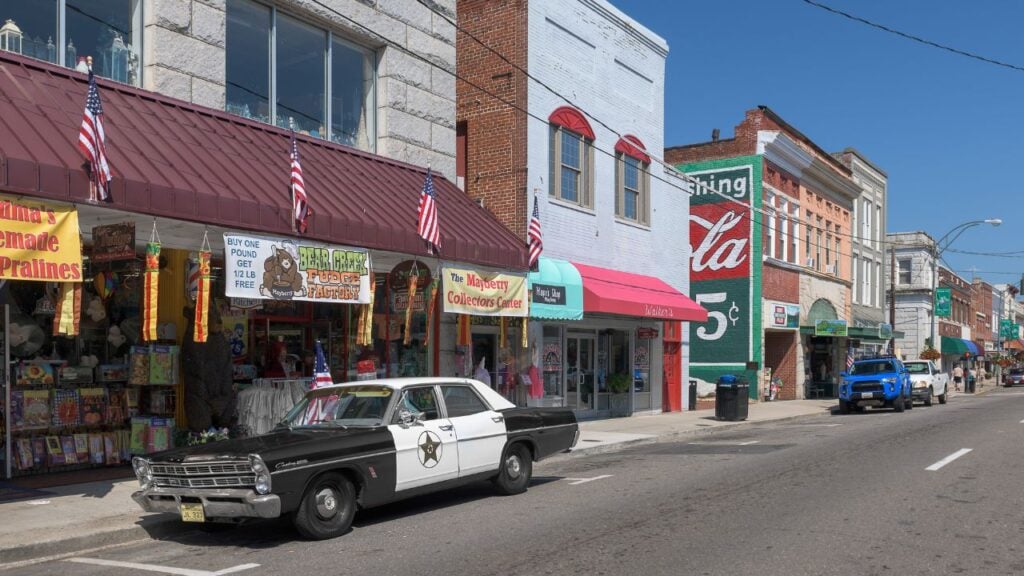
In one eastern town, the typical house is worth less than half the statewide median.
A Social Security check covers a lot more of the month once you're off the coast, and the state never taxes it.
The Cheapest Places to Retire in North Carolina in 2026
10 Things Getting More Expensive for North Carolina Retirees in 2026

Even the Carolinas aren't immune to a rising bill.
Home insurance rates jumped again this year, and it wasn't the first hike retirees have swallowed lately.
10 Things Getting More Expensive for North Carolina Retirees in 2026
