
9 Southern Food Tricks That Sound Wrong Until a South Carolinian Shows You

Would you guess that Duke’s Mayonnaise, the jar many South Carolina pantries keep for sandwiches, also turns up in dessert?
To many out-of-staters, that sounds like a joke.
But in South Carolina, some of the tastiest food traditions are the ones that seem like they shouldn’t work, yet somehow do.
1. Dousing Pork in Mustard
A pork plate glazed the color of a highlighter is South Carolina’s own entry in a four-way barbecue argument no other state can even join.
South Carolina is the only state where mustard, vinegar-and-pepper, light tomato, and heavy tomato sauces all claim home turf.
German settlers who moved into the Midlands in the 1700s brought a habit of pairing pork with mustard, and their sauce still centers on Newberry County today, a few counties inland from where vinegar and tomato take over.
Why mustard, though?
Mustard’s sharp acidity cuts through a fatty cut of pork the same way vinegar does in the state’s other sauce: It doubles as a binder that holds the sauce to the meat instead of running off the way a thinner glaze would.
2. Boiling Peanuts for Hours
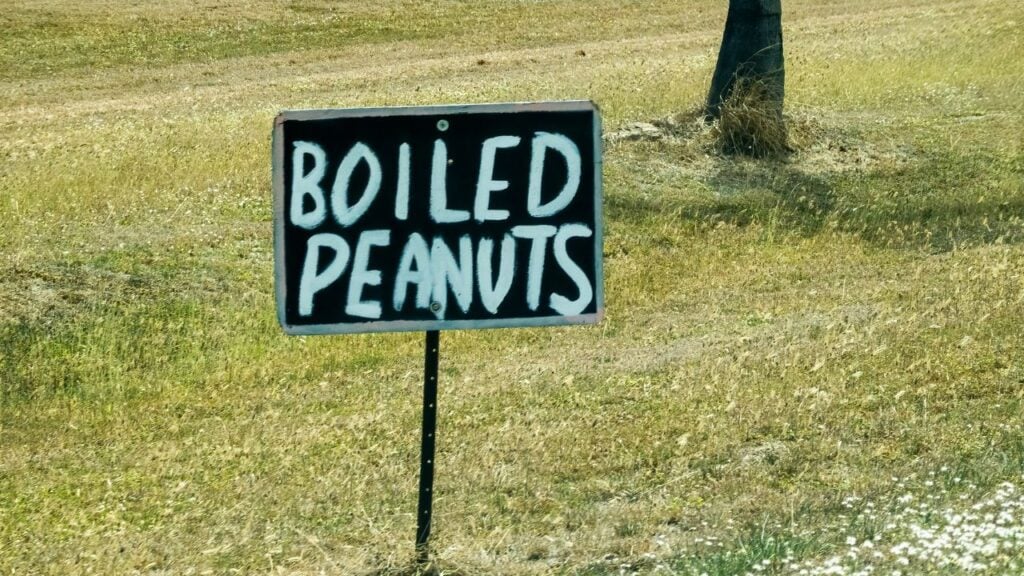
South Carolina cooks dunk raw peanuts, shell and all, into a heavy salt brine and let them simmer for six to eight hours until they turn soft.
A peanut that soft sounds ruined.
It’s the point.
The brine runs about one and a half cups of kosher salt for every four gallons of water, closer to a pickle bath than a snack recipe, and the finished peanuts taste more like a stewed bean than anything roasted.
South Carolina made the dish its official state snack in 2006, putting a legislature’s seal on a trick Lowcountry roadside stands had been selling for generations.
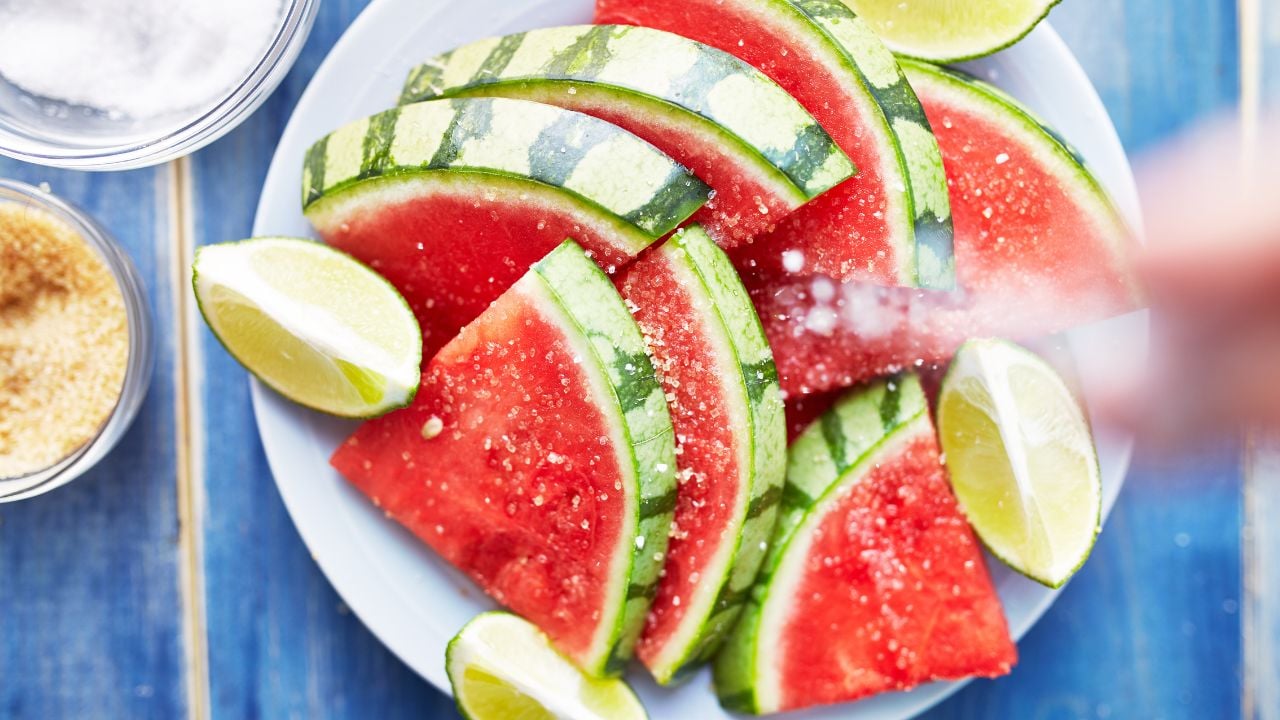
3. Salting a Watermelon
The oldest written record of salting watermelon in South Carolina runs back to 1910, when Columbia’s newspaper, The State, printed a recipe for the fruit iced with salt and a splash of sherry.
Newcomers still eye the shaker sitting next to the fruit.
Locals don’t blink.
The habit isn’t exclusive to South Carolina, or even to the South: Cooks in Japan and across Latin America have salted melon for generations too.
Salt masks bitterness on the tongue, so whatever faint bitterness sits in the fruit fades and the natural sugar comes through stronger, the same reason a pinch of salt shows up in desserts like caramel.
What’s Happening When South Carolina Reaches for the Salt Shaker
South Carolina’s watermelon trick has a second explanation that has nothing to do with masking bitterness.
Taste researcher Linda Bartoshuk, formerly of Yale University, coined the term supertaster for people whose tongues carry extra taste buds and register flavor more intensely.
Her research found more supertasters living in warmer climates.
That’s part of why hot-weather cuisines worldwide lean on salt to cut sweetness.
Salt also replaces sodium a body sweats out on a ninety-degree afternoon, so the shaker by the watermelon stand does double duty as a snack and a small dose of electrolytes.
4. Baking a Cake With Mayonnaise
Chocolate cake batter got a spoonful of mayonnaise stirred into it in South Carolina kitchens through the Great Depression, when eggs and oil ran short and mayonnaise’s own oil and eggs covered for both.
That sounds backward at the grocery store.
It isn’t.
Duke’s Mayonnaise, the jar many South Carolina kitchens still reach for, sits on a neutral, egg-rich base that keeps the crumb moist without leaving behind any tang once the cake bakes.
Eugenia Duke started the business in Greenville in 1917, but the mayonnaise didn’t reach store shelves as its own bottled product until 1923.
5. Glazing Ham With Cola
At South Carolina’s Sunday dinner table, a can of regular Coca-Cola stands in for a store-bought glaze on the holiday ham.
Pouring soda over meat sounds like a dorm-room shortcut.
It works.
Sugar is the reason: A can of regular Coke, never the diet version, caramelizes as the ham bakes and turns into a sticky glaze that also keeps the slices from drying out.
6. Dropping Baking Soda in the Peas
More field peas and southern peas come out of South Carolina’s fields than any other state’s, according to the latest Census of Agriculture, and home cooks there still drop a pinch of baking soda into the pot before the peas soften.
Baking soda in food sounds like a laundry-room ingredient that wandered into dinner.
It earns its spot.
An alkaline environment breaks down a pea’s cell walls. America’s Test Kitchen found beans turned tender in about 45 minutes with baking soda added, instead of the usual hour.
7. Dumping Dinner on the Table
South Carolina’s Frogmore Stew takes its name from a fishing community on St. Helena Island, near Beaufort, where the dish began.
Dumping a boiled dinner straight onto a bare table looks like a party that got out of hand.
That’s exactly the plan.
Cooks simmer potatoes first, add corn and sausage a few minutes later, and drop the shrimp in last for less than five minutes, then drain the whole pot and pour it out for guests to eat with their hands.
Psst! How much do you know about South Carolina food history? Take our quiz and see if you can ace it.
Quiz
South Carolina Food IQ
Answer these questions on South Carolina food history and lore. We bet you can’t get them all right. Prove us wrong?
Charleston’s she-crab soup gets its name, and its orange color, from what?
8. Building a Cobbler Backward
Peach cobbler in South Carolina gets built backward: Cooks pour melted butter and raw batter into the pan first, then dump sliced peaches on top without stirring.
A crust is supposed to end up on top, not buried under the fruit.
It still does.
Baking powder in the batter releases gas bubbles as the oven heats it, and those bubbles push the batter up and through the peaches, so the pan comes out with a golden crust floating over the fruit.
South Carolina growers produce the second-most peaches in the country. In some years, they produce more than double what Georgia's orchards bring in.
9. Sweetening a Pot of Greens
A spoonful of sugar goes into South Carolina's pot of savory collard greens, and the state grows more of that crop than any other, per the same agriculture count that ranks its field peas number one too.
Sugar in a dish built around bacon fat and vinegar sounds like a mismatch.
Not once you taste it.
Vinegar and pork fat cut the sweetness before it announces itself on the plate, the same balancing act the greens get every October at Gaston's Collard and Barbeque Festival.
9 South Carolina Small Towns Worth the Detour

The most interesting hour in South Carolina rarely happens where the tour buses park.
It happens down a two-lane road, in a town of three hundred people or three thousand, the kind locals don't bother mentioning because they figure you already know.
9 South Carolina Small Towns Worth the Detour
11 Culture Shocks People Experience When Moving to South Carolina
A neighbor mentions, almost offhand, that the alligator in the retention pond behind the cul-de-sac has been there since spring.
Nobody warns a new homeowner about that before closing, any more than they warn about the lawyer state law requires at the closing table.
11 Culture Shocks People Experience When Moving to South Carolina
