
9 Texas High School Football Traditions Outsiders Don’t Understand

Football fans turn a four-letter word into a wall of noise every Friday night in West Texas.
Outsiders hear it and ask what it means.
These are the Texas high school football traditions that out-of-staters don’t understand until they’ve spent time in the Lone Star State.
1. Homecoming Mums
A Texas homecoming mum starts as a single chrysanthemum and rarely stays that small.
The tradition showed up on a Texas campus at Baylor University in 1936, borrowed from a custom that started in Missouri.
By the 1990s, artificial flowers replaced fresh mums.
Mums grew ribbons, bells, charms, and a student’s name spelled out in glitter letters.
A premium mum now runs past $1,000 and trails to the floor.
Students wear them to school on football game day, not to the dance that follows it.
Not subtle.
It’s meant to be seen from clear across a school hallway.
What’s a Homecoming Garter?
Texas homecoming has a second accessory that mums don’t get credit for.
It’s called the garter.
It’s the boy’s version of a mum, sized to fit around an arm instead of draping over the shoulders.
It carries the same ribbons, bells, and charms, just scaled down to arm size.
The date usually designs and orders it, matching her mum to his garter before the game.
2. Six-Man Football
Six-man football keeps Friday nights alive in Texas towns too small to field eleven players.
Roughly 200 teams play it across the state today, many in towns where the whole roster could fit in one classroom.
The field runs 80 yards instead of 100.
A field goal counts for four points instead of three.
A first down needs 15 yards instead of 10.
Score gets out of hand fast.
If a team leads by 45 points or more after halftime, the game ends on the spot.
Players call it getting 45’d.
Outsiders picture backyard football.
Six-man teams still travel two hours each way for a district game, then do it again the following week.
3. Multimillion-Dollar Stadiums
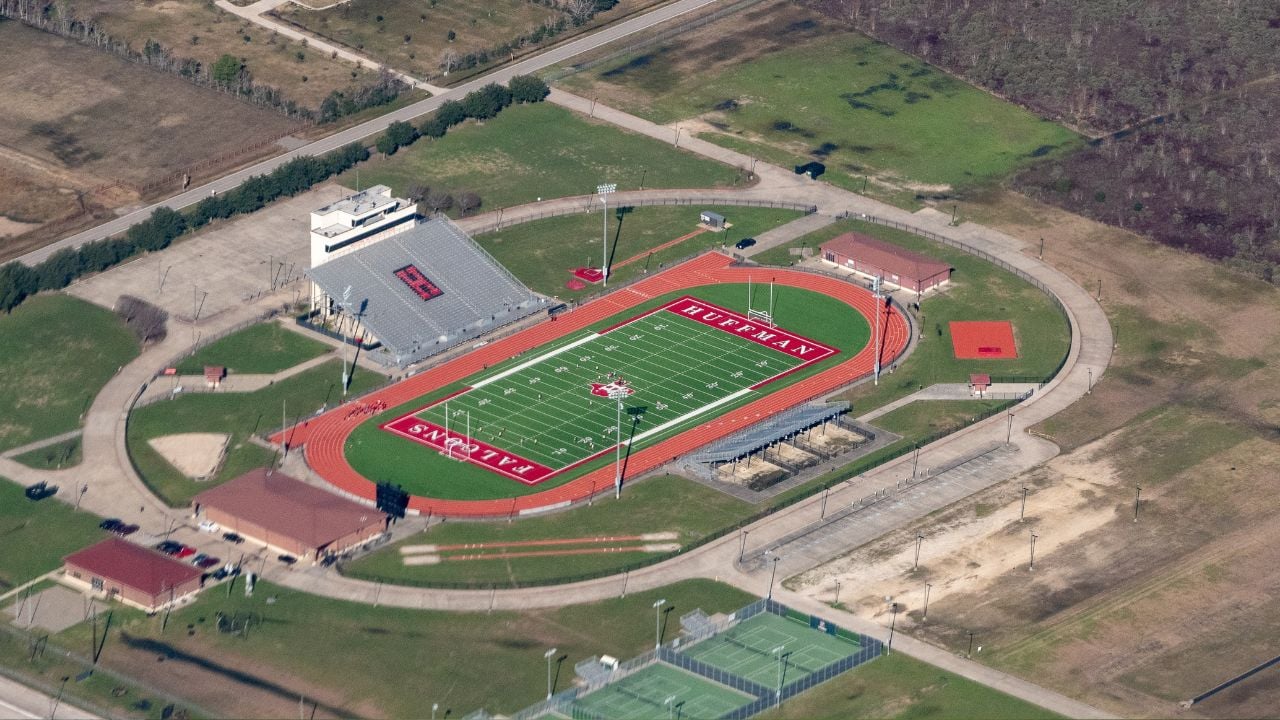
Texas high school football stadiums increasingly rival small colleges in size and price tag.
Voters keep approving nine-figure bonds for the projects, one district after another.
Cy-Fair FCU Stadium cost its Houston-area school district $80 million.
It seats 11,000 fans for a game between two public high schools.
It isn’t the only Texas stadium in that price range.
Allen Eagle Stadium ran $59.6 million and holds 18,000 people.
McKinney and Katy each built their own $70 million stadiums nearby.
All for high schoolers.
Taxpayers approve these projects through school bonds.
The money buys turf, lights, and video boards that could pass for something out of an NFL stadium.
Seven of the ten priciest high school stadiums in the state sit in the Houston area alone.
4. State Finals at AT&T Stadium
AT&T Stadium has hosted the UIL state football finals every year since 2010, with one exception.
That’s the home of the Dallas Cowboys.
Twelve championship games run there across four days each December, a game for every classification and every division.
High schoolers walk out of the same tunnel NFL players use on Sunday.
Some cry.
Some can’t stop smiling.
Nobody forgets that walk.
5. Permian’s Mojo
Permian High School’s rallying cry, Mojo, borrows a word many Odessa fans never realized had another meaning first.
The word entered English around 1922, most likely from a West African language.
It named a small charm carried for luck in African American hoodoo folk magic.
Permian fans started chanting it in the Odessa stands in 1967, decades after the word already had a life of its own.
A year later, the school’s pep squad sold bumper stickers reading “The Mighty Mojo Panthers.”
The band spelled the word out on the field before kickoff that same season.
Few fans in the stands ever traced the cheer back to a charm bag rather than a school invention.
The word still followed the Panthers into a book.
Then a movie.
Then a TV show, all three titled Friday Night Lights.
All three turned Odessa’s own Friday nights into a story the rest of the country still watches.
6. The “Bible” of Texas Football
Dave Campbell’s Texas Football hits grocery store magazine racks every summer.
It’s been doing it since 1960.
Fans call it “the Bible” because it previews every team that matters before anyone plays a single snap.
The annual edition runs 400 pages and covers more than 1,500 high school teams, plus college and pro programs.
Whoever lands on the cover fields questions about it for a year.
The pick stays secret until the issue hits shelves.
7. Six-Figure Coaches
Texas school districts compete for winning football coaches the way companies compete for executives, with bidding wars fought out in public board meetings.
Booster clubs help fund it, raising money aimed squarely at topping a rival district’s offer.
Southlake Carroll’s head football coach, Riley Dodge, earned $175,000 in 2025, the highest publicly reported salary for a coach in the Dallas-Fort Worth area.
He’s not alone.
Highland Park, Rockwall-Heath, Duncanville, and Allen all pay their head coaches past $150,000 a year, too.
A head football coach in the region now averages more than $125,000 a year.
Some coaches also serve as athletic director, adding a second salary on top of the first.
Districts pay for wins.
A coach who delivers them can expect a rival district to make a bigger offer within a year or two.
Psst! How much do you know about Texas high school football history? Take our quiz and see how many you can get right.
Quiz
Texas Football IQ
Answer these questions on Texas high school football history. We bet you can’t get them all right. Prove us wrong?
Six-man football wasn’t invented in Texas. Which state was it invented in?
8. Summer 7-on-7 Tournament
Texas high school football doesn't stop when the pads come off in June.
Teams travel to College Station every summer for the state's 7-on-7 tournament, a passing-only format that skips the offensive and defensive line entirely.
It's been running at Veterans Park for more than a decade.
Quarterbacks and receivers run routes against a defense that can only cover.
Rosters mix returning starters with freshmen trying to crack next fall's lineup.
The scoreboard still counts.
Programs travel hours to play games that never touch an official win-loss record.
9. Drill Team Kick Lines
The drill team stands apart from the marching band and the cheer squad at every Texas high school football halftime show.
It performs on the track between the band and the field.
The team's signature move is a high kick, performed in unison down the line.
Two Texas women, working independently in the 1930s, built the format from scratch.
Gussie Nell Davis refined a Greenville High School pep squad into something new through the 1930s.
She then founded the Kilgore College Rangerettes, which debuted in 1940 as the country's first precision dance-drill team.
Kay Teer Crawford founded a parallel group, the Sergeanettes, at Edinburg High School in 1936.
Davis and Crawford are jointly credited with starting the drill team tradition.
More than 1,000 Texas high schools field their own drill teams today.
Tryouts draw more than 30,000 students a year.
That's a lot of teenagers.
Officers wear all-white uniforms.
The rest of the team performs the matching kick lines in white hats and boots.
Realignment's Snapshot Day
The University Interscholastic League (UIL) resets nearly every Texas high school football district every two years.
The whole process starts on a single date.
Every school reports its enrollment on October 15, a day the UIL calls Snapshot Day.
One date decides it all.
More than 1,300 schools turn in a number.
Those numbers decide who plays in which of the six classifications, from 6A down to 1A.
Then the UIL draws new districts from scratch.
Fans plan road trips around whichever town lands in their district this time.
It happens again in two years, whether anyone's ready or not.
9 Odd Texas Laws Most Americans Have Never Heard Of
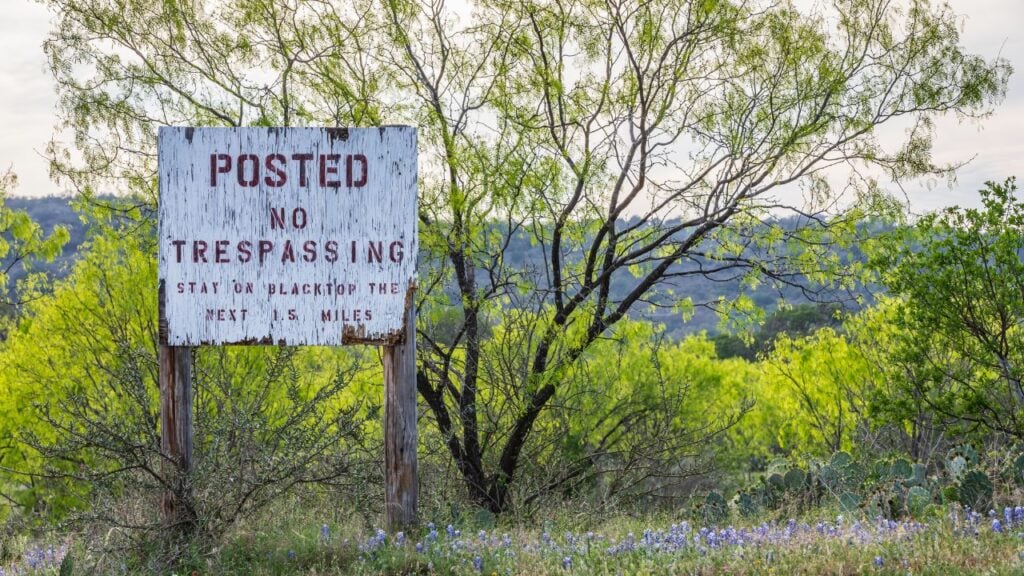
Texas law books hide a few rules that have nothing to do with Friday nights.
Some have just as much to do with how the state runs day to day.
From helicopter hog hunts to purple paint on a fence post, these are the statutes many Americans have never heard of.
9 Odd Texas Laws Most Americans Have Never Heard Of
8 Money Mistakes That Cost Texas Renters Every Year

Football season isn't the only place Texas plays by its own rulebook.
Renters who don't know the state's actual late-fee and deposit rules end up handing landlords money they never owed.
