
9 Texas HOA Rules Owners Find Out About After They Buy

Intro Option 1:
Texas has more homeowners associations (HOAs) than every state except California and Florida, covering an estimated 2.8 million houses.
Some of those rules protect a new owner more than they expect.
Others catch a new owner off guard the very first time reality collides with the rulebook.
These are the Texas HOA rules new owners often run into only after they buy their home.
Note: This is general information, not legal advice. Association rules vary by community and are subject to change, so check your own governing documents.
1. Special Assessments Skip a Homeowner Vote
A special assessment can become official in a Texas HOA without a single homeowner casting a vote.
There’s no ballot involved.
Unless the declaration itself says otherwise, the board only has to give proper notice of its own meeting under Section 209.0051 of the Texas Property Code, mailed 10 to 60 days out, or posted as little as 72 hours ahead if the board calls a special meeting to approve it (144 hours ahead for a regular one).
Show up, and the board votes on the bill in front of you.
Skip the meeting.
The assessment still shows up in the mail with the rest of your dues.
Texas sets no statewide dollar cap on how big that special assessment can run, so a new roof for the clubhouse or a busted retention pond can land on an owner’s account within weeks of closing.
2. Fines-Only Liens Can’t Take Your Home
Section 209.009 of the Texas Property Code draws a hard line: A Texas HOA cannot foreclose over unpaid fines alone.
Nothing about that line bends.
The rule blocks a foreclosure sale when the debt is nothing but fines the board levied, or attorney’s fees tied only to those fines.
That fear belongs to another state’s law, not Texas’s.
A stack of parking or paint-color citations can snowball into serious debt, but Section 209.009 keeps it from turning into a lost house.
An unpaid regular assessment works under a different rule, and it can still put a lien on the property.
Mix unpaid dues into the balance, and the fines-only shield disappears.
3. Foreclosure Still Needs a Judge’s Sign-Off
A Texas HOA with a solid lien still needs a judge’s order before it can foreclose, even when the debt is completely legitimate.
Section 209.0092 requires the association to get that Texas court’s order through an expedited foreclosure process, unless the owner agrees in writing to waive the step.
The courtroom step isn’t optional.
Some states let an association foreclose through a simple notice-and-sale process with no courtroom involved at all, which is where the “the HOA can just take your house” fear usually comes from.
Texas isn’t one of them, so an owner facing a lien still gets a hearing before anyone loses a home.
4. Missing the 30-Day Window Costs Your Hearing
A violation notice from a Texas HOA starts a 30-day clock on the day it goes into the mail, not the day it lands in your mailbox.
Section 209.006 gives the owner that window to request a hearing before the board, plus a chance to fix a correctable violation before any fine attaches at all.
Miss that window.
The hearing right is gone for good.
Many new owners toss the certified-mail slip as junk mail because they don’t recognize the association’s name yet.
By the time they open the follow-up bill, the 30 days already ran out.
Fix the violation inside the cure period, though, and the law says no fine can attach at all.
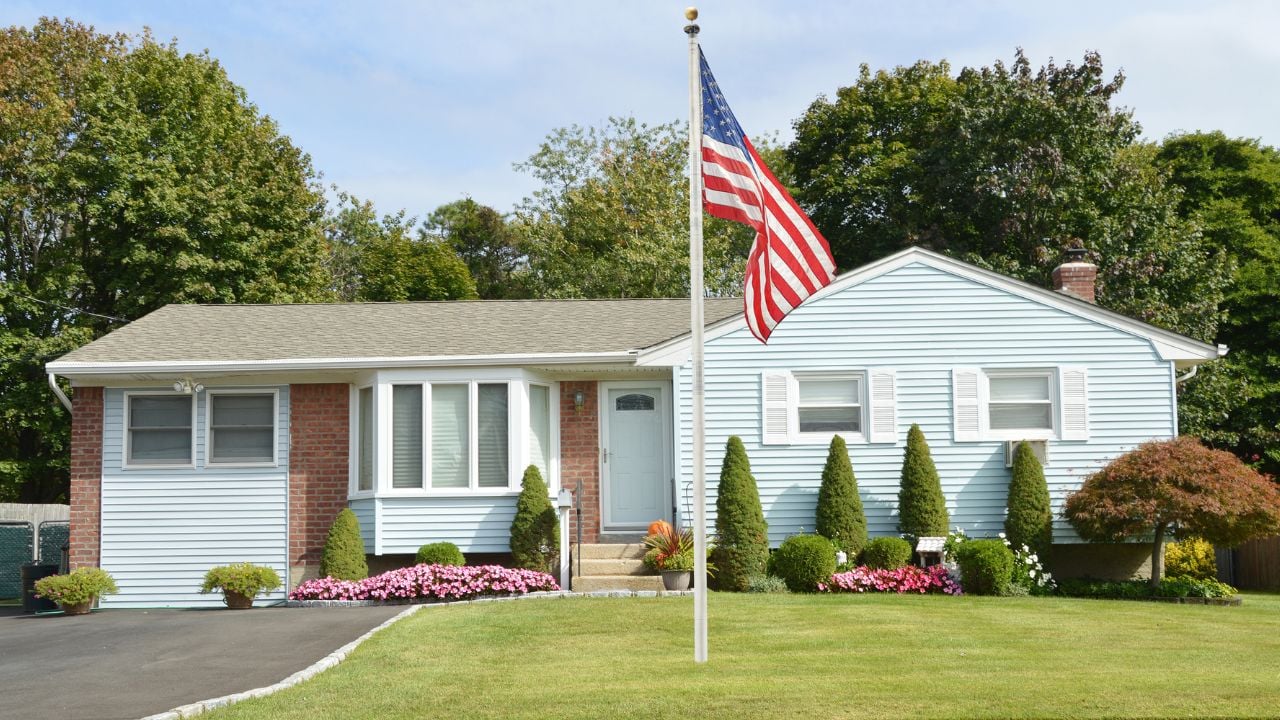
5. Your Flagpole Has a Height Limit
No Texas HOA can veto your right to fly the Texas flag, the United States flag, or an official military flag.
That part’s protected outright under Section 202.012.
The pole’s a separate question.
The same law lets an association cap a front-yard flagpole at 20 feet, limit an owner to one, and regulate the lighting and noise from an external halyard slapping against it at night.
An owner who plans on a tall commercial-style pole finds out fast that Texas protects the flag itself, not the size of the pole flying it.
Psst! How much do you know about Texas HOA myths and facts? Tap through these cards and see how many you can call right.
6. Solar Panels Answer to the Roofline
Section 202.010 keeps a Texas HOA from banning solar panels outright, but it doesn’t hand over the whole roof.
Approval isn’t automatic.
The same statute lets the association require sign-off before installation and reject a panel that rises above the roofline, doesn’t run parallel to the roof’s slope, or shows non-black, bronze, or silver hardware where it’s visible from the street.
The architectural committee is usually the first place a Texas homeowner hears about the roofline rule, often only after a permit already came back rejected once.
7. Xeriscaping Is Protected
Drought-resistant landscaping is one fight a Texas HOA already lost under state law.
A brown lawn breaks no rule.
Many new owners assumed a tidy green lawn was non-negotiable.
It never was.
Section 202.007 stops an association from prohibiting rain barrels, drought-tolerant plants, or an efficient drip-irrigation system, and it protects composting grass clippings on the lawn too.
A new owner tired of watering St. Augustine grass through a Texas summer can swap in native, low-water plants without the board’s blessing.
The HOA can still set reasonable aesthetic standards around the edges, so a plan that keeps beds tidy travels a lot smoother than a plan that doesn’t.
8. Political Signs Have a Clock
Political yard signs keep their protection from a Texas HOA for one stretch of the calendar every election year.
Section 259.002 of the Texas Election Code blocks a total ban from 90 days before an election through 10 days after it.
The association decides the rest.
Even inside that window, the association can still regulate placement, size, and how many signs go up on one lawn.
Outside the window, it has much wider room to restrict signs on its own terms.
Buy a house in October of an election year, and that sign in the yard next door is protected in a way it wouldn’t be the following spring.
9. Tow Trucks Don’t Have to Call First
A Texas HOA’s towing contractor can remove your car from a community street without contacting you before the truck shows up.
Section 2308.301 of the Occupations Code only requires a posted sign, at least 18 by 24 inches, with the towing symbol and a 24-hour phone number for finding the car afterward.
The truck doesn’t call ahead.
Park in a numbered spot that belongs to a neighbor, or leave a trailer on the street past the posted limit.
The sign at the entrance already did the legal notifying for the tow company.
Skip reading that sign on move-in day, and your empty driveway does the explaining instead.
Why the Rules Show Up Late
Texas Property Code Chapter 207 does force a seller’s HOA to hand over a resale certificate, but nothing in the closing process forces a buyer to read it first.
The request has to happen.
A buyer, a seller, an agent, or the title company can request that certificate.
Once someone does, the clock many homeowners never hear about starts running.
What a Texas Resale Certificate Lists
A Texas HOA resale certificate has to cover 16 items under Chapter 207, not just a yes-or-no on whether dues are current.
That packet spells out the exact balance owed to the association and any violation the board already knows about on that lot.
It also lists the reserve fund’s cash position and a copy of the association’s insurance.
The association has 10 business days to deliver it once the written request comes in.
A pending special assessment or an open violation on the fence line sits right there in that document.
Texas didn’t hide the information; the closing process just never forced anyone to open the file before the movers showed up.
Short-Term Rentals Aren’t Guaranteed Either
Texas HOAs can restrict or ban short-term rentals like Airbnb and Vrbo listings, even in a neighborhood that allowed them when a homeowner first bought in.
The rule isn’t frozen.
An association can amend its declaration through a membership vote and add a leasing restriction years after a buyer signs.
That amendment binds every owner in the subdivision once it’s recorded, not just future buyers.
An owner who bought the house to run a weekend rental near Austin or the Hill Country can lose that income stream to a vote they didn’t call and might not have won.
A board resolution alone can’t create that restriction, though.
It takes an actual amendment to the recorded declaration, voted on and filed with the county the same way the original restrictions were, before a leasing cap can be enforced against an owner who already closed.
8 Property Tax Mistakes Costing Texas Homeowners Every Year

Pay a Texas property tax bill one day late, and the penalty hits 6% by the next morning.
By July it rises to 12%, with interest still stacking on top every month.
8 Property Tax Mistakes Costing Texas Homeowners Every Year
9 Odd Texas Laws Most Americans Have Never Heard Of
Some rules on the Texas books protect everyday freedoms, and others govern situations many people would never think to write a law about.
A few of them read like a dare.
