
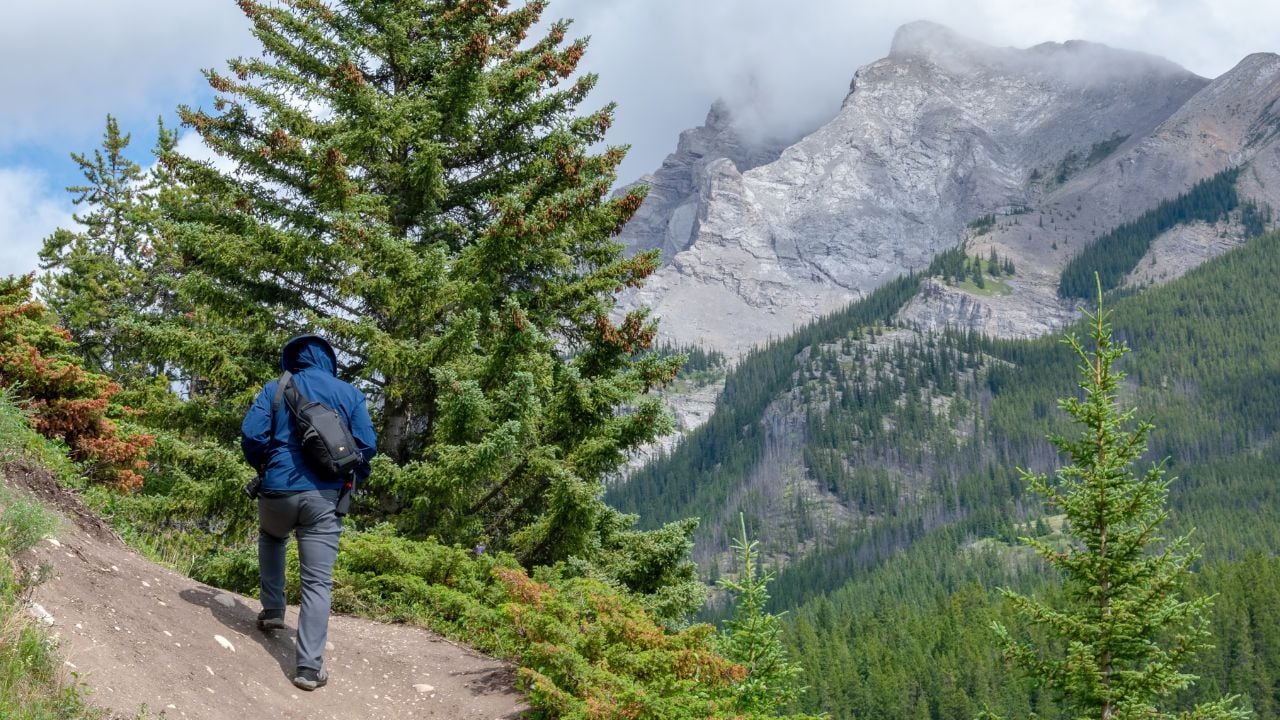
9 Things Coloradans Never Leave Home Without When Heading Into the Mountains

Fall in the Colorado high country can bring sunshine, snow and hunting season all in the same week.
Coloradans who head up often pack for every kind of day, not just the one in the forecast.
Here’s what to have with you before you head into the mountains.
Note: This is general information, not medical or legal advice. Health guidance and road rules are subject to change, so confirm the current traction law requirements with the Colorado Department of Transportation.
1. CORSAR Card
The Colorado Outdoor Recreation Search and Rescue (CORSAR) card costs $5 for one year or $20 for five, according to Colorado Parks and Wildlife.
You can buy it at cpwshop.com, by phone or at any Colorado Parks and Wildlife sales location.
The agency’s Backcountry Search and Rescue program delivers the search and rescue itself at no cost to the person in need.
If a search is launched for you and you have a card, or an eligible Parks and Wildlife license or registration, a reimbursement payment to the county is processed immediately.
What the CORSAR Card Leaves Out
Colorado Parks and Wildlife says the CORSAR card isn’t insurance for the person who buys it.
It doesn’t reimburse you for medical expenses, and it doesn’t pay for medical transport.
Without a card, an eligible license or an eligible registration, the county’s reimbursement request is held until the end of the year.
If money is available in the fund at the end of the year, the requesting county receives reimbursement.
2. Bear Spray
Bear spray leads Colorado Parks and Wildlife’s short list of tools to keep on hand when you hike in bear country.
A whistle and a tin can of coins or rocks that make noise when shaken are on the list too.
Don’t assume the bears have gone to sleep yet.
Most of the state’s bears are active from mid-March through early November.
Fall brings a stretch of compulsive overeating called hyperphagia.
Keep the bear spray where you can grab it fast, not at the bottom of your pack.
If you’re camping, spray is no substitute for bearproofing your campsite.
3. Rain Shell and Warm Layers
A rain shell and extra layers of clothing sit on the National Park Service’s essentials list for the high country in Rocky Mountain National Park.
A bright, sunny day can turn windy and wet within minutes, with driving rain or snow.
The Colorado Mountain Club says afternoon storms, wind and sudden cold fronts are the norm in the mountains throughout the year.
September and October are a stretch of crisp air, blue skies and generally dry weather, though an early snowstorm may occur.
In its cold-weather advice, the park lists a warm hat, a windproof or waterproof jacket, and mittens or gloves.
Keep a shell in the pack even on a clear morning.
If your layers are in the trunk, they can’t help you at the top.
4. Bright Clothing
Colorado’s second regular rifle season for deer and elk runs October 24 to November 1 in 2026, according to Colorado Parks and Wildlife’s big game season structure.
During muzzleloader and rifle seasons, the agency recommends that other recreation users wear bright colors as well.
It isn’t required.
Your bright jacket or hat from the closet does the job.
Blending in isn’t your goal.
5. Traction Devices
Colorado’s Passenger Vehicle Traction Law is in effect from September 1 through May 31 on the I-70 Mountain Corridor between Dotsero and Morrison, the Colorado Department of Transportation says.
If your drive includes I-70 between Dotsero and Morrison, October falls inside that window.
If you drive a two-wheel-drive vehicle on I-70, the Colorado State Patrol says you need chains or an approved alternative traction device installed on two or more drive tires.
Upgrading to all-season tires doesn’t bring a two-wheel-drive vehicle into compliance.
If you drive an all-wheel-drive or four-wheel-drive vehicle, the department says your tires need at least 3/16 inch of tread and an all-weather, mud-and-snow or mountain-snowflake rating.
Psst! How much do you know about heading into the mountains? Take our quiz and see how many you can get right.
Quiz
Mountain Trip IQ
Answer nine questions on bears, altitude and mountain weather. We bet you can’t get them all right. Prove us wrong?
Colorado Parks and Wildlife says bear spray is proven to be more effective than what at deterring bears?
6. Topographic Map and Compass
The Colorado Mountain Club's Ten Essentials guide calls a topographic map, kept in a protective case or baggie, essential, along with the skill to read it.
A compass is necessary too, especially if you get off course.
The Colorado Search and Rescue Association says rescue teams can need anywhere from 30 minutes to 30 hours or longer to reach a lost or injured person.
The club describes a global positioning system (GPS) receiver as nice to have but dependent on working batteries, user skills and reliable electronics.
Learn how your compass works at home because a fork in the trail is a poor place for a first lesson.
7. Headlamp
A Boulder County news release said three climbers on the Naked Edge route in Eldorado Canyon State Park had no headlamps when darkness fell on April 12, 2026.
All three climbers returned safely to the trailhead at about 2:25 a.m.
Carry reliable headlamps with extra batteries, even on routes you expect to finish in daylight.
With a headlamp on, both of your hands stay free for trekking poles, a map or a climb over rocks.
Check the batteries before you leave the house, not at the trailhead.
The Colorado Mountain Club adds that alkaline batteries lose power in extreme cold, so keep them insulated or close to your body.
8. Extra Water
Extra water belongs in the pack because the National Park Service tells Rocky Mountain National Park visitors to drink several quarts of water per day.
The Colorado Mountain Club adds that high altitude increases the amount of fluid you lose through breathing.
High altitude also raises the chance of dehydration, severe sunburn and mountain sickness, which brings headaches, nausea and dizziness.
The park's essentials list names extra food and water together.
Fill your bottle at the trailhead, and carry a second bottle.
9. Sunscreen and Sunglasses
The Colorado Mountain Club calls sunscreen and sunglasses indispensable at Colorado's altitude, noting that ultraviolet (UV) rays penetrate clouds.
The Centers for Disease Control and Prevention (CDC) says ultraviolet B (UVB) light is most intense during midday, from 10 a.m. to 4 p.m., and at higher elevations.
For your skin, choose a broad-spectrum sunscreen with a sun protection factor (SPF) of at least 30.
For your eyes, look for polarized lenses rated UV 400, a label for lenses that block nearly all damaging ultraviolet light.
Put sunscreen on at the trailhead, and reapply it every 2 to 4 hours.
Trail Ridge Road Closure
If you're driving into the mountains, Trail Ridge Road inside Rocky Mountain National Park normally closes in mid-October, according to the National Park Service's closure announcement.
In 2025, the park closed the road to through travel on November 14.
Winter conditions of drifting snow, high winds and below-freezing temperatures occur above 10,000 feet.
You can call the park's recorded Trail Ridge Road status line at (970) 586-1222 before you head up.
9 Fitness Tracker Numbers Coloradans Shouldn't Take Seriously
You can log a lot of your movement on a wrist these days.
A few of the readings on that screen are worth questioning.
9 Fitness Tracker Numbers Coloradans Shouldn't Take Seriously
7 Radon Findings That Stall a Colorado Home Sale

Buyers and sellers both hope the inspection goes smoothly.
One test result can change what happens next.
