
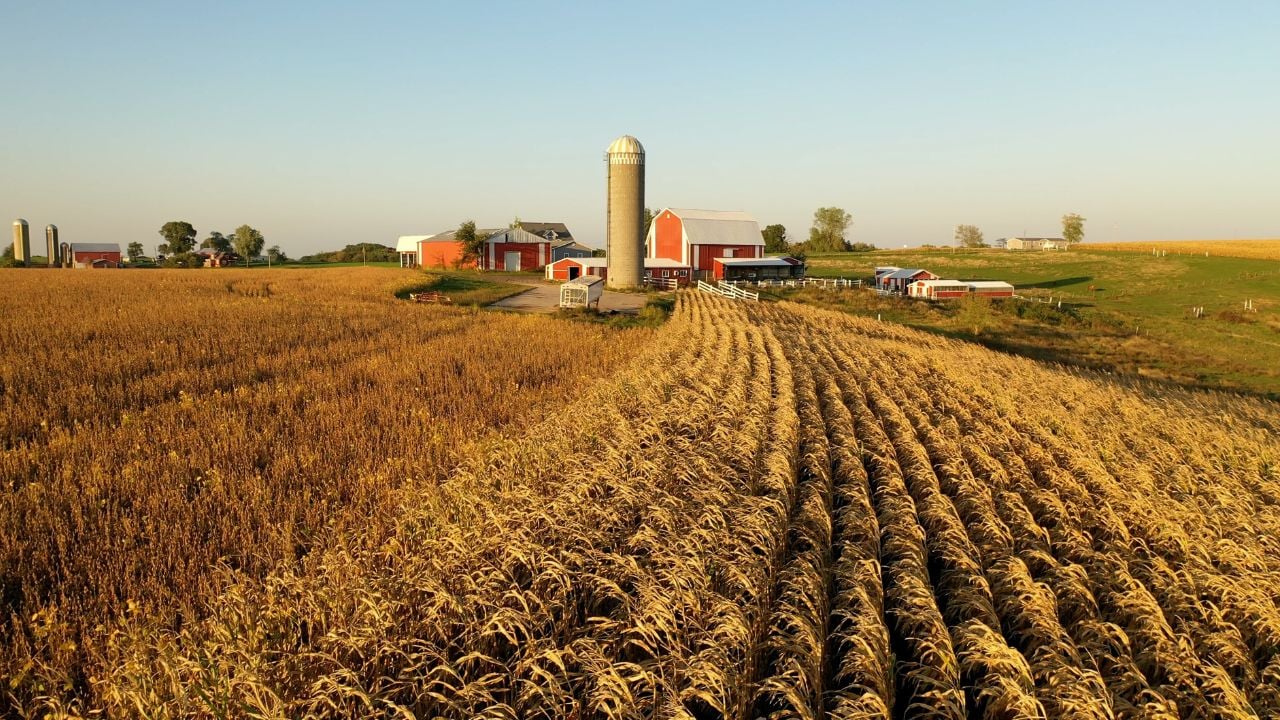
9 Things Iowa Farm Families Should Settle Before Anyone Retires

Two-thirds of Iowa farmland belongs to someone 65 or older. Landowners 75 and up hold more than a third of that.
The people farming that ground aren’t usually ready to step back from it until someone younger is ready to take over.
These are the things Iowa farm families should settle before anyone retires.
Note: This is general information, not financial, tax, or legal advice. Succession rules, tax figures, and exemption amounts are subject to change.
1. No Plan in Writing
Farm families tend to put off the succession conversation until somebody forces it into the open.
Fewer than 44% of Iowa farm operations under 1,000 acres have that plan in writing, according to Iowa State University Extension and Outreach.
Nobody wants to start it.
Iowa State built a free portal and workbook in 2026 to close that gap, plus a mediation service for families who waited too long to talk it out.
56% of the people who’ve used the free portal said it would save five to fifteen hours of attorney work.
A quarter put the value of catching problems early above $25,000.
2. Credit for the Years Worked
Iowa farm families often split everything evenly among the kids on paper, whether or not one of them spent 20 years running the place.
Iowa State’s succession planning guidance, built alongside the same free portal above, urges families to weigh that imbalance directly instead of defaulting to an even split.
Crediting the years an heir spent running the operation, in cash or in added ownership, is the fix the guidance points to.
Otherwise, families just assume the estate will sort it out later.
Off-farm siblings notice.
A sibling who left for a career in the city can see an equal split as fair.
A sibling who milked cows before school every day for a decade usually doesn’t.
3. Land Bought Along the Way
Farm operations rarely stay the same size across one career, and what happens to the extra acres bought along the way becomes the next argument.
Nebraska Extension’s farm-transition research, covered by Farm Progress, found the same fight breaking out on operations that expanded after an heir came back to farm.
The dispute comes down to one question: Should that newer land divide equally among every heir, or credit the one who helped grow it?
Debt complicates it further.
That same research found land bought later in a farmer’s career often carries debt the other heirs never knew existed.
Those conversations rarely happen until a death forces the topic.
Dividing that ground into smaller parcels can feel fair in the moment, but it can also leave a farm too small in pieces to run well.
Handing it all to one heir instead can strain the family relationships the split was supposed to protect.
4. Gridlock After the Split
Farm families who inherit land together as tenants in common quickly learn nobody can just farm a share and call it settled.
Iowa State’s estate and succession planning workbook warns that co-owners can’t each plant 300 acres of the same field.
Decisions on renting, selling, or planting need everyone’s agreement instead.
Iowa State’s teaching materials describe a mother left holding 48% of a family operation after her husband’s sudden death, with the couple’s four children holding 12% each.
Voting together, those children pushed the business toward expansion with no dividends, leaving their mother without income from a stake she still owned outright.
Ownership isn’t control.
5. Full Price or a Break
Landowners face a split decision once they’re ready to hand off ground: Sell to whoever pays the most, or make room for a beginning farmer instead.
Iowa State survey data shows 40% of landowners open to working with a beginning farmer would take a below-market price for someone they saw as hardworking.
Half worried those newer farmers couldn’t afford fair market value at all.
About 40% of Iowa farmland changed hands in the past two decades, the same researchers found, and just 2% of it went to young or beginning farmers.
Full price isn’t guaranteed.
Splitting the difference, a price nobody quite loves, is often the version everyone signs.
Psst! How much do you know about the fine print behind passing down a farm? Flip these cards and see how many you get right.
6. Naming a Daughter
Farm families still default to sons more often than daughters when it comes time to name a successor, even when a daughter put in the same years of work.
An Iowa State analysis of Iowa farmers found 57% named a son as their identified successor, versus just 8% who named a daughter.
That’s not close to even.
A woman running the operation picks a daughter as the next generation’s leader about 12% of the time, the same analysis found, versus roughly 6% for a male operator.
Men still run many farms, though, so families rarely put the pattern to the test.
7. Retirement Without Gutting the Farm
Iowa farm families face a math problem funding retirement: Selling land or equipment to cash out can trigger capital gains and depreciation-recapture taxes.
Those taxes shrink the payout before it ever reaches a bank account.
Leasing spreads it out instead.
Iowa State’s retirement planning guidance for farm families points to leasing the ground instead of selling it outright.
That trades a smaller lump sum for a steadier check that doesn’t force a tax hit in one year.
Farmers also have a harder time picturing retirement than many workers, the same guidance notes.
So much of their identity is tied up in an occupation instead of a job.
A modern retirement can stretch 25 to 30 years past the day the keys change hands.
Iowa’s Retired-Farmer Tax Break
Iowa lets a retired farmer skip state tax on certain farm income, but the eligibility line trips people up.
The cash-rent exclusion is for someone 55 or older who owned the land and materially participated in farming for at least 10 years.
Taking that election is permanent, though, and it locks out the separate capital-gains exclusion.
It also locks out Iowa’s beginning farmer tax credit, so a family has to pick one path and live with it.
8. Uneven Tax Basis
Iowa farm families who think an equal split of land means an equal inheritance often miss the tax math sitting underneath it.
Iowa State’s estate and succession planning workbook walks through a case where farmland bought at $3,000 an acre grew to $12,000 an acre by the time it passed down.
One heir’s share came as a lifetime gift and kept the original low tax cost.
The Internal Revenue Service (IRS) reset another heir’s share to full market value the same day. That share passed down at death instead.
The tax bill isn’t equal.
That gap often surfaces only after a sale, when one heir owes far more than another ever will on the same parcel.
9. Gifting Now or Later
Farm families weighing whether to gift land now or wait until death face a trade-off, not just a paperwork choice.
The federal estate-tax exemption sits at $15 million per person for 2026, up from $13.99 million in 2025, under a federal tax law enacted in 2025.
Gifting early skips that reset.
A gift made during someone’s lifetime carries over the original, often lower, cost basis, while the IRS resets land passed down at death to its current value instead.
For a larger operation, AgWeb reports a farm partnership’s negative capital accounts can run $5 million to $10 million on paper.
Gifting that stake during life can turn part of it into ordinary income, the same income a family avoids by waiting until death instead.
Heirs who wait inherit the stake instead, and the ordinary-income hit disappears along with it.
Neither path is free, which is exactly why the family has to pick one on purpose instead of by default.
8 Yosemite Mistakes Tourists Make Once Summer Ends

Labor Day just cleared out the parking lots at Yosemite, and the park’s calendar moved on just as fast.
One of the park’s most useful shuttles, the line that saves hikers from hunting for parking in the high country, is already counting down its final days for the year.
