

9 Things New Virginia Residents Get Wrong About Their Neighbors

Buying a bag of birdseed to feed the backyard birds sounds like a friendly gesture to many new Virginia residents.
Their neighbors and forty-four Virginia counties disagree.
State wildlife code treats it as illegal deer feed the moment deer start eating it.
These are the things new Virginia residents often get wrong about how their neighborhood operates.
Note: This is general information, not legal advice. Property, wildlife, and local ordinance rules vary by county and are subject to change, so check your own county’s current rules.
Trimming a Neighbor’s Branches
Virginia lets a homeowner trim a neighbor’s overhanging branches back to the property line without asking anyone first.
It surprises many new arrivals who hear it for the first time.
Many assume a neighbor’s tree is off-limits until the neighbor says otherwise, so a branch loaded with leaves keeps dropping onto a new patio for a full season before anyone reaches for the pruning shears.
The trim can only go up to the line, and the tree itself has to survive it.
Virginia’s Supreme Court changed the bigger question in 2007, ruling in Fancher v. Fagella that a neighbor can sue over the whole tree, not just clip at it, once roots or branches cause actual harm.
Cosmetic annoyance still isn’t enough.
Splitting the Fence Bill
Virginia treats a boundary fence as a shared expense between neighbors, not a solo project.
State law requires the owners on both sides of the line to build and keep up a division fence at joint and equal cost, unless one side agrees to leave the land open.
That invoice is usually the first anyone new to the state hears about it.
The law calls it a shared bill, never a favor.
Fix a leaning fence, and an invoice follows.
The neighbor who never signed off on the repair still owes half the bill.
Refuse to pay. Virginia law lets the other owner collect that half through a court action, not an awkward conversation over the property line.
Underestimating the HOA Board
Virginia’s homeowners associations (HOAs) put a new resident’s actual neighbors in charge of decisions many newcomers assume some distant company handles.
More than 811,000 housing units in Virginia answer to one.
The board voting to approve or deny a fence, a paint color, or a shed is usually a handful of people from a few doors down, not a faceless office.
A new resident treats that board like a suggestion box.
A friendly wave at the mailbox carries no weight at the next board meeting.
Virginia’s Property Owners’ Association Act backs that same board with an actual lawsuit, seeking an injunction or money damages, on top of whatever fine the covenant already allows.
The neighbor two doors down can end up suing over a fence color.
Virginia law says that’s allowed.
Shooting on Your Own Land
Virginia doesn’t let “it’s my property” settle the question of a gun going off near a neighbor’s house.
State law bans handling a firearm in a way that endangers anyone’s life or property, no matter whose yard someone fires it in.
Not a chance.
Counties tighten that further, and the distance changes at the county line.
Chesterfield County keeps every shot 600 feet from a dwelling.
Prince William draws the line at 100 yards, unless the neighbor inside that zone gives permission first.
That permission piece surprises people most.
A next-door neighbor’s sign-off, not a property survey, decides whether target practice is legal.
Fighting the Farm Next Door
Virginia protects a working farm from a new neighbor’s nuisance complaint, and it protects it hard.
Under the state’s Right to Farm Act, nobody can sue an agricultural operation over noise, odor, or dust if that operation was already running and reasonably knowable before the new resident moved in.
The tractor at dawn, the manure smell after a rain, the crop dusters over a field at sunrise: All of it can stay legal as long as the farm follows standard practices.
A lawsuit doesn’t undo any of it.
The pretty pasture view sells the house long before anyone reads the deed’s fine print about what pastures do.
By the time the silage smell hits in August, the lawsuit was never an option.
Filling the Backyard Bird Feeder
Virginia treats a backyard bird feeder as the neighbor’s problem before it’s ever a wildlife problem, the moment deer start eating from it.
The deer it draws pile up in the yard next door.
It’s usually that neighbor, not the new resident filling the feeder, who calls it in.
State code counts corn, salt licks, apples, and birdseed spilled on the ground as illegal deer feed the moment deer start eating it.
Good intentions don’t earn an exception.
Forty-four Virginia counties and cities ban the practice year-round, Fairfax, Arlington, and Loudoun among them.
The rest of the state still bans it for four months every fall and winter.
A new resident pictures a friendly gesture to the local wildlife.
The neighbor whose yard now floods with deer, and whose car nearly hit a deer on the way home, pictures something else entirely.
When Virginia’s Deer-Feeding Ban Applies
Virginia runs two separate deer-feeding rules, not one.
Everywhere in the state, feeding deer is illegal from September 1 through the first Saturday in January, the stretch that covers hunting season.
In 44 of Virginia’s counties and cities, many of them clustered around Fairfax, Arlington, and Loudoun in Northern Virginia, the same ban runs 365 days a year with no off-season at all.
A newcomer checking the rule in July, months before the statewide window opens, can still be breaking the law depending on which side of a county line the feeder sits.
Skipping the Sidewalk Shovel
Virginia lets certain counties turn snow removal from a courtesy into a legal duty.
Richmond backs the same idea with its own separate city ordinance.
State law allows Northern Virginia’s Planning District 8 counties, Arlington among them, to require property owners to clear the sidewalk in front of their home within a set window after snow stops falling, backed by a civil penalty of up to $100.
That’s not nothing.
Richmond is an independent city, not a county, so that state statute never reaches it.
Richmond requires the same sidewalk clearing under its own City Code § 24-34 instead, with its own separate enforcement.
A transplant from a milder climate rarely expects a shovel deadline written into law.
Their next-door neighbor, who slipped on the unshoveled patch walking the dog to the corner, doesn’t treat it that way.
Burning the Leaf Pile
Burning a leaf pile in a new Virginia yard feels like a private habit to a lot of newcomers, something between them and their own backyard.
Virginia’s fire code says otherwise.
The state’s burning law restricts open burning during fire season each spring, permitting it only after 4 p.m., and local fire marshals add permit rules and distance requirements on top of that.
4 p.m., not noon.
A leaf pile lit at noon back home doesn’t survive first contact with a Virginia spring.
Smoke that drifts onto a neighbor’s property during that restricted window is exactly the kind of complaint that reaches the same local fire department that issues the burn permits in the first place, not just a neighbor’s dirty look.
Psst! How much do you know about Virginia’s neighbor customs? Take our myth-or-fact challenge and see how many you get right.
Hunting the Woods Out Back
Virginia doesn’t let a new resident’s own “back 40” put the neighbor’s opinion out of the picture.
State law requires a hunter, including the neighbor who has hunted that same tree line for thirty years, to get the new owner’s actual permission before setting foot on the land, posted signs or not.
Some new owners assume no posted signs means open season for anyone.
Others post every tree on the property line and assume the sign alone settles things with that same neighbor.
A conversation with the neighbor next door decides it, not a fence post.
Hunting unposted land without asking still carries a fine up to $500, and hunting posted land without asking can carry a fine up to $2,500 and up to twelve months in jail.
Ask first, or post the line.
Either way, the conversation with that neighbor is what keeps a hunt legal.
How the Rules Shift Across Virginia
Virginia’s neighbor rules change shape depending on which side of a county line a new resident lands on.
HOA density is one of the sharpest examples.
Virginia’s associations charge an average monthly fee of $325, one of the ten highest state averages in the country per Virginia REALTORS.
That cost concentrates hardest in the same crowded Northern Virginia suburbs where deer-feeding and firearm-discharge ordinances also tend to run stricter.
A rural county two hours south of Fairfax may have no HOA on a given street at all, let alone a board voting on paint colors.
That same rural county is far more likely to put an actual working farm next door, protected by the same Right to Farm Act that rarely comes up in a Loudoun County subdivision.
8 Things Virginia Home Sellers Do That Kill the Sale

A signed contract on a Virginia home isn’t the same as a sold house.
Buyers walk away often enough that a handful of avoidable seller mistakes end up costing thousands at the worst possible moment.
8 Things Virginia Home Sellers Do That Kill the Sale
3 Virginia Historical Markers That Got History Wrong
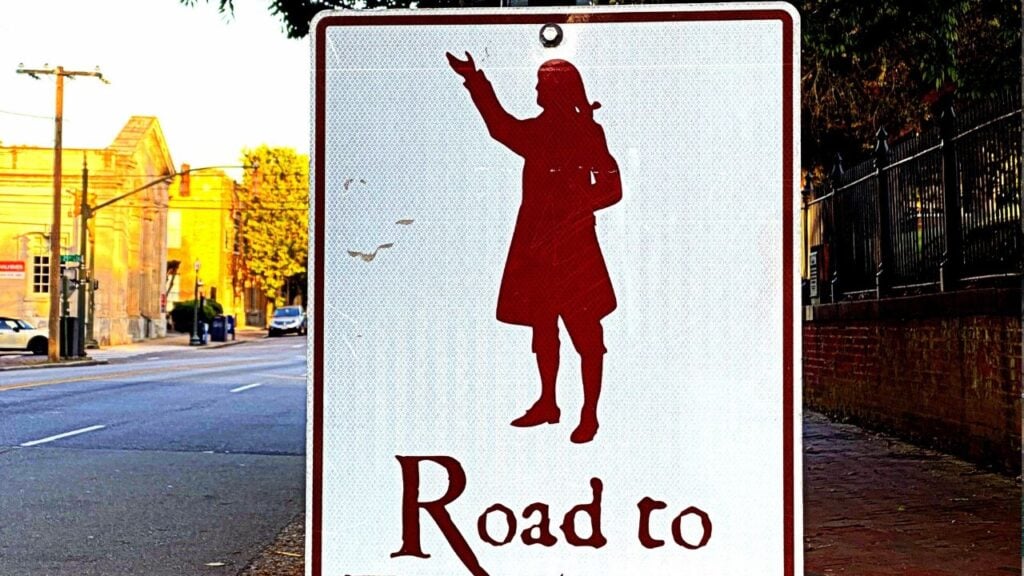
A Virginia roadside marker can stand for decades before anyone checks whether it’s true.
These are the official state markers a researcher finally corrected, long after they went up.
