
9 Things Ohioans Stop Buying at the Grocery Store the Week the Weather Turns

Basil leaves turn black once the temperature dips to 40 degrees, according to Rutgers’ agricultural extension.
But Cleveland’s first real freeze doesn’t arrive until around October 28, per the National Weather Service.
Ohio’s carts change over in the weeks between those two numbers, well before the first freeze arrives.
These are the things Ohioans stop buying at the grocery store the week the weather turns.
1. Watermelon and Cantaloupe
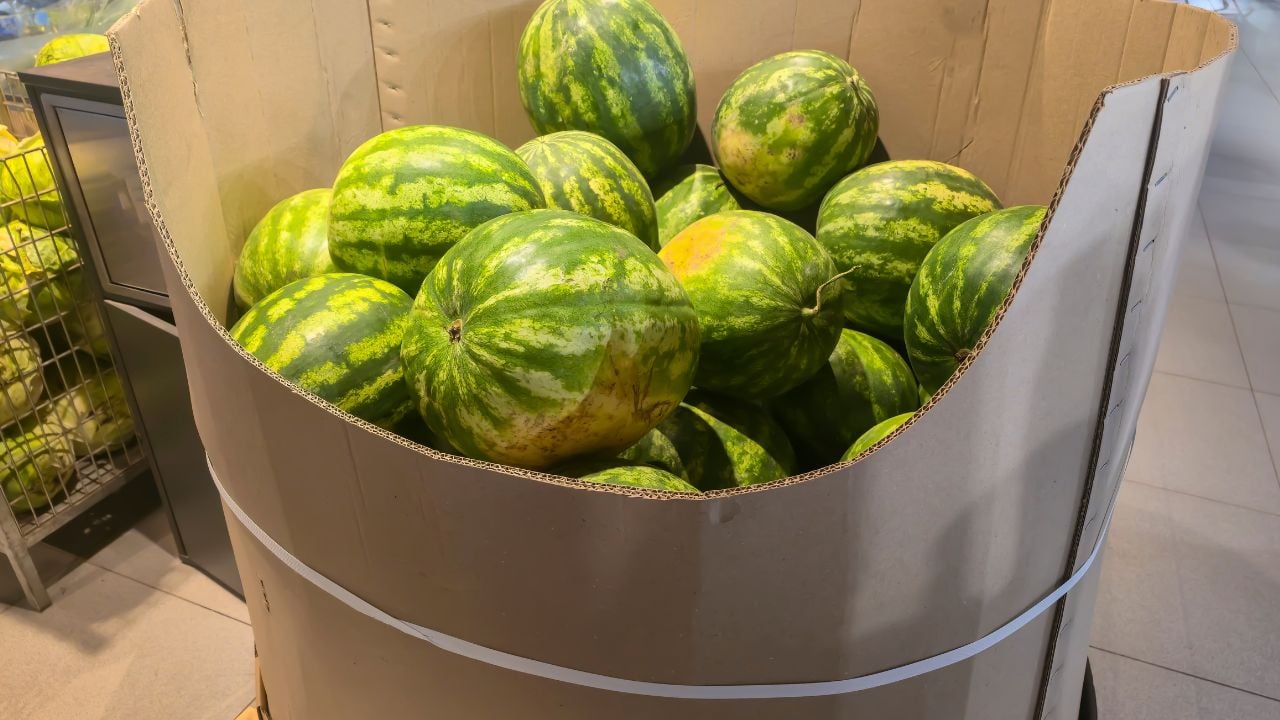
Watermelon and cantaloupe pile up by the front doors of many Ohio grocery stores all summer, stacked for the next cookout or pool party.
The week the weather turns, many produce departments cut that display down to a single stack tucked near the bananas.
Melons belong to the cucurbit family, the same group as cucumbers and squash.
Extension horticulture guides for home gardeners count them among the crops with no frost tolerance at all.
One cold night finishes off a local melon patch for good.
Then it’s gone.
Melon growers who sell at Ohio farm markets wrap up their harvest around that same cold snap, and local supply disappears fast.
Once it’s gone, many Ohio shoppers stop buying watermelon and cantaloupe until next summer rather than pay more for the imported fruit that replaces it.
2. Fresh Basil
Fresh basil is the first thing many Ohioans stop buying once the weather turns, weeks before frost ever touches a tomato plant.
Basil goes first.
The reason is almost unfair to the plant: Rutgers’ agricultural extension notes that basil leaves turn black once temperatures dip to 40 degrees.
A 32-degree freeze is still weeks away across much of Ohio when that happens.
Grocery basil bunches disappear on the same timeline, arriving thinner and pricier for the few weeks before they’re gone.
Pesto season ends fast.
Ohio’s Freeze Line Moves Across the State
Ohio doesn’t hit its seasonal turn all at once; the cutoff moves across the state over about two weeks.
Weather forecasters track two separate numbers: A “frost,” around 36 degrees, and a harder “freeze” at 32 degrees that finishes off almost everything still growing.
The National Weather Service’s Cleveland office puts that city’s first freeze around October 28, the latest average freeze date of Ohio’s three largest cities.
Cincinnati’s first freeze lands around October 25 and Columbus’s around October 27, according to the National Weather Service’s Wilmington office.
Both dates fall just a few days ahead of Cleveland’s, since Lake Erie keeps that city’s air a little warmer into fall.
3. Local Sweet Corn
Local sweet corn builds every Ohio grocery produce table’s late-summer display, and Ohio State University’s extension office marks exactly when Ohioans stop buying it.
The season runs from about July 1 until the first frost, typically late September into early October.
That’s a fixed deadline, not a guess.
Once frost hits, Ohio-grown corn stops arriving at the loading dock, and many Ohio Kroger produce sections either swap in corn shipped from farther south or drop the bin completely.
Deliveries stop.
Many Ohio shoppers who filled a bag with local ears all August stop buying corn altogether once it’s the trucked-in version, waiting instead for next year’s local crop.
4. Vine-Ripened Tomatoes
Vine-ripened tomatoes hold on a little longer than corn in Ohio, but not by much.
Tomato plants are frost-tender the same way corn and squash are, and one hard freeze turns a loaded vine into compost overnight.
Cleveland’s average first freeze runs a few days behind Cincinnati’s and Columbus’s, but the difference is only days, not weeks.
Then it’s over.
Grocery produce sections swap the local vine-ripened bin for hothouse tomatoes trucked in year-round.
Many Ohio shoppers stop buying tomatoes at that point rather than pay more for the hothouse version’s flatter taste.
5. Cucumbers and Bell Peppers
Cucumbers and bell peppers don’t get much extra time in Ohio once the tomatoes go.
Both are frost-tender crops with zero cold tolerance, the same category that covers watermelon and cantaloupe.
Ohio gardeners who spent August handing off grocery bags of extra cucumbers to neighbors watch that surplus disappear within days of the season’s first cold snap.
Supply runs dry.
Local bins thin out fast in many Ohio grocery stores, replaced by peppers and cucumbers trucked in from warmer growing regions at a higher price.
Many Ohio shoppers stop buying them by the bagful once that happens, picking up just enough for one meal instead of a whole bag like they did all summer.
Psst! How much do you know about Ohio’s fruits, farms, and grocery history? Take our quiz and see if you can ace it.
Quiz
Ohio Harvest IQ
Answer these questions on Ohio’s fruits, farms, and grocery history. We bet you can’t get them all right. Prove us wrong?
Ohio’s official state beverage, made law in 1965, comes from which grocery-aisle staple?
6. Zucchini and Summer Squash
Zucchini and summer squash spend all of August practically giving themselves away in Ohio, piled on porches and church potlucks faster than anyone can cook them.
Then the joke ends.
Squash plants are among the frost-tender crops Ohio gardeners grow, and a single cold night collapses the vines completely.
Zucchini bins that stayed packed and cheap in many Ohio grocery stores all summer thin out and cost more per pound once local supply disappears.
Many Ohio shoppers stop buying zucchini and summer squash at that price.
They wait for it to show up again next July instead of paying more for a vegetable that used to be free.
7. Hot Dogs, Burgers, and Bratwurst
Grilling season has an expiration date in Ohio, and hot dogs, burgers, and bratwurst go first.
The National Hot Dog and Sausage Council counts the season as Memorial Day through Labor Day, when it estimates Americans go through roughly seven billion hot dogs nationwide.
Labor Day ends that math.
Many Ohio grocery meat departments swap the oversized grilling multi-packs for smaller portions built around a slow cooker instead of a grill grate.
Many Ohioans feel the shift at the register before they feel it in the weather.
8. Charcoal and Grilling Fuel
Charcoal and grilling fuel follow the same seasonal pattern nationwide, and Ohio grocery stores are no exception.
Clorox, the company behind Kingsford, has pointed to its spring-into-early-summer fiscal quarter, the stretch covering the start of grilling season, as the brand's biggest sales run of the year.
National demand drops off once that quarter ends.
Many Ohio grocery stores stop restocking the charcoal display as fall produce and decor take over the same seasonal endcap.
Cookout season is done.
9. Ice Cream and Frozen Treats
Ice cream and frozen treats don't stay stacked two and three deep in Ohio grocery freezer cases past summer the way they do in July.
The stock thins out fast.
The International Dairy Foods Association lists March through September as the industry's busiest stretch for making ice cream in the first place.
Once the weather turns, shoppers reach for the freezer case less often, and many stores thin out the novelty variety packs that dominated it all summer.
A pint of something still sells here and there, just not by the cartful anymore.
8 Ohio Diner Traditions That Are Slowly Disappearing

Ohio lost close to 400 restaurants and diners in its northeast corner alone last year, even as hundreds of new places opened in that same stretch.
Rent, thin staffing, and rising food costs are squeezing longtime owners, and a few diner habits are going with them.
8 Ohio Diner Traditions That Are Slowly Disappearing
12 Products From 2016 That Are Suddenly Cool Again Among Ohioans in 2026

A shopper at a Cleveland-area consignment shop stops on a pair of leggings in a loud purple paisley print, the old LuLaRoe tag still stitched inside.
She pays five dollars for pants that cost three times that a decade ago, and she's far from alone.
12 Products From 2016 That Are Suddenly Cool Again Among Ohioans in 2026
