

9 Things That Give Away Someone Who Grew Up in Kansas

You can take a Kansan out of Kansas, but a few habits tend to come along.
From a quick phrase to the way you talk about the weather, Kansans often give themselves away without realizing it.
See how many of these sound like you.
1. Pronouncing the Arkansas River
The Arkansas River gets a different pronunciation in Kansas than it does in the state of Arkansas.
Mental Floss says that in Kansas, it’s the ar-KAN-zus River and ar-KAN-zus City, with the stress on the second syllable.
Say it the Kansas way in another state, and you’ll often get a correction.
The Arkansas River starts high in the Rocky Mountains and flows through Kansas.
The Arkansas Secretary of State’s office says the state settled on ARkansaw in 1881, when the General Assembly passed a resolution after the state’s two U.S. senators disagreed over the pronunciation.
2. Rock Chalk
Rock Chalk started as a chemistry professor’s idea.
E.H.S. Bailey proposed the first version of the University of Kansas (KU) cheer on May 21, 1886.
It began as “Rah, Rah, Jay Hawk, KSU,” repeated three times, and KU’s history site says the terms KU and KSU were used interchangeably in the late nineteenth century.
Within a year, the Rah, Rah had turned into Rock Chalk.
The person or people responsible are unknown, though the geology professors in Snow Hall, whom Bailey credited with the alteration, likely played a role.
The geology department pointed out in 1956 that chalk outcroppings aren’t found on KU’s hill, though they’re found in western Kansas.
3. EMAW
Every Man a Wildcat, shortened to EMAW, is among the most popular phrases fans use, according to the Kansas State athletics site.
Many Kansans choose between Rock Chalk and EMAW long before they choose a college.
The Wildcat part is newer than the school, since Kansas State used Aggies as its nickname for its first 19 seasons of athletic competition.
Coach John Bender tried Wildcats before the 1915 season, and Charles Bachman renamed the team Wildcats in 1920, when the nickname stuck.
The music department burned down in the fall of 1968, and the only music saved was in the band director’s briefcase.
One of those pieces, the Wabash Cannonball, became a second fight song.
4. Kansas Day
The first Kansas Day was a history class in Paola in 1877.
Teacher Alexander LeGrande Copley set aside an afternoon to study the geography, history and resources of Kansas.
Students covered the blackboard with drawings of the state seal and maps of the state, the county and the township.
They also listed the banner counties in wheat, corn, oats, hay and cattle.
Speeches by a few boys followed, along with questions in Kansas history that one side of the room asked and the other answered.
Kansas Day falls on January 29 and marks statehood, the Kansas Historical Society says.
Teachers and students across the state celebrate it today, and adults who grew up in Kansas remember it fondly, including those who’ve moved to other states or countries.
5. Bierocks
Bierocks are baked German stuffed rolls filled with beef, cabbage and onion, according to a local television report on the Hays Oktoberfest.
Volga Germans who settled in Ellis County put bierocks on the Kansas table.
Those settlers arrived in 1876.
A KMUW report on 150 years of Volga German heritage in Kansas says it’s not unusual to find bierocks, sauersuppe and streusel kuchen at family gatherings in the region.
Quiz
Kansas Insider Quick-Fire
Answer nine quick questions on Kansas history and trivia. We bet you can’t get them all right. Prove us wrong?
Dan and Frank Carney borrowed how much from their mother to open the first Pizza Hut in Wichita?
6. Oz Jokes
The Kansas Historical Society calls The Wizard of Oz one of the most powerful sources of Kansas imagery.
Many lifelong Kansans have heard "we're not in Kansas anymore" more than once.
Nathan Dowell, a museum director in Liberal, told public radio in 2023 that he has heard the line more times than he can count.
He jokes that his grade school made students watch the film each year as part of the state curriculum.
The story itself is based on Dorothy's attempt to return home to Kansas.
7. Spring Wind
April is on average the windiest month of the year, with March and May also posting the highest average wind speeds, the National Weather Service office in Goodland says.
April 2022 ranked first in Goodland's records in all three wind categories the office tracks, including an average daily wind speed of 17.7 mph and 10 days with gusts of at least 50 mph.
In Dodge City, the wind speed in April 2018 ran more than 4 mph, or 15%, above the historical average, Kansas State University's climate office reported.
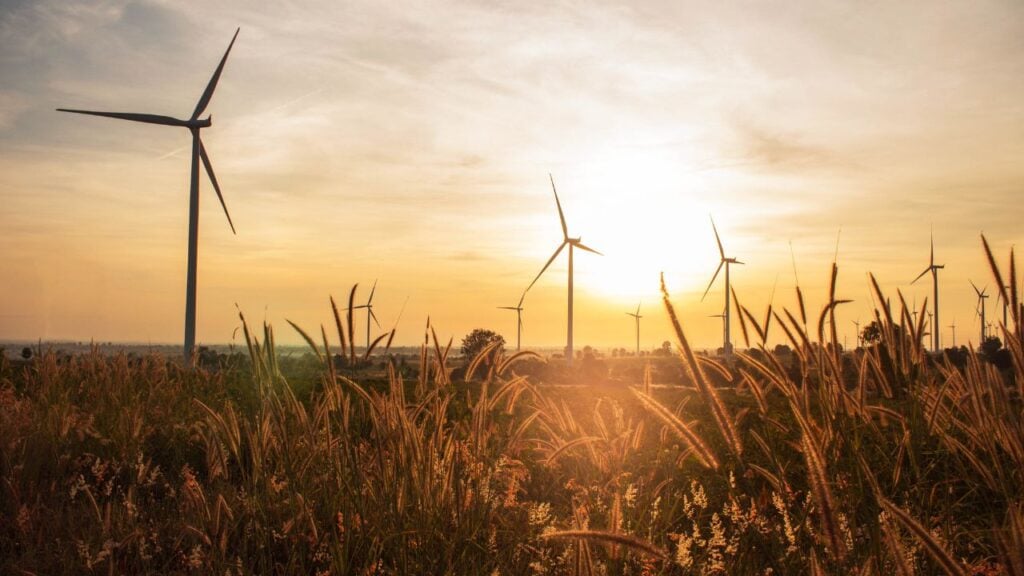
Wind turbines supplied 36% of the electricity generated in Kansas in 2018, a larger share than in any other state.
A 2024 state profile also lists wind as the state's primary energy source.
8. Tornado Season
Many Kansans can tell a tornado watch from a warning without having to look it up.
Tornado season in Kansas historically runs from mid to late April through mid June, according to the National Weather Service in Wichita.
The daily peak historically falls between 4 p.m. and 8 p.m.
In records going back to 1950, Kansas ranks third in the country at 4.4 tornadoes per 100 square miles, behind only Oklahoma and Florida.
There's also a secondary minor peak in October and November, when the onset of winter battles the relatively mild fall air mass still in place.
Tornado Watch Versus Tornado Warning
A tornado watch means tornadoes are possible in and near the watch area, the National Weather Service says.
That's the time to review your emergency plans and check your safe room.
A tornado warning means someone has sighted a tornado or weather radar has indicated one.
That signals imminent danger to life and property.
9. Wheat Harvest
The Kansas Historical Society's online exhibit on wheat farmers describes wheat harvest as a job for the whole family, from grandparents to young kids.
Family lore credits Mennonite families from Russia with bringing Turkey Red wheat seed to Kansas, where they planted their first crop around Goessel in 1874.
Some experts dispute the story, arguing it's unlikely the immigrants carried enough seed to plant a significant first crop.
A vast number of modern wheat varieties grown in Kansas can be genetically traced to Turkey Red.
Custom cutters are professional harvesters who contract with farmers to cut wheat.
Many crews head south in late spring and then move north with the ripening wheat, some traveling from Texas to Canada.
3 Hy-Vee Services Kansans Are Paying For and Never Use
Many Hy-Vee shoppers in Kansas pay for extras that sit unused.
These are the services some of them overlook.
3 Hy-Vee Services Kansans Are Paying For and Never Use
9 Things Kansas Does Better That Oklahomans Won't Admit
Which Kansas region holds a big share of the tallgrass prairie that remains?
These are the areas where some Kansans say their state comes out ahead.
