
9 Things That Make Indiana Feel Like Two Different States

Indiana can look like one tidy rectangle on a map.
Drive it from top to bottom, though, and the land, the weather and even the clocks change along the way.
Here’s what makes northern and southern Hoosiers feel a world apart.
1. Where the Glaciers Stopped
The glaciers of the last ice age didn’t extend to southern Indiana, according to the Children’s Museum of Indianapolis.
Meltwater from the northern ice carved the rivers and hills that dominate the south today.
In the north, the ice retreated more quickly and left behind ridges of glacial till that are still mostly flat.
In Brown County, glaciers stopped short of the hills.
Their meltwater helped create the narrow ridges, steep slopes and deep gullies of Brown County State Park.
It covers nearly 16,000 acres.
2. Two Time Zones
Indiana has 92 counties, and 12 of them are on Central Time, according to the Indianapolis TV station WRTV.
The other 80 stay Eastern.
Those 12 counties sit in two groups, one in the northwestern tip of the state and one in the southwestern tip.
Federal rules put the dividing line on county borders.
In the north, it follows the LaPorte, Starke, Marshall, Pulaski, Jasper and Newton county lines.
In the south, it ends where Perry County meets Kentucky.
3. Lake-Effect Snow
Annual average temperature varies by about 10 degrees Fahrenheit from north to south, according to the 2022 State Climate Summary for Indiana.
Snow runs the other way.
Lake Michigan is the source of the lake-effect snow that piles up in the north.
That leaves the southwest with about a fifth as much snow as those northern spots.
How Far Lake-Effect Snow Reaches
Lake-effect snow from Lake Michigan can extend as far inland as Elkhart in the north-central part of the state, according to the state climate summary.
In January 2014, one lake-effect storm dropped 18 inches of snow on Gary in five hours. That lake is the source of the heavy snow in the north.
4. Amish Settlements
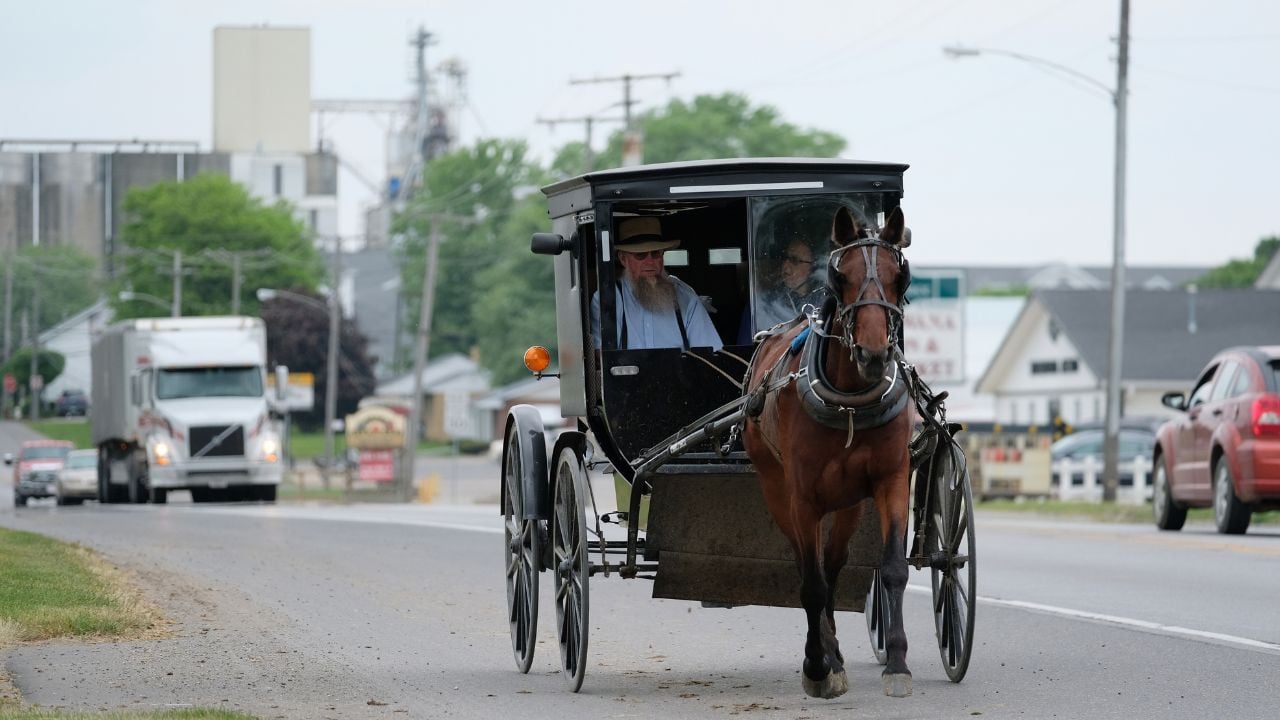
Indiana has 68,025 Amish residents in 28 settlements, according to the Young Center for Anabaptist and Pietist Studies.
Only two states have more.
The largest settlement, in the Elkhart and LaGrange counties area, has 30,795 people.
That makes it the third-largest Amish settlement in the country.
Five of the country’s 12 largest are in Indiana.
The Daviess County area in southwestern Indiana has 6,490 people, roughly a fifth of the Elkhart and LaGrange total.
5. Hoosier National Forest
Hoosier National Forest covers 205,000 acres in the hills of south-central Indiana, according to the U.S. Forest Service.
That’s about 320 square miles.
It’s a mix of rolling hills, back-country trails and rural crossroad communities.
It has more than 260 miles of trails for hiking.
Those hills sit in southern Indiana, where the last ice age’s glaciers didn’t extend.
Psst! How much do you know about Indiana history? Take our quiz and see if you can ace it.
Quiz
Indiana History Pop Quiz
Answer nine questions on Indiana’s people, places and past. We bet you can’t get them all right. Prove us wrong?
In 1833, the Indianapolis Journal printed one of the first references to the word “Hoosier.” What form did it take?
6. Indiana Dunes National Park
Indiana Dunes became a national park on Feb. 15, 2019, when Congress changed its name from Indiana Dunes National Lakeshore.
Congress first authorized 8,330 acres for the lakeshore in 1966.
That was only the beginning.
Four expansion bills between 1976 and 1992 pushed it past 15,000 acres, a fraction of the 205,000 acres in Hoosier National Forest.
If you're coming from Chicago, the park is about an hour away, according to the National Park Service.
Even in the mostly flat north, the Hoosier Slide dune was 200 feet in height, the largest on Indiana's lakeshore.
7. Caves and Sinkholes
Indiana's mapped sinkhole areas are in southern Indiana.
The Indiana Department of Transportation names two primary karst areas, the Mitchell Plateau and the Crawford Upland.
Sinkholes there form where bedrock collapses over an underground void, and caves are voids big enough for a person to enter.
The Mitchell Plateau runs from eastern Owen County south to the Ohio River in Harrison County and into Kentucky.
In the northern two-thirds of the state, thick glacial material covers rock layers that could otherwise form karst.
The ice mattered.
8. Steel Mills
Indiana led the country in steel production for the 42nd straight year in 2016, making 24.4 million tons, the Indianapolis public media outlet WFYI reported.
That was 27 percent nationally.
The major mills sat in Gary, East Chicago and Burns Harbor, all on the south shore of Lake Michigan.
In south-central Indiana, limestone quarrying was the primary industry for most of a century.
9. Limestone Quarries
The Indiana Limestone Institute of America centers the stone in Lawrence, Monroe and Owen counties.
Many of the state's key limestone quarries are also in the Mitchell Plain.
It's called Salem Limestone.
That formation lies directly beneath the surface of the Mitchell Plain, where it can easily be quarried in open pits.
Indiana limestone clads buildings from the Empire State Building to the Pentagon, according to the institute.
If you've seen either landmark, you've seen Indiana limestone.
Clocks Before 2006
Before 2006, only about a dozen Indiana counties followed daylight saving time with the rest of the country, according to the Indiana Capital Chronicle.
Roughly 76 didn't.
Those counties switched between Eastern and Central Time whenever other states changed their clocks.
The General Assembly passed statewide daylight saving time in 2005.
The House passed the bill by a single vote, and Gov. Mitch Daniels signed it.
Hoosiers first sprang forward together in 2006, across all 92 counties.
5 Ways Hoosiers Get Money Back From Meijer After They've Already Paid
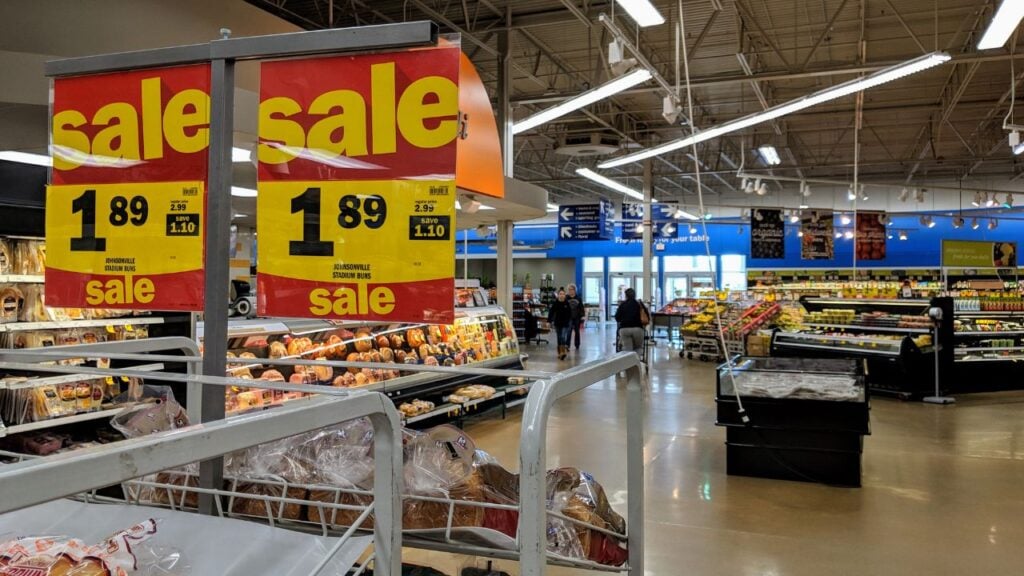
Paying isn't always the last step at checkout.
A handful of options at Indiana locations can send cash back your way.
5 Ways Hoosiers Get Money Back From Meijer After They've Already Paid
9 New Car Technology Features That Leave Hoosiers Asking Why
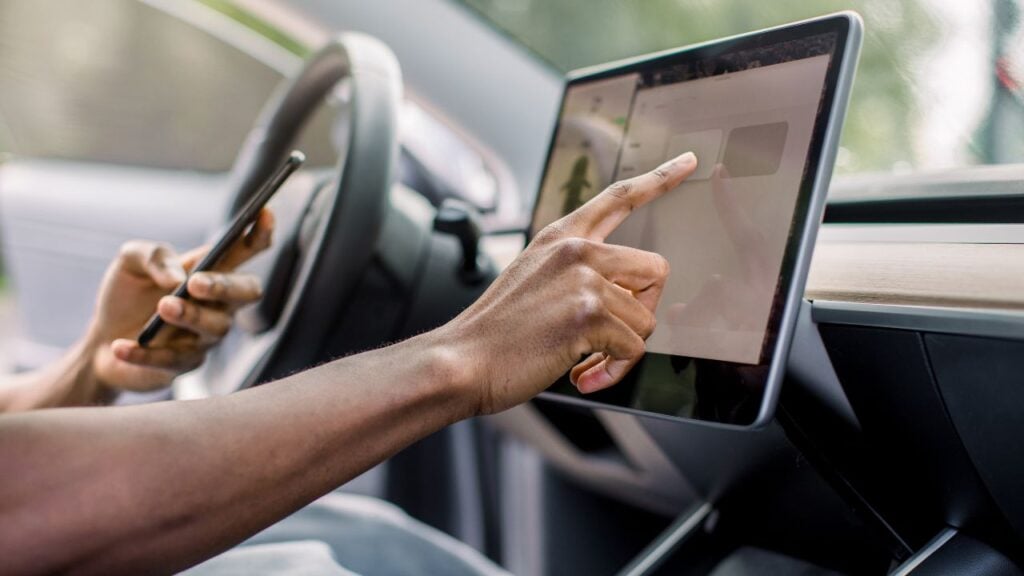
New cars keep adding screens in places that used to have none.
These are the new car technology features that leave Hoosiers, and Americans everywhere, asking why.
9 New Car Technology Features That Leave Hoosiers Asking Why
