
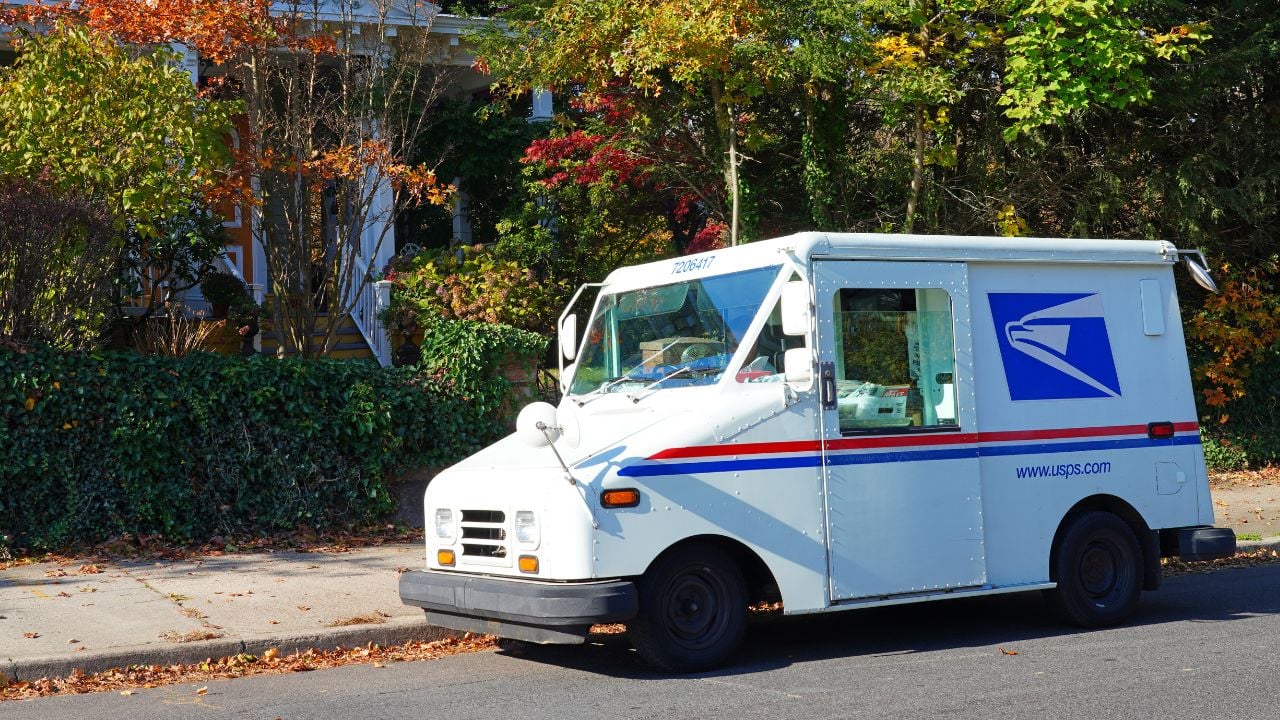
9 Things West Virginia Mail Carriers Know About a House Before Anyone Answers the Door

U.S. Postal Service workers experienced more than 5,200 dog attacks nationwide last year.
A loose dog is the obvious warning; a carrier reads plenty more about a house before ever touching the porch steps.
These are the things West Virginia mail carriers know about a house before anyone answers the door.
1. A Mailbox Left Full
A stuffed, uncollected mailbox reads as information to a mail carrier, not just clutter piling up.
The Postal Service and the National Association of Letter Carriers have run a joint program training carriers to watch for exactly that kind of pileup since 1982.
On an elderly or homebound customer’s route, that same pileup becomes a possible warning sign.
Carriers also watch for curtains that stay drawn and snow nobody has walked through.
Together, they add up.
A carrier who notices the pattern reports it to a supervisor.
The supervisor passes the word to a local agency, such as a United Way chapter or an Area Agency on Aging.
Someone checks on the house soon after.
2. A Dog on the Route
A dog in the yard is the first thing a mail carrier reads on a house, often before the numbers on the box even register.
An animal straining against a fence, barking hard at the gate, or pacing a porch rail sends one signal.
A dog stretched out asleep in the sun sends another.
The posture says it first.
A chained gate, a hand-lettered warning sign, or an empty doghouse with no dog in sight can tell a carrier almost as much about a household as the dog.
One documented incident is enough to flag an address for the rest of that carrier’s route.
Delivery there stops until the dog is confined or the household switches to a P.O. Box.
USPS carriers received more than 5,200 of those dog-related injuries nationwide last year alone.
That count is why one unrestrained dog can change how USPS serves an entire address, not just a single day’s mail.
3. A Blocked or Icy Walkway
A blocked or icy walkway forces a carrier to make a safety call at every single step, not just at the mailbox.
Postal Service policy instructs carriers to skip a stop when a walkway, staircase or mailbox looks too hazardous to approach.
That covers ice, deep snow, or a gate chained shut just as much as a loose dog.
Safety wins every time.
Clear the steps and the sidewalk, and the carrier delivers right to the door the same as always.
Leave the ice or block the box, and the carrier holds that day’s mail until the path clears.
4. A Mailbox Out of Spec
A mailbox post tells a carrier almost as much about a house as the paint job does.
That’s true whether it’s a matched, storebought unit or something welded together in a barn.
Upkeep shows first.
A fresh coat of paint, a house number bolted on straight, and a post standing plumb usually mean somebody tends to the place regularly.
Leaning, duct-taped or clearly cobbled together, that same post reads as neglect instead.
The Postal Service’s installation guidance sets a narrow target anyway: 41 to 45 inches off the road, six to eight inches back from the curb.
It needs a visible house number nearby too.
An unsafe support post, a concrete-filled pipe or an old milk can among them, raises the odds that a small fender-bender turns into a serious injury.
State highway safety guidance flags that exact kind of homemade post as a crash hazard worth replacing.
That kind of post says plenty about a household’s do-it-yourself streak, no porch visit required.
5. A Porch Full of Packages
Packages piling up on a porch are something a mail carrier notices fast, delivered or not.
The Postal Service’s Inspector General puts nationwide package theft at more than 58 million parcels stolen in 2024 alone.
It’s the exposed part.
A carrier reads a stack of boxes sitting untouched for days as an empty house or a porch worth watching, not a busy household.
Carriers can’t fix that risk, but they notice it every single stop.
The Federal Law Behind the Mailbox
Federal law treats a mailbox as more than a box on a post.
Willfully injuring, tearing down or destroying someone’s mailbox carries a fine or up to three years in federal prison under 18 U.S.C. § 1705.
Taking mail out of that box without permission is a separate federal crime, punishable by up to five years under 18 U.S.C. § 1708.
Both laws apply the moment mail goes into the box, whether or not anyone ever opens the door.
6. A Stack of Missed-Delivery Slips
A stack of missed-delivery slips sitting untouched in a mailbox tells a carrier there’s a pattern, not just a single miss.
Every time nobody is available to accept a delivery, a carrier fills out the Postal Service’s Notice Left form.
It stays right there until somebody picks it up.
A single slip means little.
Three or four in a row is different, and a carrier who counts that many knows the household has missed more than one chance to answer.
That’s a different signal than an empty mailbox, closer to a pattern than a single bad afternoon.
7. A Hold at the Post Office
A Hold Mail request pauses delivery to one address for a minimum of three days and up to 30 days.
Right away, a carrier can tell when a hold is active because that stop simply drops off the day’s route.
The Postal Service routes everything to the local Post Office instead.
It’s routine, not alarming.
This is the opposite of the warning signs in the Carrier Alert Program: A clean, requested gap instead of an unexplained gap.
A carrier reads that difference immediately, straight off the day’s route sheet.
8. Curbside Box or Cluster Box
Whether a house keeps a curbside mailbox or shares a cluster box down the street decides how much of that house a carrier sees on an ordinary stop.
A curbside box parked at the end of the driveway means the carrier walks up to that exact property every day.
Porch, walkway and window details all get picked up the same way, every time.
The house gets noticed.
A cluster box breaks that link because the carrier loads that day’s mail into one numbered compartment inside a shared unit and moves down the row.
The carrier never approaches the house behind it at all.
USPS’s delivery planning standards call centralized delivery the preferred setup for new residential development.
Developers of new neighborhoods now install shared cluster units instead of individual curbside boxes.
That shift explains why a house behind a shiny bank of compartments gets a thinner, more anonymous version of the read a lone post at the curb still gets.
Psst! How much do you know about the Postal Service’s history? Take our quiz and see if you can ace it.
Quiz
Postal History Pop Quiz
Answer these questions on U.S. Postal Service history and trivia. We bet you can’t get them all right. Prove us wrong?
Which cartoon character has held his ZIP code for decades, with fan mail still routed straight to it?
9. The Long Way to the Door
West Virginia mail carriers work more rural ground than almost anyone else in the country.
West Virginia's population is 55.2% rural, the third-highest share of any state, trailing only Maine and Vermont.
That changes the whole read.
A West Virginia carrier reads a long gravel driveway and a mailbox planted at the bottom of a hollow instead of the porch.
The same goes for a house set well back from the road, and a carrier notices all of it before the engine even stops.
8 West Virginia Mineral Rights Surprises That Blindside Families Who Inherit Land

Three-fourths ownership is the only number that decides whether a company can lease a West Virginia mineral tract, not a unanimous family vote.
Once owners holding that share sign off, state law treats every other heir as if they agreed too, and that catches a lot of families off guard.
8 West Virginia Mineral Rights Surprises That Blindside Families Who Inherit Land
4 Giant Eagle Discounts West Virginia Shoppers Over 60 March Past Every Week
Most Giant Eagle shoppers know to scan their Advantage Card at checkout.
Far fewer West Virginia shoppers over 60 stop to see everything that scan unlocks, starting with a $4 prescription list many people never notice.
4 Giant Eagle Discounts West Virginia Shoppers Over 60 March Past Every Week
