
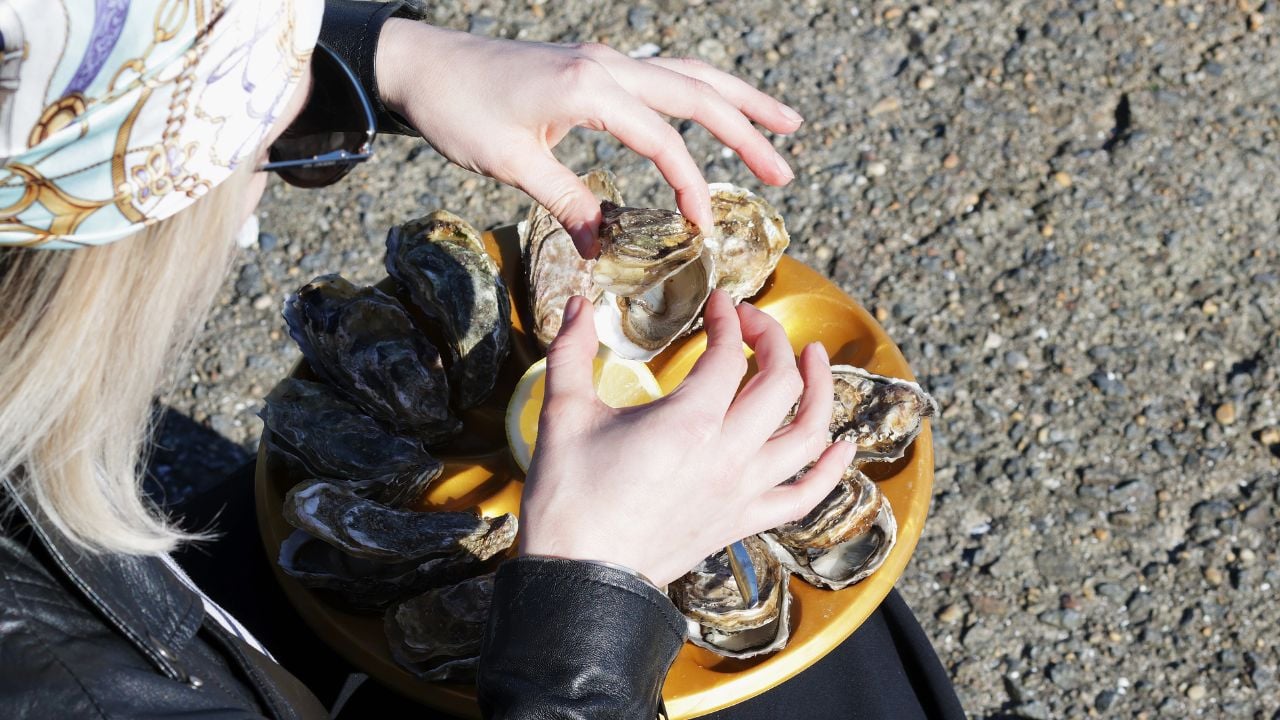
9 Ways to Embarrass Yourself at Your First South Carolina Oyster Roast

A shovel scrapes across a sheet of hot steel at an oyster roast in South Carolina, and a fresh pile of oysters lands on the table.
There are no plates, no forks, and no waiter, just a knife and experienced locals.
These are some sure-fire ways to embarrass yourself at your first South Carolina oyster roast.
1. Double-Gloving Your Shucking Hand
A South Carolina oyster roast only calls for one glove, not two.
That glove goes on your non-dominant hand, the one holding the oyster steady while your knife hand does the work.
Bare hand, better grip.
Gloves on both hands, or a pair of kitchen oven mitts, get you clocked before you’ve opened a single shell.
Why the Glove Matters More Than Manners
A South Carolina oyster roast puts a knife and a pile of broken shells right next to your bare skin, and that combination carries more than the risk of a scraped knuckle.
The Centers for Disease Control and Prevention (CDC) warns that Vibrio vulnificus, a bacterium that lives in warm coastal water and raw shellfish, can slip through even a small cut exposed to seawater or oyster liquor.
That infection can turn serious fast, especially for anyone with liver disease or a weakened immune system.
It’s the reason locals rinse a nick with soap and water right away instead of shrugging it off.
2. Expecting a Full Gape
At a South Carolina oyster roast, the shells never fully open the way a pot of clams does.
Hosts spread the oysters across a scorching sheet of steel, layer a soaked burlap sack on top, and let them steam until the shells crack open a few millimeters.
That’s it. That’s done.
Wait around for a bigger crack, and you’ll get a drier, tougher oyster for your patience, since the wider a shell opens, the more of that briny liquor cooks away.
Pull your oyster the moment the shell cracks. Wait too long, and the wide-open oysters are what’s left for someone who doesn’t know better.
3. Forgetting to Bring Your Own Knife
Your first South Carolina oyster roast runs on a simple rule: Bring your own oyster knife, shortened by regulars to BYOOK.
Hosts usually set out a few loaner knives, but they rarely last past the first dozen shells once a crowd gets going.
Then you’re stuck waiting.
Show up without a knife of your own, and you’ll spend half the night watching someone else’s back instead of shucking.
That’s not how you want to spend your first roast.
A cheap oyster knife from any hardware store or seafood counter earns its keep the first time you use it.
4. Losing the Liquor to a Bad Angle
The liquor inside every oyster shell is the whole point at a South Carolina oyster roast, and regulars work fast to keep it.
Wiggle the knife into the hinge at the pointed end, twist to pop it, then slide the blade flat along the top shell to free the meat.
Spill it.
You just lost the best part of the whole oyster.
Jam the knife in at the wrong angle, or twist it before the hinge gives, and the liquor sloshes out onto the steel table before you get a single sip.
Regulars notice a wasted oyster fast.
A puddle on the steel in front of you is the tell that you’re still new to the knife.
5. Tossing Trash in the Shell Hole
A South Carolina oyster roast table usually has a hole cut through the middle, with a trash can waiting underneath it.
That hole is for spent shells only.
Nothing else belongs there.
Drop a beer can or a napkin down that hole, and the regulars standing nearest will notice before you can fish it back out.
That bin is shells only, since many hosts hand it off to the South Carolina Department of Natural Resources’ shell-recycling program, called SCORE.
SCORE has recycled more than 609,000 bushels of shell into new reefs since 2000.
Keep your own trash in your other hand until you find the actual garbage bag.
Psst! How ready are you for your first South Carolina oyster roast? Run through this checklist and find out.
6. Hunting for a Mignonette Bar
The condiment table at a South Carolina oyster roast holds cocktail sauce, horseradish, sleeves of saltine crackers, hot sauce, and a few lemon wedges.
That’s the whole spread.
Not tonight.
Ask the host for a shallot mignonette or a raw-bar garnish tray, and you’ll get a puzzled look because that vinegar-and-shallot condiment belongs to a white-tablecloth raw bar, not a roast.
Many regulars skip the sauce altogether after the first few and eat the oyster plain, straight off the knife.
7. Grabbing Oysters Straight off the Fire
A South Carolina oyster roast dumps each batch onto the table straight from the fire, and that steel plate stays hot enough to blister skin.
Give the pile a minute before you dig in.
Not yet.
The shells hold onto that heat, and a first-timer who grabs the top of a fresh pile usually ends up shaking off a burned hand instead of eating.
Watch a regular, and you’ll notice they wait a beat, then work from the cooler edges of the pile inward.
8. Mixing up Clusters and Singles
Wild clusters, not individually farmed singles, are what lands on the table at a South Carolina oyster roast, chiseled apart by hand and roasted together on the steel.
Singles grow one by one in mesh bags in tidal creeks, and farmers sort them by size until they end up on ice at a raw bar.
Different oyster, different table.
Ask why your roasted oyster looks blade-shaped and clumped together instead of the deep-cupped, teardrop shape from a raw bar, and you’ve just marked yourself as someone used to ordering off ice, not off a shovel.
9. Showing up Without a Cold Beer
A South Carolina oyster roast at a backyard or a church lot runs on one simple rule: Bring your own beer.
Bottles and cans travel better than glass, and a koozie keeps yours cold as the fire keeps everything else warm.
Come stocked.
Empty hands at a private roast mean working through someone else’s cooler all night.
That works fine once.
Everyone else at the roast notices who never brings their own, especially at a roast that doubles as a fundraiser for the church or the volunteer fire department hosting it.
South Carolina’s Oyster Season
South Carolina’s oyster season runs on a set calendar, not luck.
State rules bar anyone from harvesting a wild oyster between May 15 and September 1 every year, according to the South Carolina Department of Natural Resources (SCDNR), so the clusters roasting on tables from fall through spring are legally in season.
Bowens Island Restaurant on Folly Road has been part of that rhythm since the 1940s, and it now serves upward of 2,300 bushels a season, from October through May.
Old habit, same math.
Gathering your own wild oysters off a South Carolina mudbank takes a state Saltwater Recreational Fishing License, required for anyone 16 or older who wants to rake their own.
The daily limit sits at two bushels of oysters per person, and the state caps that haul to two days out of any seven-day stretch.
8 Zaxby’s Habits That Instantly Mark a South Carolina Regular

The Zaxby’s near Clemson’s Memorial Stadium starts backing up almost an hour before kickoff, and regulars already know their order before they reach the intercom.
These are the habits that separate a South Carolina Zaxby’s regular from a first-timer, right down to the sauce.
8 Zaxby’s Habits That Instantly Mark a South Carolina Regular
9 South Carolina Small Towns Worth the Detour

An interesting hour in South Carolina doesn’t always happen where the tour buses park.
It happens down a two-lane road, in a town of 300 or 3,000, and these are the South Carolina towns worth turning off the highway for.
