
14 Things Every Florida Household Had in the ’90s That Have Completely Disappeared

The ’90s were the last decade before the internet rewired everything, and the average Florida home was full of items that felt permanent at the time.
They weren’t.
Most of these things vanished between 2005 and 2015, quietly pushed out by smartphones, streaming services, and digital convenience.
Here’s the rundown of what used to be in every American home and just isn’t anymore.
The Rolodex on the Desk
Every home office desk in America had a Rolodex spinning on it, packed with handwritten cards for every contact in the family’s life.
Doctors. Plumbers. Relatives. Business associates.
You’d flip through the tabbed cards to find the person you needed, pick up the phone, and dial.
Smartphones wiped the Rolodex out entirely. Nobody under 30 would even recognize what one is.
The Encyclopedia Set on the Living Room Shelf
World Book. Britannica. Funk and Wagnalls.
Every middle-class American family had a multi-volume encyclopedia set taking up an entire shelf of the bookcase, usually bought from a door-to-door salesperson or through a supermarket promotion.
Kids used them for school reports.
Wikipedia launched in 2001 and slowly killed the home encyclopedia industry.
The sets now sit in basements, estate sales, and thrift stores across the country.
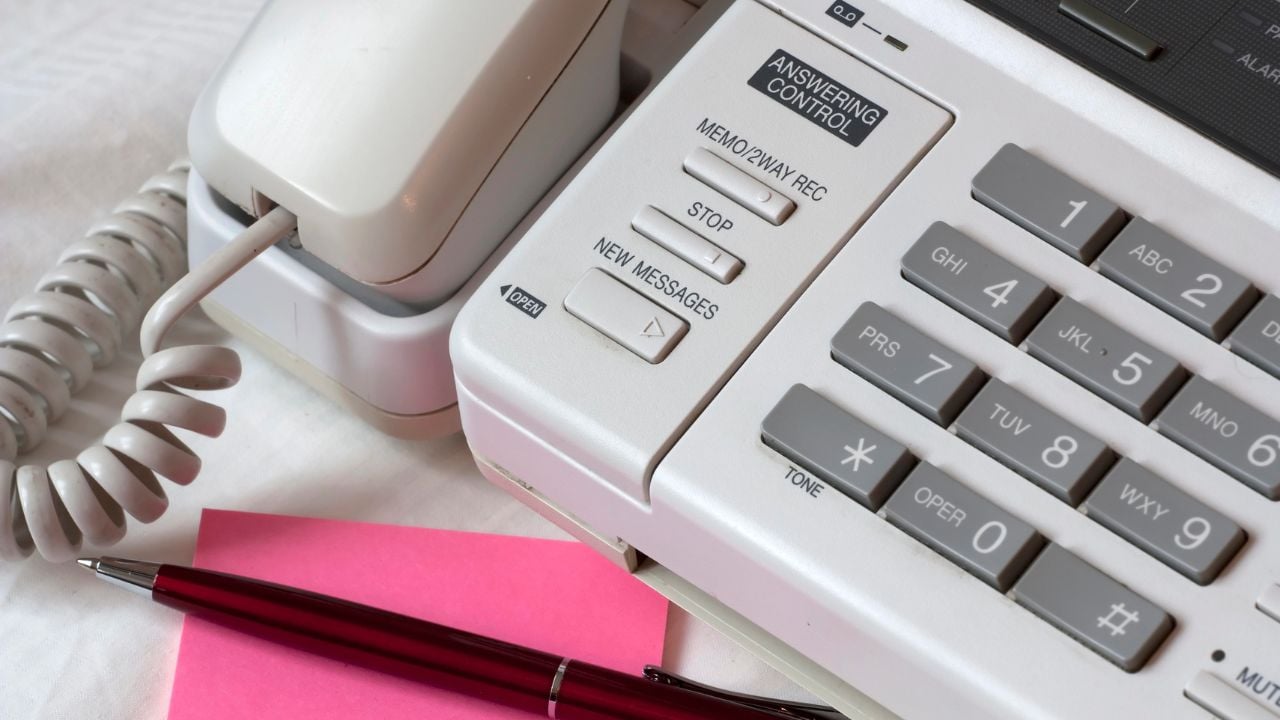
The Answering Machine
Before voicemail moved to the phone carrier’s servers, nearly every household had a physical answering machine sitting next to the landline.
Cassette-based at first, then digital.
The little red light would blink when you had messages, and you’d press a button to listen to whoever had called while you were out.
Today, the answering machine is essentially extinct. A lot of households don’t even have a landline anymore.
The TV Guide
Every week, the new TV Guide arrived in the mail or at the grocery store checkout.
Families used it to plan their viewing, circle shows they wanted to watch, and argue over who got control of the remote on Thursday nights.
TV Guide stopped publishing as a weekly in 2005.
Streaming services and on-demand viewing made the entire concept of a printed TV schedule irrelevant.
The Phone Book
The Yellow Pages and White Pages arrived at every American doorstep once a year, landing with a thud.
Kitchens had a dedicated drawer for the phone book.
You used it to find a plumber, look up a business, or figure out a neighbor’s phone number.
Search engines and online directories made the phone book completely obsolete. Most cities stopped automatic delivery in the 2010s.
The VCR and the VHS Tape Collection
The VCR sat under every TV in America, and every household had a stack of VHS tapes, many of them labeled with handwritten titles in Sharpie.
The Lion King. Home Alone. Titanic.
Most families also had a VCR manual nobody could find, a head cleaner tape nobody used, and at least one tape that had “Eaten by the VCR” written on it in frustration.
DVDs killed the VCR in the early 2000s. Streaming killed the DVD collection not long after.
The CD Tower
The CD tower stood next to the stereo, usually a tall black plastic structure holding 50 to 300 CDs.
Pearl Jam. Nirvana. The Cranberries. Whitney Houston. Celine Dion.
The CD tower was a visible representation of a household’s music taste, and every ’90s American home had one within reach of the living room.
iTunes, Napster, and then streaming services made the CD tower disappear from American life in under 15 years.
The Boombox
Every kid’s bedroom had a boombox on the dresser. Every garage had one on a workbench. Every pool party had one on a plastic table.
Dual cassette deck. CD player. Radio tuner. Heavy as a brick.
The boombox was how people brought music into portable spaces for decades.
Bluetooth speakers and smartphones took over the exact same role, in devices a fraction of the size.
The Fax Machine in the Home Office
Home fax machines were a status symbol in the ’90s. The person who had one was the serious professional in the family.
Small businesses ran on faxing contracts. Grandmothers faxed newspaper clippings. Students faxed college applications.
Email killed faxing for most home use.
A handful of industries still rely on fax, but almost no American household has one nowadays.
The Microfiche Reader at the Library (and the Library Card That Got You There)
This one’s for parents who hauled their kids to the library for school projects.
The microfiche reader was a staple of every local library research trip.
The library card itself was a household essential, typically kept in the kitchen drawer or on a hook near the door.
Libraries still exist, obviously, and library cards still exist too. But the microfiche reader and the “going to the library for research” ritual are essentially gone.
The Polaroid Camera and the Shoeboxes of Loose Photos
Polaroid cameras were a ’90s staple, but the bigger piece of this is what every household did with photos in general.
Loose prints went into shoeboxes.
Actual photo albums got filled once a year (maybe).
Parents had envelopes of doubles from Walmart or CVS with the paper tab that said “Free 4×6 reprints with this coupon.”
Digital photography killed all of it. The average American household now has 30,000 photos on a phone and not a single printed one.
The Wall-Mounted Calendar in the Kitchen
Every American kitchen had a wall-mounted calendar in the ’90s, usually a free one from the local bank, pharmacy, or insurance agent.
Family birthdays got circled. Appointments got written in pencil. Kids’ school events got marked with highlighters.
It was the family’s central organization tool.
Google Calendar, iPhone calendars, and shared family apps took over the same role and eliminated the wall calendar from most kitchens.
The Landline Phone (Especially the Corded Kitchen Wall Phone)
Every house had at least one landline phone, and most had the iconic kitchen wall phone with a spiral cord that stretched across half the room.
Long cord phones. Clear plastic phones. Princess phones. Cordless handsets that needed charging on a dock.
The landline was the social and logistical nervous system of every American home.
Cell phones steadily replaced it starting in the mid-2000s, and most American households under 50 no longer have any landline at all.
The Cabinet Full of Physical Maps
Every car had a glove compartment full of folded maps. Every home had a cabinet or drawer with state and regional maps for trip planning.
Rand McNally road atlases. Folding street maps from AAA. Gas station freebie maps.
Families planned vacations around these paper maps, traced routes with highlighters, and argued about which way to go at rest stops.
GPS and smartphones erased this entire system within a decade.
Gone But Not Forgotten
The ’90s household was packed with stuff that felt permanent and then just… wasn’t.
None of this happened gradually. The tech transition between 2005 and 2015 was one of the fastest in American history, and it emptied out millions of American homes of items that had been there for decades.
If you still have a Rolodex, a VCR, a fax machine, or a CD tower somewhere in your house, you’re either deeply nostalgic or you haven’t cleaned out that closet in 20 years.
Either way, you’re holding onto a piece of American household history. The rest of the country has moved on, and the ’90s living room is now a memory tucked between the Polaroids and the shoeboxes of old family photos.
Which one did you last see in your own home? Odds are it’s closer to your closet than you think.
12 Candies Kids in the ’80s Couldn’t Get Enough Of

Kids in the 1980s didn’t worry about grams of sugar. They worried about whether they had enough Fun Dip to share with their friends.
For those who grew up in the ’80s, these treats were colorful, chewable memories that stuck with them.
12 Candies Kids in the ’80s Couldn’t Get Enough Of
18 Things Only Americans Who Grew Up in the 1980s Understand
Kids who lived through the 1980s were pretty much the last generation to grow up mostly offline and totally outside.
For those who lived through it, these ’80s memories will bring back a whole lot of nostalgia.
18 Things Only Americans Who Grew Up in the 1980s Understand
