
11 Things Pennsylvania Farmers Markets Don’t Want You to Know

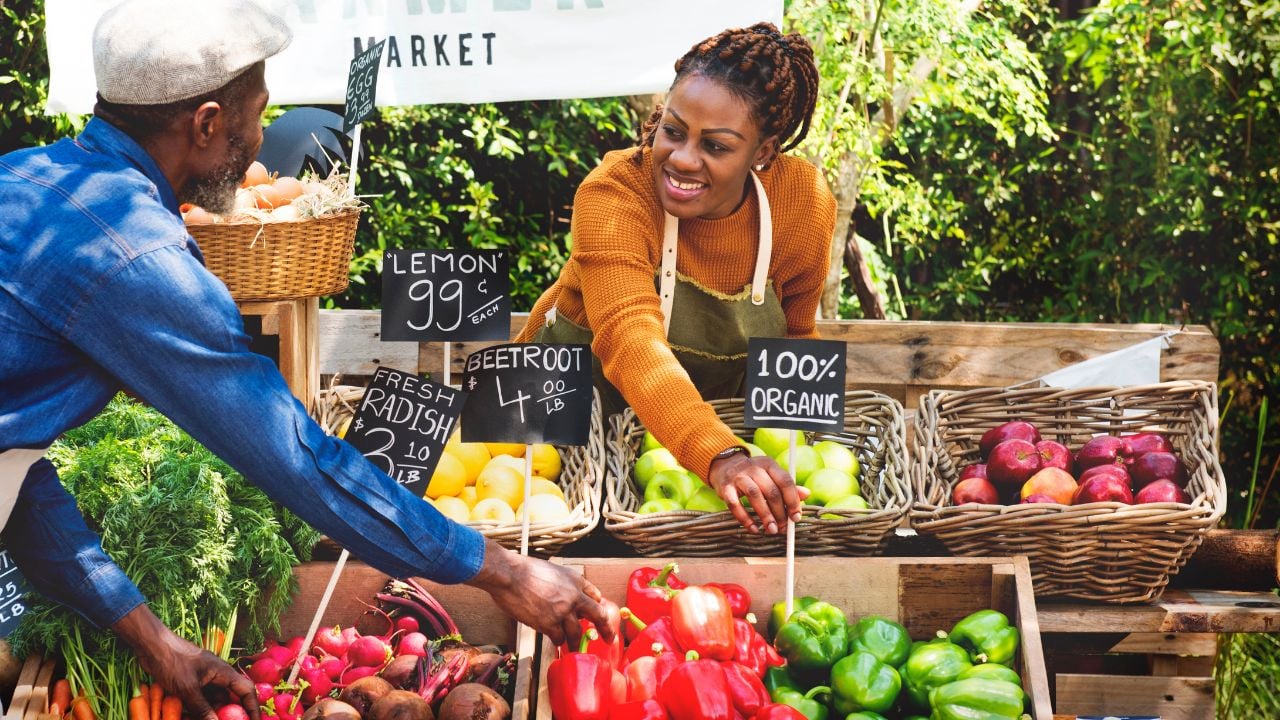
You load up your tote at the Pennsylvania farmers market, feeling good about supporting local growers and eating fresh.
And mostly, you should.
But that “fresh-picked” sign hides a few asterisks, and that “no spray” label might not mean what you think it means.
A little insider knowledge turns a nice morning out into a much smarter shopping trip.
Let’s pull back the curtain.
Note: Eligibility rules, voucher amounts, and benefit programs vary by county and change from year to year. This is general information, not financial advice. Check with your county Area Agency on Aging or your local market for current details.
Some of Those “Farmers” Didn’t Grow a Thing
Walk up to a stand piled high with perfect produce and ask one simple question. “Did you grow this?”
At some markets, the answer is no.
A few vendors buy produce wholesale and resell it at a markup, posing as the people who raised it.
Pennsylvania takes this seriously enough that its nutrition-voucher program flatly bars anyone who only sells wholesale produce from taking part.
The honest growers won’t mind the question one bit.
The resellers might shuffle their feet.
If it matters to you, shop the producer-only markets, where every vendor has to grow what they sell.
“No Spray” and “All Natural” Mean Nothing Official
That handwritten “no spray” sign feels reassuring.
It’s also unverified.
Terms like “no spray,” “all natural,” and “pesticide free” are unregulated terms that nobody inspects or certifies.
The only label with real rules behind it is Certified Organic, which requires USDA-accredited certification, annual inspections, and a paper trail.
That doesn’t make the “no spray” farmer a liar. Plenty are telling the gospel truth.
The sign is just a promise rather than a guarantee.
If clean growing matters to you, ask the farmer exactly what they do, or look for the certified label.
That “Fresh-Picked” Apple Might Be Months Old
Pennsylvania grows wonderful apples, especially out in Adams County.
But here’s the thing about that crisp apple in January: It was almost certainly picked the previous fall.
Apples are routinely kept in cold, controlled-atmosphere storage for months, sometimes close to a year, then sold long after harvest.
That’s not a scam. It’s how the apple business works everywhere, and the fruit stays surprisingly good.
Still, “fresh” at the market doesn’t always mean picked this week.
If you want just-picked fruit, buy what’s in season right now, and ask the grower when it came off the tree.
Not Everything Is Cheaper Than the Grocery Store
Somewhere along the way, “farmers market” became shorthand for “bargain.”
It isn’t always so.
Plenty of items, especially specialty greens, berries, and grass-fed meats, cost more than the supermarket version.
What you’re paying for is freshness, flavor, and a few dollars going straight to a local family instead of a corporation.
That can be worth every penny.
But walk in clear-eyed, rather than assuming everything is a steal.
The true bargains tend to be whatever’s in peak season and overflowing, when a farmer with too many zucchini will practically pay you to haul them off.
The Market Manager Knows Who Grows What
Almost every market has a manager, and that person is a goldmine of straight answers.
Want to know which vendors grow their own and which ones truck in produce from who-knows-where?
The manager knows.
Want the stand with the best tomatoes, or who takes vouchers, or which farm is certified organic?
Ask at the info booth.
If they run a producer-only market, they’ll tell you proudly, because that’s their whole reputation.
A two-minute chat with the manager beats guessing your way through forty tables.
Pennsylvania Seniors Can Get $25 in Free Produce
Here’s a secret worth money.
If you’re 60 or older in Pennsylvania and your income falls under the limit, you qualify for free vouchers through the Senior Farmers Market Nutrition Program.
It’s five checks worth five dollars each, twenty-five dollars total, to spend on Pennsylvania-grown fruits, vegetables, and herbs.
The income cutoff runs around $29,500 for one person and $40,000 for two, and at many sites, you don’t even fill out an application.
Just bring proof of your age and address.
Call your county Area Agency on Aging. The vouchers go fast, first-come, first-served.
Your SNAP Card Can Be Worth Double
If you use SNAP, the farmers market might be the best deal in town.
Many Pennsylvania markets accept EBT, and a lot of them stretch it further through Food Bucks and similar programs that match your SNAP dollars.
Spend ten dollars in benefits, walk away with twenty in fruits and vegetables.
The state has been expanding these match programs to more markets.
It’s free money for fresh food, and many eligible shoppers have no idea it exists.
Look for the SNAP or Food Bucks table near the market entrance, usually staffed by a friendly volunteer.
Look for the PA Preferred Logo
When a sign just says “local,” ask yourself: Local to where, exactly?
“Local” has no legal definition, so it can stretch awfully far.
If you want produce grown right here in the Commonwealth, look for the blue and gold PA Preferred logo.
It’s the state’s official mark for products grown or made in Pennsylvania, and the senior voucher program points shoppers straight toward it.
When you spot it, you know that money is staying in a Pennsylvania field, not riding in on a truck from three states away.
It’s a small logo that answers a big question.
Show Up Early for the Pick, Late for the Deals
Timing is everything at a farmers market, and it cuts two ways.
Get there right at opening, and you’ll have first crack at the freshest, best-looking produce, before the good heirloom tomatoes and the last dozen eggs disappear.
Or roll in during the final half hour, when vendors would rather cut you a deal than load unsold crates back onto the truck.
You’ll often catch markdowns, two-for-one offers, or a farmer happy to round the price down.
Early for selection, late for savings.
You rarely get both, so shop the time that fits what you need that day.
Buying by the Box Saves a Bundle
Single peppers and half-pints add up fast.
The real savings hide in volume.
Ask any farmer about buying in bulk, a half-bushel of tomatoes, a flat of berries, a sack of seconds, and watch the per-pound price drop.
This is canning and freezing season gold.
A bushel of Pennsylvania peaches put up in August tastes like pure sunshine come February.
Even for just two people, splitting a bulk box with a neighbor or your grown kids cuts both the cost and the waste.
Farmers love moving volume. You love the discount.
Everybody comes out ahead.
Ask for the “Seconds”
This is the move almost nobody makes, and it might be the best one.
“Seconds” are the bruised, lumpy, or oddly shaped fruits and vegetables that won’t win any beauty contests.
They taste exactly the same, and farmers often sell them cheap or keep a box under the table for anyone who thinks to ask.
A crate of dented tomatoes makes the same glorious sauce as the pretty ones. Spotty peaches cook down into perfect cobbler.
So lean in and ask, “Got any seconds today?”
You’ll save a bundle, cut down on waste, and probably make a farmer’s day by buying the stuff nobody else wanted.
24 Items That Have Alarmingly High Levels of Microplastics

You can’t see, smell, or taste microplastics. But research reveals they’re showing up in our everyday lives.
Here are 24 common items where microplastics hide and why you need to pay attention.
24 Items That Have Alarmingly High Levels of Microplastics
15 Amazon Prime Perks You’re Paying For but Probably Never Use

If fast delivery is the only reason you’re paying for Prime, you’re leaving a ton of value on the table.
Here’s how to make Amazon Prime earn its keep.
15 Amazon Prime Perks You’re Paying For but Probably Never Use
