

6 Tennessee Grocery Habits That Instantly Give Away a Longtime Local

At a Food City in Elizabethton, a shopper walks past the Sprite and loads a case of Dr. Enuf.
She didn’t have to think about it.
The man behind her moved down from Illinois in March, and he’s never heard of Dr. Enuf.
These are the grocery habits that give away a longtime Tennessean.
1. Waiting Until 10 on Sunday
Wine showed up in Tennessee grocery stores in 2016, but only in the cities and counties whose voters approved it.
A city could hold that referendum on its own, without waiting for its county to vote.
So the wine shelf sits in one town and not the next.
Tennesseans instinctively know where that line falls.
A grocery store can’t ring up wine before 10 a.m. on Sunday, and a liquor store can’t open before 10 either.
So an early run gets you nowhere.
Nobody sells wine on Thanksgiving, Christmas, or Easter, either.
Somebody new to Murfreesboro loads two bottles at 9:15 on a Sunday and watches the cashier set them aside.
The cashier can’t override it.
2. Reading Two Tax Rates
Tennessee taxes the food in your cart and the food from the hot case at two different rates.
Groceries carry a state rate of 4%, and prepared food, candy, and dietary supplements sit at the full 7%.
Your county and city add their own sales tax on top of both, up to another 2.75%.
Buy a raw chicken, and you pay the lower rate.
Grab the rotisserie chicken twenty feet away, and the higher rate applies.
The hot case costs more.
Tennessee’s average combined sales tax runs 9.61%, second only to Louisiana.
That gap adds up across a month of trips to the store.
3. Reaching Past the Sprite
The soda aisle in a Tennessee grocery store sorts locals from tourists without anybody saying a word.
Tri-City Beverage has bottled Dr. Enuf in Johnson City since the late 1940s, back when a businessman wanted a soft drink that wasn’t all sugar.
B vitamins went in instead.
Pal’s Sudden Service pours it at the drive-thru window, and grocery stores across the Tri-Cities stack it by the case.
The company only moved Dr. Enuf into 16-ounce plastic bottles a few years ago, after decades of nothing but glass.
Every case still comes out of the same Johnson City plant.
4. Stacking Fuel Bucks
In East Tennessee, the grocery run and the fill-up count as one errand, and Food City built that habit on purpose.
The chain runs 98 of its 158 stores in East Tennessee, and every dollar on a ValuCard earns a Fuel Buck.
Redeem 150 of them, and you save 15 cents a gallon at a Gas ‘N Go.
On Wednesdays, 300 Fuel Bucks take 30 cents off instead.
That’s capped at 20 gallons.
So shoppers run the big trip first, then scan the card at the pump on the way home.
A refill at the Food City pharmacy adds 25 bonus Fuel Bucks, which counts toward the same discount.
Psst! How much do you know about Tennessee food history? Take our quiz and see if you can ace it.
Quiz
Tennessee Food IQ
Answer nine questions on the food history and grocery brands born in Tennessee. We bet you can’t get them all right. Prove us wrong?
Two brothers invented Mountain Dew in Knoxville. What did they want it for?
5. Hunting the Red Barn
Tennessee puts a red barn on food grown and made inside the state, and shoppers scan for it without thinking.
The Tennessee Department of Agriculture has run Pick Tennessee Products for more than 30 years, and its logo turns up on jam, cheese, sausage, honey, and beef.
Faced with two packs of ground beef at the same price, many shoppers raised in Maury County reach for the barn.
The state prints that barn on farmers market signs too, and it runs a free Pick Tennessee app that finds farms and food businesses near you.
You learn the barn.
6. Checking the Beer Label
The beer cooler in a Tennessee grocery store looked different ten years ago.
State law capped what grocery and convenience stores could sell at 6.2% alcohol by volume, so anything stronger meant a separate trip to a liquor store.
A law redefining beer raised that ceiling to 10.1% on January 1, 2017.
Shelf space opened up.
Yazoo, out of Nashville, was already talking to Kroger and Publix about its bigger beers before the law took effect.
Tennesseans who lived through the old rule still check the label out of habit.
Sorghum Season at Muddy Pond
Sorghum sits next to the maple syrup in a lot of Tennessee grocery stores, and it isn't molasses.
The Guenther family presses cane sorghum at Muddy Pond Sorghum Mill in Monterey and sells it in sizes running from half pints up to gallons.
It pours thinner than molasses, tastes less sweet, and carries a mineral edge behind the sugar.
The mill runs on its own calendar.
They start pressing the Saturday before Labor Day, then work Tuesdays, Thursdays, and Saturdays through September and October.
Buy it in the fall.
Cooks who grew up on sorghum pour it over biscuits and cornbread until spring.
Why the Grocery Tax Survived
Tennessee's 4% grocery tax has outlived every recent attempt to kill it.
Republicans and Democrats both filed bills in 2026 to wipe it out, and the session ended in April without either passing.
The holdup is the money: The grocery tax brings the state around $800 million a year, and nobody agreed on how to replace it.
Shoppers did get one break in 2023, when Tennessee suspended the food tax for three months and saved an estimated $273 million.
That holiday hasn't come back, and the 4% still lands on every grocery receipt in the state.
Shopping for Race Week
Twice a year, shoppers in upper East Tennessee build a grocery list around Bristol Motor Speedway.
Food City has sponsored races there for decades, putting its name on the spring Food City 500 and the fall Food City 300.
Its stores sell tickets to both races, right by the registers, while supplies last.
Tickets beside the bread.
The chain also runs the Food City Fan Zone at the speedway, with music, driver appearances, games, and giveaways.
Shoppers around Bristol buy their ice and buns on Wednesday, ahead of the race traffic backing up on I-81.
11 Things Tennesseans Are Tired of Explaining to Everyone Who Moves In

Half of what newcomers think they know about Tennessee came from a country song or a whiskey bottle.
Both get it wrong, and Tennesseans have run out of patience explaining why.
11 Things Tennesseans Are Tired of Explaining to Everyone Who Moves In
8 Tennessee Mountain Towns Locals Love (and 3 Tourists Overrun)
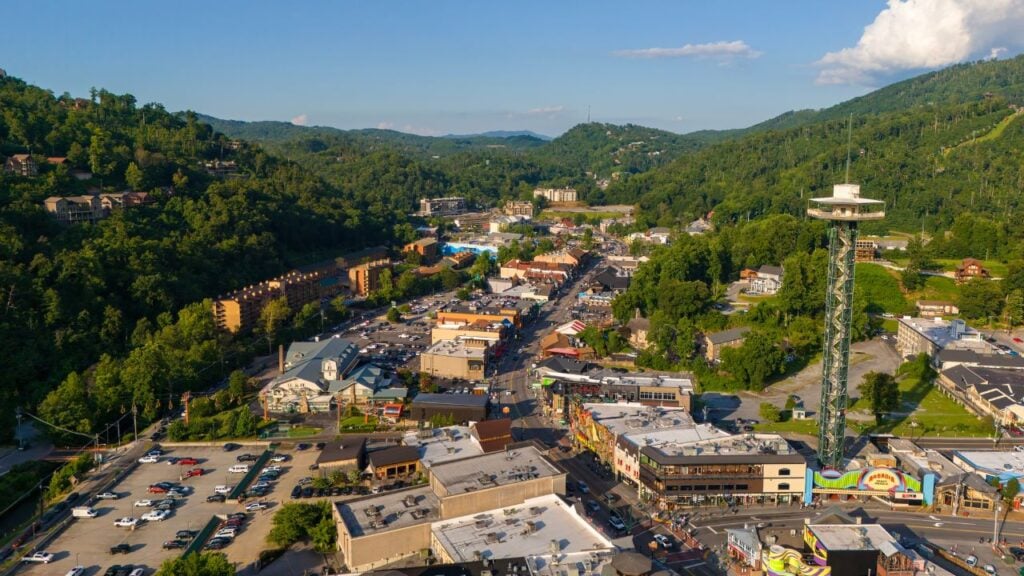
A tour bus sits bumper to bumper on the Gatlinburg Parkway while a woman raised in those mountains turns off two exits early.
Up that back road she finds room to park and no wait for a table.
8 Tennessee Mountain Towns Locals Love (and 3 Tourists Overrun)
