
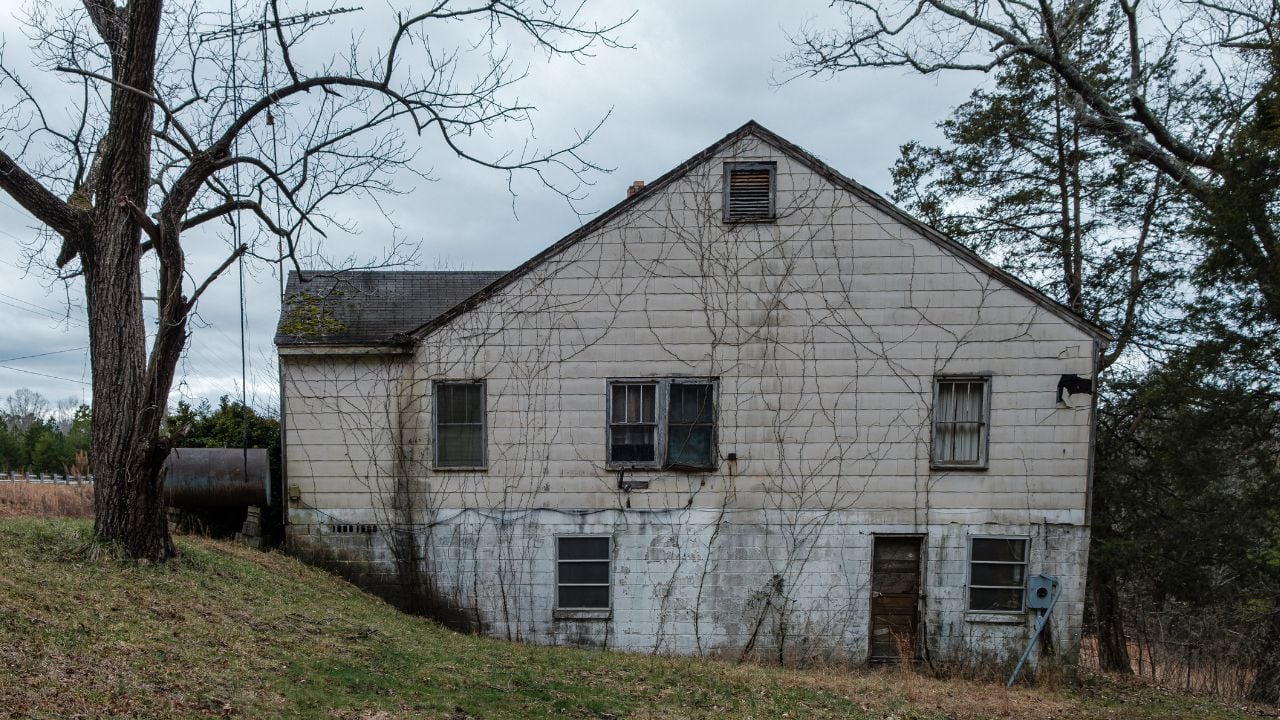
9 South Carolina Squatter Rules That Leave Homeowners Powerless

You find a stranger’s mattress in your empty Horry County beach house, and every instinct says change the locks tonight.
If you do that, you could end up writing a check.
The check goes to the squatter.
These are the South Carolina squatter rules that leave homeowners feeling powerless.
Note: This is general information, not legal advice. Property laws and court procedures are subject to change. Confirm the current rules with a South Carolina attorney.
1. Ten Years Ends Your Claim
Adverse possession is the doctrine that turns a long enough trespass into ownership, and South Carolina sets the wait at ten years.
That reads like a rule about the occupant.
It’s a deadline on you.
A judge presumes that whoever holds legal title has been in possession all along, and treats anybody else on the ground as standing under that title.
That presumption breaks only where somebody held the place against you for the full ten years before you sued.
Say a man parks a camper on your back acre outside Conway in October 2016 and never leaves.
Sue him in September 2026, and you’re inside the window. Wait until October, and you aren’t.
The occupant never files a thing.
They only have to outlast you.
2. Your Tax Receipts Prove Nothing
Homeowners assume a squatter claim collapses the second the occupant skips a tax bill, and in some states it does.
South Carolina lawmakers wrote no such condition.
In Florida, a claimant has to pay every outstanding tax within a year of moving in and then file a formal return with the county property appraiser.
Chapter 67 of the South Carolina code never mentions taxes at all.
Not once.
So the receipts in your Charleston County file do nothing to the clock, and an occupant who never paid a cent loses nothing for the gap.
Paying on time keeps you square with the treasurer, and nothing more.
3. Bad Paper, Whole Tract
A squatter with a piece of paper claims more South Carolina ground than a squatter with none.
Lawyers call that paper color of title, a deed or court order that looks like it hands over the property but carries a flaw somewhere inside.
Bad paper still works.
Judges have treated a deed as color of title even where the signer owned nothing at all.
Here’s where it stops being a paperwork problem: Ten years of possession under that instrument counts across the whole tract the paper describes, not just the corner somebody cleared.
Picture a flawed deed to forty acres outside Walterboro, and an occupant who clears two of them and camps there a decade.
All forty are in play.
Subdivisions carry an exception, though.
Where the tract is already cut into lots, possession of one lot doesn’t count as possession of any other lot in that tract, so a squatter on Lot 12 gains nothing on Lot 13.
4. One Lawsuit Is All You Get
Take a squatter to court and you get a single attempt at the whole fight.
Sue to recover the property, or just the possession of it, and you’re limited to one action for recovery.
No second try.
Lose on a thin survey, a witness who won’t show, or a boundary you assumed everybody agreed on, and the statute says nothing about a second lawsuit.
That reads like housekeeping until it lands on a family lot in Beaufort County that three siblings have argued over since the nineties.
Whoever files that lawsuit had better be ready the first time.
5. Locking Them Out Costs You
Many homeowners who find a squatter in an empty house reach for the deadbolt first.
Handling it yourself goes by the name self-help, and it can leave you paying the squatter.
If the occupant ever counted as a tenant, say the renter who stopped paying in March and never left, they can sue you for three months of rent or twice their actual damages, whichever is greater, plus attorney’s fees.
No force required.
On a house that rented for $1,500 a month, three months’ rent is $4,500.
An older track, traced to a 1712 act, covers forcible entry and detainer: Putting somebody off land by force, and then holding that land by force.
Where a court finds you entered with force, or held the land with force once inside, the person you put out recovers treble damages, so a $4,000 loss becomes $12,000.
Force is the trigger, so changing the locks while nobody is home may never reach that statute.
Even under the 2026 removal law you keep off the doorknob until an officer serves the order, and then you pay that officer by the hour to watch you change the locks.
Psst! How much do you know about South Carolina land and property? Take our quiz and see if you can ace it.
Quiz
Palmetto Property Pop Quiz
Nine questions on South Carolina land, deeds, and property tax. We bet you can’t get them all right. Prove us wrong?
In 1986, a developer paid $975,000 for two empty beachfront lots, and a new state law then barred him from building. Which South Carolina island were the lots on?
6. Five Days Before Anyone Moves
The quick route against a plain trespasser still costs you five days, and it runs through your county magistrate.
Ejectment is the court proceeding that puts an owner back in possession, and Chapter 67 has a summary version for trespassers.
You apply to the magistrate, who serves the occupant a notice to quit the premises.
Then everybody waits five days from the moment that notice lands in the person's hand.
Nothing happens sooner.
Only then does the magistrate issue a warrant to the sheriff or a constable, who can use whatever force the job takes.
And the countdown starts on personal service, so an occupant in a Richland County rental who won't open the door stretches the calendar before it begins.
7. How They Stall You
An occupant facing that magistrate's warrant isn't out of moves.
The catch?
They have to appear before the five days run out and satisfy the magistrate that they hold a good-faith claim to the place.
Then they post a bond, money or a guarantee the magistrate approves, promising to cover your costs and any damage you take while they stay put.
Do both, and the warrant never goes out.
That's it.
Either side can appeal, too, and the magistrate has to hold the warrant for five days after announcing a decision.
In that gap the occupant can ask a circuit judge for an injunction that holds off the warrant until the appeal is decided.
8. Waiting Sinks Your Own Case
South Carolina judges can end a squatter fight before the ten-year clock ever matters, using a doctrine called laches.
Laches means unreasonable, unexplained delay that leaves the other side worse off for the wait.
Ask the Lexington County man who bought Lot 31 in the Metts Lake Subdivision in 1966 and then left it alone.
In 1987, a couple bought the same lot for $2,000 on a deed traced to a mistaken conveyance, and they bush-hogged it, graded a driveway, ran a wire fence, staked the corners, and paid the taxes.
By his own testimony, he didn't set foot on the lot for seventeen years.
When he finally sued in 2005, the Court of Appeals upheld the couple's title and the laches ruling against him.
His deed wasn't the problem.
9. Nine Sworn Boxes
Gov. Henry McMaster signed South Carolina's new squatter law on June 30, 2026, and it took effect the same day.
Under Act 252 you file a sworn petition with the clerk of court or the chief magistrate, and a judge can sign a removal order that afternoon without hearing the occupant.
A hearing follows within twenty-four hours of the filing, unless somebody shows good cause for a delay.
Then comes the fine print.
Your petition has to set out nine statements, and three rule out most of what people picture: The occupant can't be a current or former tenant, an immediate family member, or somebody you already have litigation with over the property.
A cousin who moved in after Thanksgiving and never left doesn't qualify.
Neither does the tenant you evicted in March.
Miss the tenant box and you land in the track Act 252 renamed "Ejectment of Tenants," where a magistrate issues a rule to vacate or show cause and the occupant gets ten days to answer it.
Come up short on the family box or the litigation box instead, and you're back at the five-day notice to quit.
Use the fast lane on the wrong person, and that person can come back at you for possession, their damaged belongings, court costs, and $1,000 on top.
Psst! How much do you know about South Carolina squatter rules? Flip each card and see how many you call right.
Twenty Years and a Presumed Deed
Past that ten-year statute, South Carolina judges recognize a second route onto your land, and it takes twice as long.
Courts call it the presumption of a grant: Hold ground openly, hostilely, exclusively, and continuously for twenty years, and a judge may presume a deed once existed back there and simply went missing.
Nobody has to produce it.
Hostilely has nothing to do with temper.
It means the person holds the ground without your say-so, so the neighbor who is sure that strip has always been his still qualifies.
A claimant also gets more room to stack years, adding time from successive holders linked in the chain rather than only inheriting it from an ancestor.
A 1997 case out of Jasper County shows the reach of that, over 131 acres of swamp neighbors had hunted with dogs and standers since the 1940s.
The circuit judge handed that land to the possessors as a matter of law.
The Court of Appeals pulled the ruling back and sent the whole question to a jury, which is its own kind of answer for a landowner: Twenty years of somebody else's deer season had built a case worth trying.
Cut timber, a graded path, a hunting camp, or a fence line held a foot too far all count toward it, even on ground you've never walked, since the presumption turns on use and not on what your deed says.
8 South Carolina Laws Visitors Break Without Realizing It

A rented golf cart is street legal on a Murrells Inlet side street until the sun goes down, and after that it isn't.
Visitors break that law and several more every summer without ever learning they exist.
8 South Carolina Laws Visitors Break Without Realizing It
9 South Carolina Backyard Pests That Ambush Newcomers
A newcomer in Mount Pleasant runs the mower over a hidden nest one July evening and gets stung before she can cut the engine.
Her neighbor, a native of the Lowcountry, points at the ground and laughs.
9 South Carolina Backyard Pests That Ambush Newcomers Every Summer
