
9 Virginia Landmarks Locals Love That Never Make the Guidebooks

Roaring Run’s waterfall pools run clear enough to see the bottom, tucked behind a Civil War-era iron furnace inside the Jefferson National Forest.
Virginia’s own official guide to its 25 best waterfalls skips right over it.
Botetourt County families know better, hiking past the ruins to swim there every summer.
These are the Virginia landmarks locals show up for that never make the guidebooks.
1. Bacon’s Castle
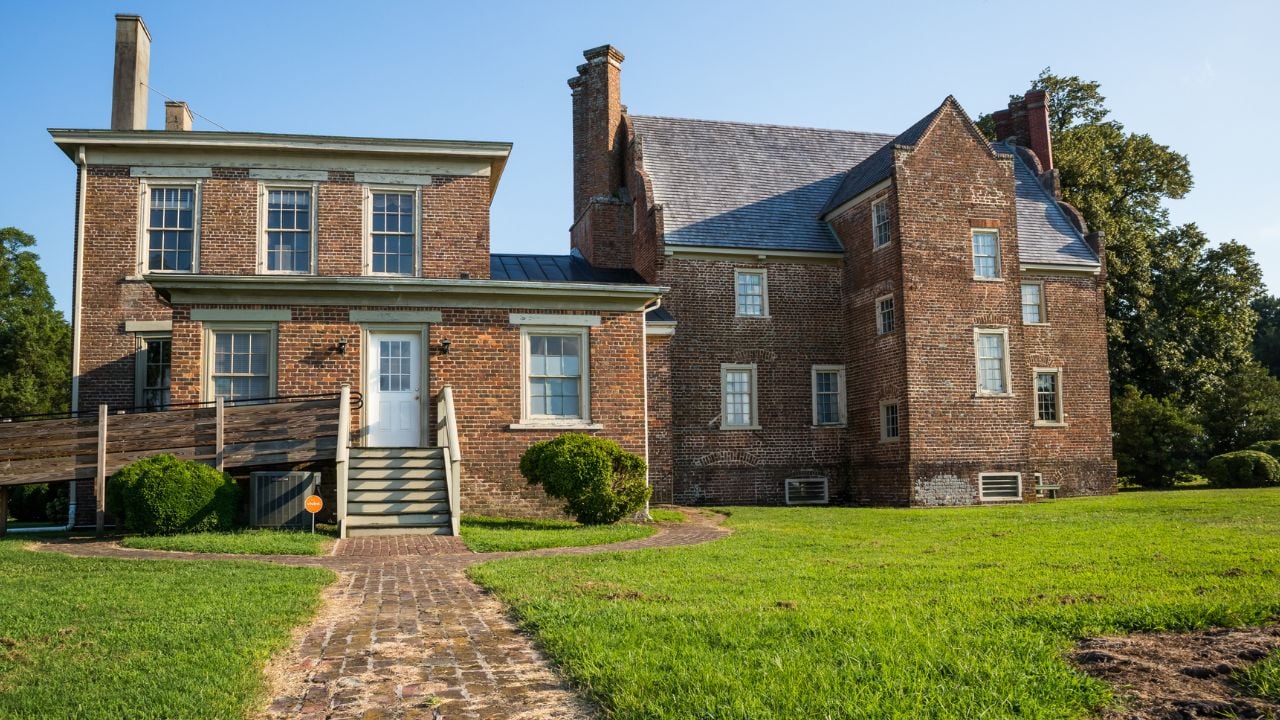
Bacon’s Castle has stood in Surry County since 1665, making it the oldest documented brick dwelling in North America.
Arthur Allen built it as a display of wealth, since only the richest planters in the colony could afford an entire house made of brick.
Nathaniel Bacon’s rebels occupied the place for just over three months during Bacon’s Rebellion in 1676.
Bacon himself never owned it.
Preservation Virginia restored the grounds and the house’s colonial garden.
Surry County residents treat a walk through both as a regular Sunday stop, not a special-occasion trip.
Virginia’s official promotion of its colonial history runs almost entirely through the Historic Triangle: Jamestown, Williamsburg, and Yorktown.
Bacon’s Castle sits outside that loop in Surry County, across the James River, even though it predates Williamsburg’s restoration by centuries.
2. Natural Chimneys Park
Natural Chimneys Park has crowned a jousting champion every year since 1821, longer than the Kentucky Derby or the World Series have existed.
Riders in full costume still gallop a seventy-five-yard track, trying to spear three small rings hanging from wooden arches.
Local legend says a woman named Lucy Ann settled a fight between two suitors with a joust instead of a coin flip.
She married the winner.
The tournament runs the third Saturday of August inside the park’s natural limestone amphitheater.
Augusta County families set up lawn chairs the way other towns do for a football rivalry.
Natural Chimneys never joined the Virginia State Parks system the way Natural Bridge and Shenandoah River State Park did.
Augusta County runs it as a county park instead, so the official state parks guide that every Virginia visitor center hands out never lists Natural Chimneys at all.
3. Grand Caverns
Grand Caverns has led visitors underground every year since 1806, making it the oldest continuously operating show cave in the United States.
The cave’s private owner donated it to the Upper Valley Regional Park Authority in 1974.
That regional authority dissolved in 2009, and ownership passed to the Town of Grottoes instead of a private company.
No corporation runs the show.
Grottoes, a town of under 3,000 people, runs the cave with no marketing budget, unlike the family-run businesses that put Luray Caverns and Shenandoah Caverns on billboards up and down Interstate 81.
The same park holds the town’s community pool, which Grottoes families fought to save: Volunteers reopened it in 2025 after it nearly shut for good.
More than 200 Civil War soldiers scratched their names into the limestone walls of Cathedral Hall, a room tall enough to swallow a seven-story building.
Grand Caverns still points tour groups toward the signatures instead of walking past them.
4. Natural Tunnel State Park
Natural Tunnel State Park carries an 850-foot limestone tunnel that active freight trains still rumble through today, the same tunnel William Jennings Bryan once called the Eighth Wonder of the World.
Many guidebook features lead with the chairlift, the way that same Garden & Gun feature does.
Scott County’s chairlift, the only chairlift inside a Virginia state park, drops riders 550 feet over about seven minutes to a boardwalk at the tunnel’s mouth.
A separate hiking trail drops down to the same tunnel floor for free.
Scott County locals use it instead of paying for the lift.
That’s the version guidebooks skip.
Locals plan their trips around the freight schedules for Norfolk Southern and CSX Transportation (CSX), the two railroads that still run trains through the tunnel, hoping to catch one roll through while they’re standing there.
5. Shot Tower Historical State Park
Shot Tower Historical State Park preserves the oldest tower of its kind in the country, a 75-foot stone column that builder Thomas Jackson finished in 1807 to manufacture ammunition.
Workers dropped molten lead through a sieve at the top of the tower.
The metal fell 150 feet total, counting the shaft that continues underground, cooling into round musket balls by the time it hit a kettle of water below.
The height mattered.
A shorter tower would have dropped the lead into the water before it fully hardened, leaving lopsided balls instead of round ones.
Wythe County cyclists riding the adjoining New River Trail treat the tower as a free rest stop, not a ticketed attraction, since it sits right off the 57-mile trail connecting Pulaski and Galax.
Virginia’s state park guides fold Shot Tower into New River Trail State Park’s own map instead of giving it a standalone listing, even though it is its own ten-acre park.
Psst! How much do you know about Virginia’s history? Take our quiz and see how many you can get right.
Quiz
Virginia History IQ
Answer these questions on Virginia’s firsts, founders, and fossils. We bet you can’t get them all right. Prove us wrong?
Virginia’s nickname “Old Dominion” traces back to which king’s praise for the colony’s loyalty?
6. Roaring Run
Roaring Run Furnace has stood inside the Jefferson National Forest near Eagle Rock since 1832, a stone charcoal furnace Botetourt County ironworkers rebuilt in 1845 and again early in the Civil War.
Richmond's Tredegar Iron Works turned the last of that furnace's iron into Confederate rifles and cannon.
A mile-and-a-half loop trail follows Roaring Run Creek past the ruins to a waterfall.
Natural stone pools near the top turn into a summer swimming hole for Botetourt County families.
Nobody advertises it.
Virginia's own official guide to the state's 25 best waterfall hikes never names Roaring Run, sending hikers toward Crabtree Falls and Dark Hollow Falls instead.
What to Know Before You Visit Roaring Run
Roaring Run charges no entrance fee and requires no permit for this Virginia landmark.
The parking area sits about a mile down Virginia Route 621, after the turn off Route 615 outside Eagle Rock.
The Forest Service preserves the furnace as a historic point of interest, not a climbing structure, so stay on the marked trail around its base.
7. Angel's Rest
Angel's Rest towers 1,650 feet above Pearisburg, and the Appalachian Trail climbs the entire way up in just a mile and a half.
It doesn't ease you in.
The reward is a boulder-top view of the New River Valley, with Peters Mountain, Butt Mountain, and Bald Knob spread across the horizon.
Pearisburg's residents and business owners have built the town's whole identity around the climb, from the hiker hostel behind the Food Lion to the hikers who wander Main Street in dusty boots.
Giles County locals hike it before breakfast the way other towns walk a dog, and Angel's Rest never lands on a Virginia guidebook's short list next to Skyline Drive's overlooks.
8. Sailor's Creek Battlefield
Sailor's Creek Battlefield preserves the ground where nearly a quarter of Robert E. Lee's army, more than 7,700 soldiers, was killed, wounded, or captured on April 6, 1865.
Lee surrendered three days later.
Amelia and Prince Edward county residents walk the park's seven interpretive trails through the same fields and creek bottoms the fighting crossed.
The restored Hillsman House still stands as the field hospital where the wounded from both armies were treated.
Appomattox Court House drew nearly 84,000 visitors in 2024 as a National Historical Park, and many Civil War itineraries stop there.
Sailor's Creek Battlefield, the state park where Lee's army collapsed three days earlier, rarely makes the same itinerary even though the drive between them takes less than an hour.
9. Fairy Stone State Park
Fairy Stone State Park is the second-largest state park in Virginia, at 4,741 acres, trailing only Pocahontas State Park.
Patrick County families still walk its shoreline hunting for the staurolite crystals that gave the park its name.
Local legend blames grieving fairies who wept after learning of Christ's death.
Their tears supposedly crystallized into the stone crosses scattered across the hillsides.
Science tells a longer story.
Heat and pressure from the folding of the Appalachian Mountains formed the crosses over millions of years, and the lake beside them only exists because the Civilian Conservation Corps flooded the valley to build it in the 1930s.
Fairy Stone State Park lets visitors keep what they find on the surface, no digging tools allowed, so Patrick County kids still walk out with a pocketful of crosses instead of a photo.
Guidebooks tend to send tourists toward roadside gem-mining flumes instead, the paid-by-the-bucket kind, while the free crosses at Fairy Stone stay something locals mostly keep to themselves.
3 Virginia Historical Markers That Got History Wrong
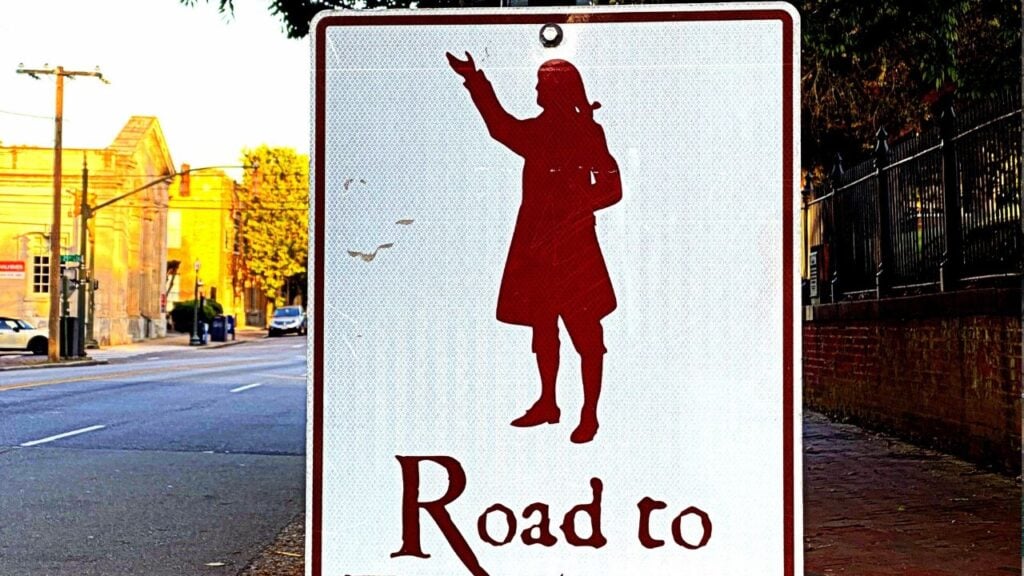
A roadside marker outside Hampton stood uncorrected for two decades before a museum researcher proved part of it wrong.
These are the Virginia roadside markers the state eventually had to rewrite to get the story straight.
3 Virginia Historical Markers That Got History Wrong
11 Words Virginians Use That Confuse Everyone Else

A new hire at a Roanoke office layers up for her first Blue Ridge winter and asks a coworker where to grab a toboggan before a weekend hike.
He points her toward the hat aisle, not the sled rack, and these are the words Virginians use without a second thought that leave outsiders lost.
