
9 North Carolina Mountain Sayings That Leave Flatlanders Completely Lost

In North Carolina’s mountains, plans to go “sanging” this weekend don’t involve a single karaoke machine.
They involve shovels.
The gap between Blue Ridge speech and the rest of the country runs deeper than an accent.
These are the North Carolina mountain sayings that leave flatlanders completely lost.
1. Sigogglin’
North Carolina’s mountain counties have their own word for anything built or hung crooked.
Outsiders never guess it on the first try.
It’s sigogglin’.
A porch nailed on wrong is sigogglin’. So is a fence post leaning hard after a frost.
The word shows up on North Carolina State University’s own Smoky Mountains dialect list, cataloged right alongside the rest of the region’s oldest vocabulary.
People often credit words like it to preserved Shakespearean English, supposedly frozen in place by the mountains for three centuries.
Why North Carolina’s Mountain Talk Isn’t “Frozen” English
North Carolina’s mountain dialect isn’t frozen Shakespearean English, whatever the popular version of that story claims.
That story doesn’t hold up well. Researchers with North Carolina State University’s Language and Life Project trace many of these words to 18th-century Scots-Irish and German settlers, not Elizabethan playwrights.
Isolation kept a few older grammar patterns around longer than in places with more through-traffic.
But the dialect never stopped changing. It just kept changing mostly out of earshot of the rest of the country.
2. Cove
North Carolina’s mountains have two different words for a valley, and outsiders usually assume they mean the same thing.
A holler twists between ridges.
A cove is flatter, enclosed farmland with just one way in or out.
Researchers with the Dictionary of American Regional English label the word especially South Midland, the dialect band running through Southern Appalachia rather than the rest of North Carolina.
Cades Cove in the Smokies and Big Cove on the Qualla Boundary both carry the name.
A flatlander hears “cove” and pictures the beach.
That’s the wrong coast entirely.
3. Holler
The valleys tucked between North Carolina’s mountain ridges needed their own word.
Mountain speech settled on “holler.”
A flatlander hears “the holler” and pictures someone about to shout.
Nobody’s shouting.
A holler is a sheltered valley, often with just a handful of houses and a single road running through it, according to public-television research on Smoky Mountain speech.
Ask for directions to “the holler,” and a local points. Nobody hollers back.
4. Sang
Head into the woods with a North Carolina mountain local in the fall, and they might mention they’re going sanging.
It isn’t about singing at all.
Sang is mountain shorthand for ginseng, the wild root diggers have hunted in these forests for generations.
That same national dialect survey that maps “cove” to Southern Appalachia labels sang chiefly South Midland as well, not the state at large.
A flatlander hearing “sanging” pictures a karaoke bar.
Nobody’s singing a note.
5. You’uns
North Carolina’s Smoky Mountain communities never adopted “y’all” the way the rest of the South did.
They built their own plural for “you.” It’s you’uns.
Ask a table of Blue Ridge locals if you’uns want more cornbread, and every one of them knows you’re talking to the whole group, not just the closest one.
Our State magazine’s dialect research places “yuns” squarely in the Smoky Mountains, distinct from the coastal and Piedmont speech patterns elsewhere in the state.
Outsiders usually assume it’s a typo.
It isn’t.
6. Boomer
A red squirrel gets a different name in North Carolina’s mountains than it does almost anywhere else in the country.
Mountain residents call the native red squirrel a boomer.
The name has nothing to do with a generation.
Blue Ridge Public Radio’s dialect reporting confirms the folk name for the region’s native red squirrel is boomer, a term some mountain counties still use and others never picked up.
Mention a boomer outside the mountains, and people picture a person born in the 1950s, not a squirrel.
That’s a big difference.
7. Leather Britches
A flatlander glancing at a North Carolina mountain pantry might expect to find clothing labeled leather britches.
They’d find dinner instead.
Leather britches are green beans, strung whole on thread and dried by the fireplace until winter.
The name comes from how they look hanging up: Rows of little pods resemble pants on a clothesline.
Dialect researchers file the dish under chiefly South Midland, narrowed again to the southern Appalachians.
Boil a batch low and slow, and the beans turn tender, smoky, and nothing like their name suggests.
Nobody’s frying up pants.
Psst! How much do you know about North Carolina’s mountains? Take our quiz and see how many you can get right.
Quiz
North Carolina Mountain IQ
Answer these questions on the history and geography of North Carolina’s mountains. We bet you can’t get them all right. Prove us wrong?
Great Smoky Mountains National Park is the most visited national park in the country. How did the government first get most of the land?
8. Doghobble
Bushwhack off-trail in North Carolina's mountains, and a tangled evergreen shrub will stop you cold: Doghobble.
The branches grow so dense and low that even dogs struggle to push through them.
Dogs hate it.
That's exactly how the shrub earned its name.
The Dictionary of American Regional English (DARE) narrows the shrub's name to chiefly southern Appalachians, a tighter region than the broader South some speakers lump it into.
Hikers who don't know the name usually just call it "that awful bush."
Mountain families already had one.
9. Bald
Several of North Carolina's mountain summits carry a name that sounds like an insult: Bald.
Andrews Bald and Gregory Bald sit right there on the map inside Great Smoky Mountains National Park, no joke intended.
A bald is a grassy, treeless patch on a peak that should, by all rights, be covered in forest.
Nobody fully agrees on why the trees stopped growing there in the first place.
The same DARE listing pins the term to chiefly South Midland, concentrated above all in the southern Appalachians.
Flatlanders usually assume it's a nickname for a person.
It's not.
Where North Carolina's Mountain Words Came From
North Carolina's mountain vocabulary has deep roots, not a random collection of quirks.
Tens of thousands of Scots-Irish and German immigrants flooded into the region beginning in the 1750s, funneling down the Great Wagon Road out of Philadelphia and into the western backcountry.
Steep terrain did the rest.
Small, scattered mountain communities kept less contact with the rest of the country for generations, so certain words and grammar patterns stuck around longer than they did anywhere else.
Linguists are racing to get it on record before more of it fades.
Fieldworkers with North Carolina State University's Language and Life Project have spent years recording their voices, sitting down with older mountain residents before their way of talking disappears with them.
Younger North Carolinians in the mountains still use many of these words without a second thought. They just don't always realize a flatlander wouldn't follow along.
Why North Carolina's Mountains Turn Blue in the Distance
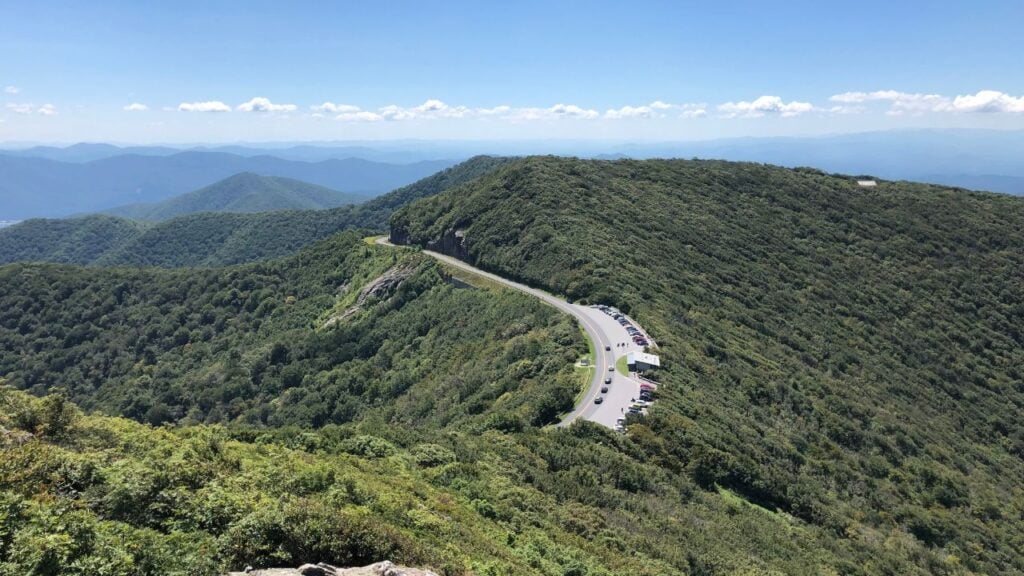
Every hiker on the Blue Ridge Parkway asks the same question about those hazy ridgelines, and many guess wrong.
Scientists took more than a century to nail down the actual explanation, and it has nothing to do with the sky.
The Real Reason North Carolina's Mountains Turn Blue in the Distance
8 North Carolina Roadside Finds That Aren't Automatically Finders Keepers
Spotting something valuable on a North Carolina roadside feels like a lucky break, until the ownership question comes up.
Finders keepers doesn't settle it, and a few of these finds carry rules many drivers never expect.
8 North Carolina Roadside Finds That Aren't Automatically Finders Keepers
