
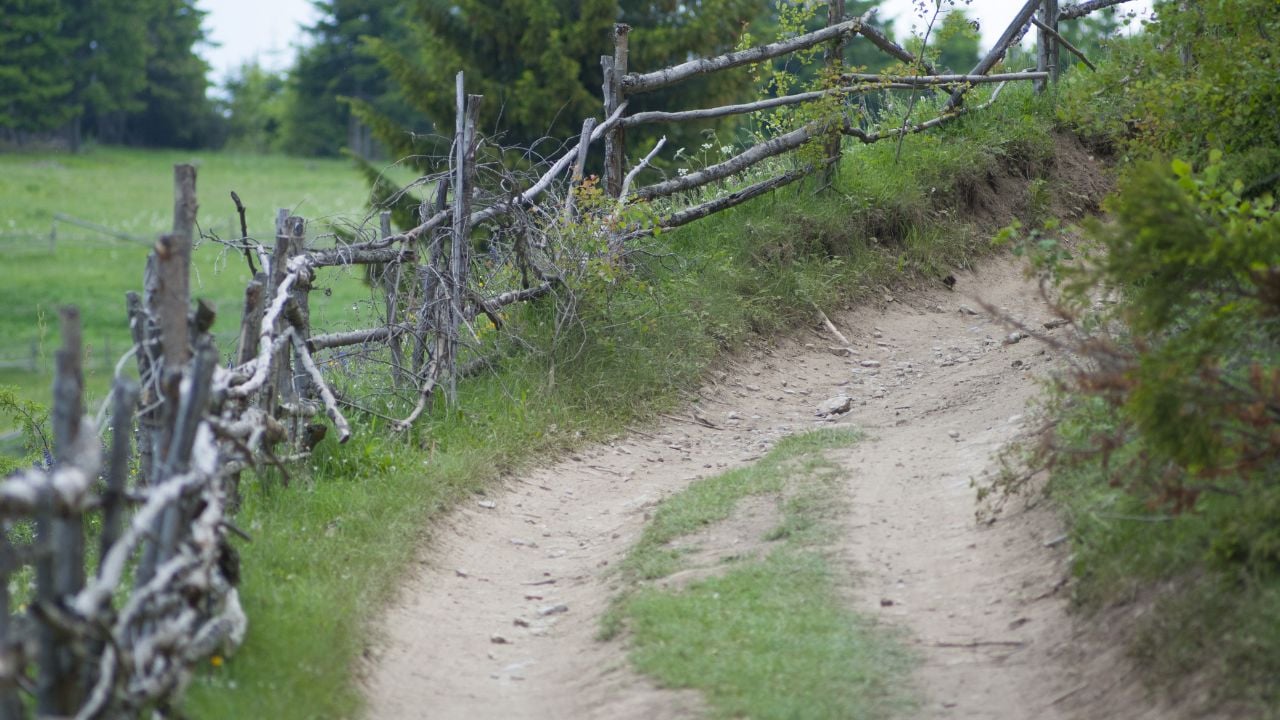
9 Virginia Easement Mistakes That Cost Rural Property Owners the Most

Think a driveway your family has used for forty years automatically comes with a legal right to keep using it?
Not always.
Virginia courts have sent rural landowners into years of litigation over exactly that kind of assumption, some all the way to the state’s highest court.
These are the Virginia easement mistakes that end up costing rural landowners the most.
Note: This is general information, not legal advice. Property and easement rules are subject to change.
1. Skipping the County Recording Step
Virginia treats an easement the same way it treats any other deal for land: It only counts against a future buyer if it’s on the record.
Many rural right-of-way arrangements still run on a handshake and a gate that’s stayed open for years.
Under Virginia’s recording law, an easement nobody files at the county circuit court clerk’s office is void against anyone who buys the land afterward without knowing about it.
Sell that neighboring farm to someone who never heard about the gravel-lane deal, and the new owner can lock the gate the same week they move in.
Fixing it afterward means hiring a real estate attorney and asking a judge to recognize a right that a quick trip to the clerk’s office would have locked in years earlier.
2. Assuming Landlocked Land Comes Free
What happens when a rural Virginia property has no road frontage of its own?
Nothing automatic, whatever a neighbor’s driveway might suggest.
Virginia only recognizes an easement by necessity when the landlocked parcel and the neighboring tract were once part of the same larger piece of land, split apart by the same owner.
No shared history like that, and there’s no automatic claim, only a negotiation.
A neighbor holding the only route in knows exactly what that access is worth.
Every foot of it.
A landowner who assumed the law would hand it over free ends up paying for what they thought they already had.
Or spending years and legal fees proving a right that was never guaranteed to begin with.
3. Splitting Land Without Reserving Access
Families divide rural Virginia land more often than a courthouse deed room shows on the surface, a back forty carved off for a grown kid or sold to cover taxes.
An implied easement only survives that kind of split if a road or path to the new lot already existed and was in use the moment the parcels separated.
Skip that step, sell off the back acreage without writing a right-of-way into the deed.
The new lot can end up with no enforceable way in or out at all.
No easement by necessity fixes it after the fact once any other legal route to the property exists.
Not one foot.
The family who thought they’d done a relative a favor ends up facing a lawsuit, or a buyer who won’t close, over three sentences a deed never had.
4. Assuming Nonuse Means Abandonment
Virginia’s courts don’t let a rural landowner erase an old easement just by watching grass grow over it.
Grass proves nothing.
The Virginia Supreme Court ruled that nonuse alone never abandons an easement, no matter how many years pass.
Reclaiming an old right-of-way takes a lot more than a fence and some patience.
It takes proof that whoever holds it meant to give it up for good.
Plow over an old farm road, fence off a right-of-way nobody’s used in decades.
The holder can still show up with a deed and a court order.
Tearing that fence back out costs a lot more than leaving it open ever would have.
5. Building Inside the Power Line’s Path
Utility easements cross a lot of rural Virginia land.
Dominion Energy and the state’s rural electric cooperatives all hold the same basic right: Keep that corridor clear.
Dominion Energy’s own rules turn down requests for sheds, decks, pools, wells, septic tanks, and anything else built within 50 feet of its lines.
A landowner who never asks first still has to answer to that rule eventually.
Put a workshop or a well inside that corridor without a signed encroachment agreement.
The utility can order it removed the day it needs the easement, on the owner’s own dime.
No compensation for the shed.
None for the labor either.
Psst! How easement-smart is your rural Virginia property once you go beyond the basics? Check off what’s already true and see where you stand.
6. Crowding a Shared Right-of-Way
A Dinwiddie County landowner learned this spring how expensive a Virginia easement mistake can get.
The setup itself was ordinary: Fence posts, a few grapevines, and some hay bales next to a gravel road, all sitting inside a shared 50-foot right-of-way but beside the actual travel lane rather than blocking it.
The neighbor who depended on that road sued anyway, demanding everything come out.
The mistake wasn’t putting those objects there.
It was never checking first whether Virginia law would treat that placement as fair game.
The case reached the Virginia Supreme Court, which ruled that objects inside an easement aren’t automatically illegal, only ones that interfere with what the easement’s for.
The landowner turned out to be legally in the clear.
Legally, not cheaply.
Getting there took years of litigation and legal fees that never show up on a property tax bill.
7. Letting a Shortcut Go Unchecked
Rural Virginia neighbors let each other cross a back field for a shortcut all the time, a hunting trail, a path to a pond, a turn-around for farm equipment.
Virginia common law lets that kind of use turn into a permanent right if it runs long enough.
Twenty years of open and continuous use, without ever asking permission, and the person crossing that field can claim a prescriptive easement that sticks with the land for good.
The landowner who never objects, and never puts anything in writing, can lose control of that strip forever.
For good.
Grant it in writing instead, even informally.
The clock never starts because permitted use isn’t adverse use.
Virginia’s Two Different Clocks
Virginia runs two separate clocks for claims like this, and rural landowners mix them up often.
Adverse possession, the claim to full ownership of a strip of land, takes 15 years under Virginia law.
A prescriptive easement, the claim to just keep using a path across someone else’s land, takes 20 years instead.
Mixing up the two costs whichever side gets the math wrong the whole case.
8. Assuming Your Neighbor Splits the Bill
A washed-out culvert on a shared farm lane in rural Virginia can sit for years without either owner willing to fix it first.
Neither neighbor wants to pay for a repair the other one benefits from just as much.
Virginia law doesn’t pick who pays for grading, culvert work, or fresh stone on a shared gravel driveway or a farm lane crossing two properties.
No default rule at all.
The bill lands wherever the last owner standing decides to write a check.
One neighbor grades the lane every spring and eats the cost alone.
Another lets that same culvert rot for years because neither side agreed who was supposed to fix it.
Both outcomes trace back to the same missing document: A written maintenance agreement recorded alongside the easement.
9. Overlooking a Permanent Conservation Easement
Some rural Virginia land carries a conservation easement a prior owner signed years or decades earlier, often in exchange for a tax break that expired long before the land changed hands again.
Under Virginia’s Conservation Easement Act, that restriction is perpetual by default and binds every owner who comes after, whether they knew about it at closing or not.
It caps how many lots the land can ever become and boxes new construction into a defined building envelope.
A landowner who plans a subdivision or a second house without checking for one first can find out only after pouring a foundation, and the easement’s holder can force it back out.
The title search finds it eventually.
Better to find it first.
Permission Slips That Turn Permanent
Virginia law splits a neighbor’s access into two very different categories, an easement and a license.
A license is just permission, revocable any time, the kind a rural landowner grants informally when they tell a neighbor to cut through the back gate.
Virginia courts have carved out an exception.
Let that neighbor spend money relying on the permission, building a driveway or running a utility line across it.
The license can turn irrevocable from that point on, acting just like a permanent easement.
No going back.
A written time limit and a revocation clause are what keep that same generosity from turning into a permanent easement.
What a Rural Survey Costs
Many easement fights in Virginia start the same way: Nobody’s sure exactly where the line runs.
A licensed survey on a rural Virginia property can run roughly $1,000 to $9,000, depending on acreage, terrain, and how far back the property’s paper trail goes.
Wooded land costs more.
Thin or missing county records cost more to research, too.
That bill still runs far under what a courtroom fight over the same boundary costs once lawyers step in.
It settles for good whether that shed sits inside the easement or just short of it.
8 Money Mistakes Virginia Homeowners Make Before They Retire

A Roanoke couple pays off the mortgage, circles a retirement date, and figures the hard part is over.
Three years later, the math they ran at the kitchen table stops matching what lands in the mailbox.
8 Money Mistakes Virginia Homeowners Make Before They Retire
11 Words Virginians Use That Confuse Everyone Else

A new hire layers up for her first Blue Ridge winter and asks a coworker where to grab a toboggan before the weekend hike.
He points her toward the hat aisle, not the sled rack, and she still doesn’t quite believe him.
