
9 Florida Small-Town Festivals Worth the Drive

Florida’s oldest seafood festival isn’t in Miami or Tampa.
It’s been running in a fishing town of about 2,300 people since 1964, on the same parade route the whole time.
These are the small-town festivals across Florida worth the drive.
1. Sopchoppy Worm Gruntin’ Festival
Sopchoppy has about 500 residents, and every spring the whole town builds a festival around pulling earthworms out of the ground.
The method is called worm grunting.
A grunter drives a wooden stake, called a stob, into the dirt, then rubs a flat iron bar across the top of it.
The vibration sends earthworms racing to the surface.
Charles Darwin had a theory for why: The worms read the shaking as a mole digging in to eat them.
No mole ever shows up.
The worms don’t know that.
One Sopchoppy family put the trick to the test in 2004, and in a single week they gathered more than 135,000 worms.
Sopchoppy has held its festival for about 25 years, always on the second Saturday in April.
A heritage village, a Wiggle Worm Fun Run at sunrise, and a Worm Grunters’ Ball that night round out the weekend.
Outsiders fly in just to watch a stranger grunt a worm out of Panhandle sand.
2. Florida Seafood Festival
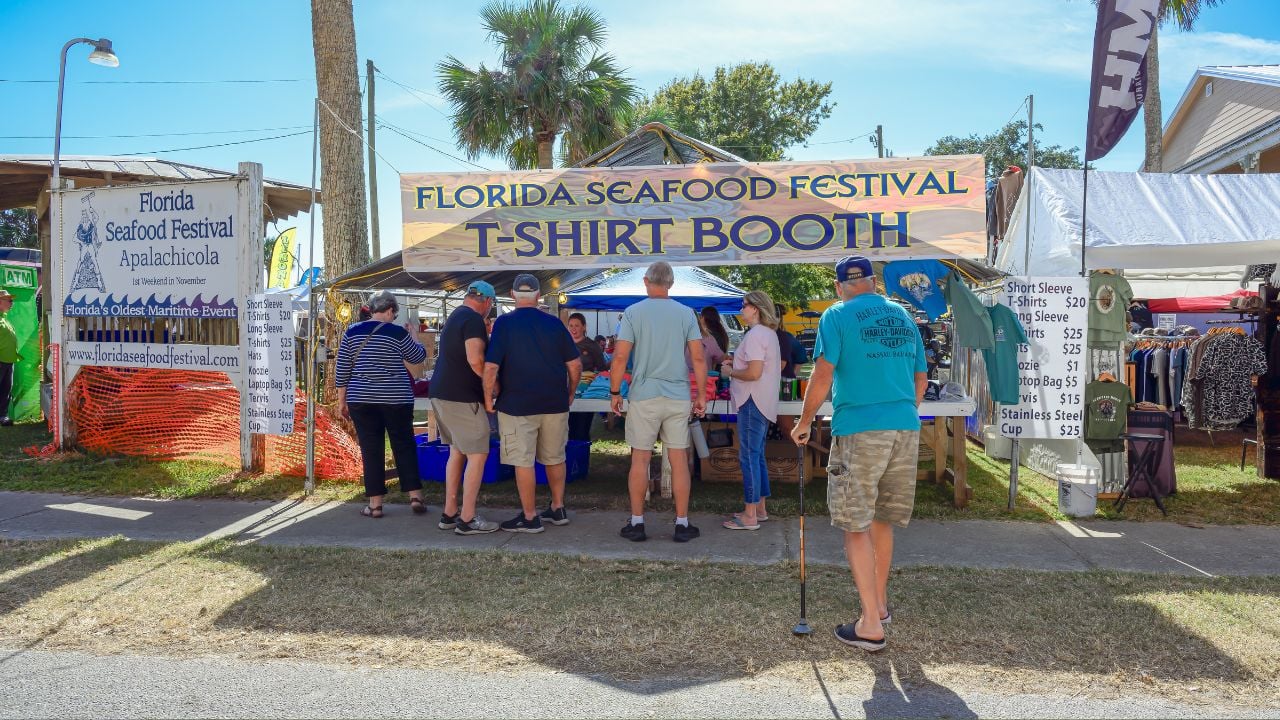
Apalachicola has thrown its Florida Seafood Festival every November since 1964, on the same parade route the whole time.
The fishing town counts about 2,300 residents, per the 2020 census.
That makes it the state’s oldest seafood festival.
About 25,000 people show up to Battery Park for it every year.
The whole weekend runs on oysters and blue crabs hauled straight out of Apalachicola Bay.
There’s an oyster eating contest, an oyster shucking contest, and blue crab races down the street.
Speed counts at both contests.
Every festival also crowns a King Retsyo, oyster spelled backward, to represent Apalachicola Bay, an honor competitors still take seriously.
3. Wausau Possum Festival
Wausau calls itself the Possum Capital of the World, and Florida’s legislature backed it up.
In 1982, lawmakers named the first Saturday in August “Possum Day,” the same year the town raised a 12-foot monument to the animal downtown.
The festival itself is older than both.
Wausau has crowned a Possum King and a Possum Queen every year since 1970.
Fewer than 400 people live in Wausau, home to one very famous possum.
The parade rolls down Main Street at 9 a.m., past vendor booths and a kids’ game corner, before Donkey Softball takes over the field.
Riders trade their cleats for a saddle and try to run the bases on an animal with no interest in home plate.
4. Florida Forest Festival
Perry built its whole festival on the timber industry that built the town.
The Florida Forest Festival began in 1955 as the Pine Tree Festival, a response to wildfires tearing through Taylor County’s timber industry.
It worked.
By 1965, Taylor County had the lowest fire record in the nation, and the state made it official, naming the county the Tree Capital of the South.
The festival kept growing anyway.
Today it centers on what organizers call the World’s Largest Free Fish Fry, a King Tree Parade, and one of the biggest lumberjack competitions in Florida.
Perry has about 7,000 residents, and on Forest Festival Saturday, a good share of them end up in a fish fry line that runs for blocks.
The line is worth it.
5. Cedar Key Seafood Festival
Cedar Key has fewer than 1,000 full-time residents, and its Seafood Festival still pulls in tens of thousands of visitors every October.
The Cedar Key Lions Club has run the festival for 54 years running as of 2025, with well over 100 vendors setting up along the waterfront.
The seafood on the table leans on clams as much as fish these days, ever since Florida voters banned large-scale gill and entangling nets in 1994 and pushed Cedar Key’s fishing families into clam farming.
Cedar Key now grows more than 90% of Florida’s clams, and the festival’s vendors sell them steamed and fried right alongside the catch.
The festival itself keeps things simple: Fresh clams, fresh fish, live music, and a crowd that outnumbers the town by a wide margin.
6. Chalo Nitka Festival
Moore Haven has held the Chalo Nitka Festival since 1948, the year the town paved Main Street and marked the occasion with a celebration.
The name means “Day of the Big Bass” in the Miccosukee language.
Moore Haven sits on the shore of Lake Okeechobee, home to the bass fishing that inspired the name.
The town has fewer than 1,600 residents, and it’s the county seat of Glades County, one of Florida’s smallest.
Two hurricanes nearly wiped Moore Haven off the map in the 1920s.
The town rebuilt anyway.
Chalo Nitka now runs the first Saturday in March, with a rodeo, a parade, carnival rides, and a livestock show that draws families from well outside Glades County.
The rodeo alone is worth the trip.
7. Isle of Eight Flags Shrimp Festival
Fernandina Beach has about 13,000 residents, and its Shrimp Festival honors a nickname the town earned: “Birthplace of the Modern Shrimping Industry.”
A Sicilian immigrant named Mike Salvador sparked that boom in the early 1900s, when he bolted an engine onto a rowboat to pull his net through deeper water.
Florida’s east coast shrimp catch went from just 39,000 pounds in 1897 to almost 9 million pounds by 1918, News4Jax reported.
Fernandina Beach threw its first Isle of Eight Flags Shrimp Festival in 1964 to bless the shrimp fleet for the season.
The name honors the eight flags that have flown over Amelia Island, from French rule in 1562 to the U.S. flag Union troops restored over the island in 1862, midway through the Civil War.
The festival brings $15 million into Fernandina Beach and Amelia Island every year.
That’s big money for one weekend on a small barrier island.
Psst! How much do you know about Florida’s small-town festival history? Take our quiz and see how many you can get right.
Quiz
Florida Festival IQ
Answer these questions on Florida’s small-town festivals. We bet you can’t get them all right. Prove us wrong?
Historians have never found any record that Tampa’s Gasparilla pirate, Jose Gaspar, ever existed. Where did his legend come from?
8. Swamp Cabbage Festival
LaBelle's Swamp Cabbage Festival has served up its namesake dish every February since 1967, and the 2026 event marks 60 years running.
LaBelle calls itself the City Under the Oaks, and its population sits under 5,000 people.
The weekend carries a 5K run, a beauty pageant, and a rodeo at Barron Park that draws working cowboys from across the state's cattle country.
The rodeo puts cowboys first and tourists second.
The main dish gives the whole event its name.
Cooks simmer it low with cured pork until it turns tender enough to eat with a spoon.
What Swamp Cabbage Is
Swamp cabbage is the reason LaBelle throws a festival every February.
It's the heart of the cabbage palm, the tree Florida named its official state tree.
Cutting that heart kills the palm, since harvesters sever the trunk a few feet below the bud to get it out.
That's why anyone harvesting one legally needs the landowner's permission first.
9. Mount Dora Arts Festival
Mount Dora earned the nickname "Festival City," and the Arts Festival is the one that started it all.
A small group of art-loving residents organized a street fair in 1975 and called it the Mount Dora Arts Festival.
It's grown every year since.
The juried show fills the historic downtown with artists from across the country every February, from oil paintings to sculpture and photography.
Mount Dora has about 16,000 residents, more than any other town on this list, though it still reads as small next to nearby Orlando's roughly 307,000.
On Arts Festival weekend, the sidewalks downtown disappear under the crowd.
Live music and food vendors fill in the gaps between the booths, and by afternoon, finding a bench to sit on takes some work.
The festival's jury selects around 300 artists to line the streets each year, and judges hand out awards for Best in Show alongside category prizes in 2D and 3D work.
Admission stays free both days, so the only cost of a February weekend in downtown Mount Dora is finding a place to park.
9 Things Nobody Warns New Florida Residents About Hurricane Season
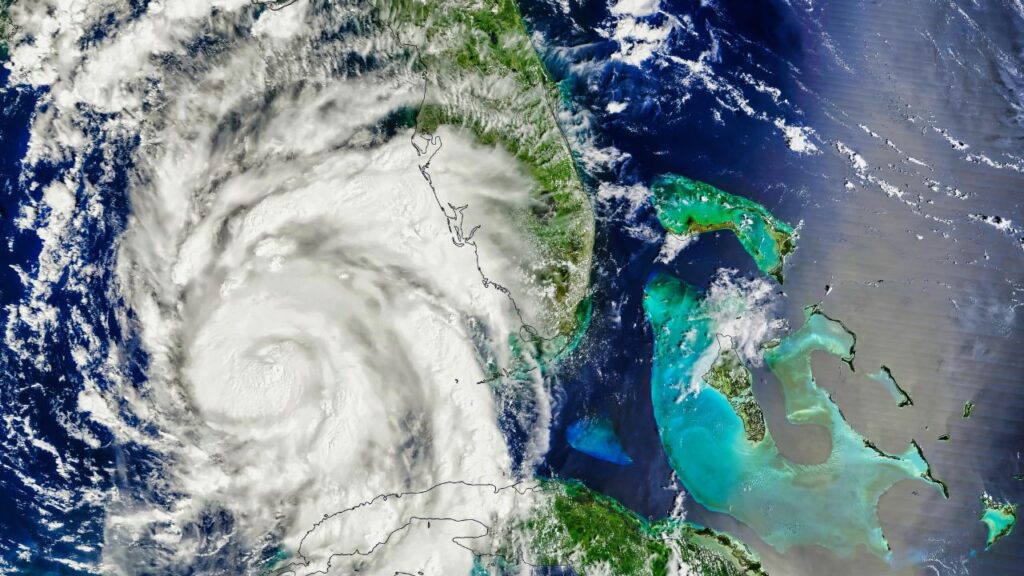
A hurricane doesn't have to touch Florida to empty a hardware store two counties away.
Plywood vanishes off the shelves and generator installers stop taking new jobs.
New residents never see it coming.
9 Things Nobody Warns New Florida Residents About Hurricane Season
10 Florida Wildlife Rules People Break Just by "Being Friendly"
A stomped-on sea turtle nest in Miami Beach once turned into a felony charge and a $5,000 bond for a tourist.
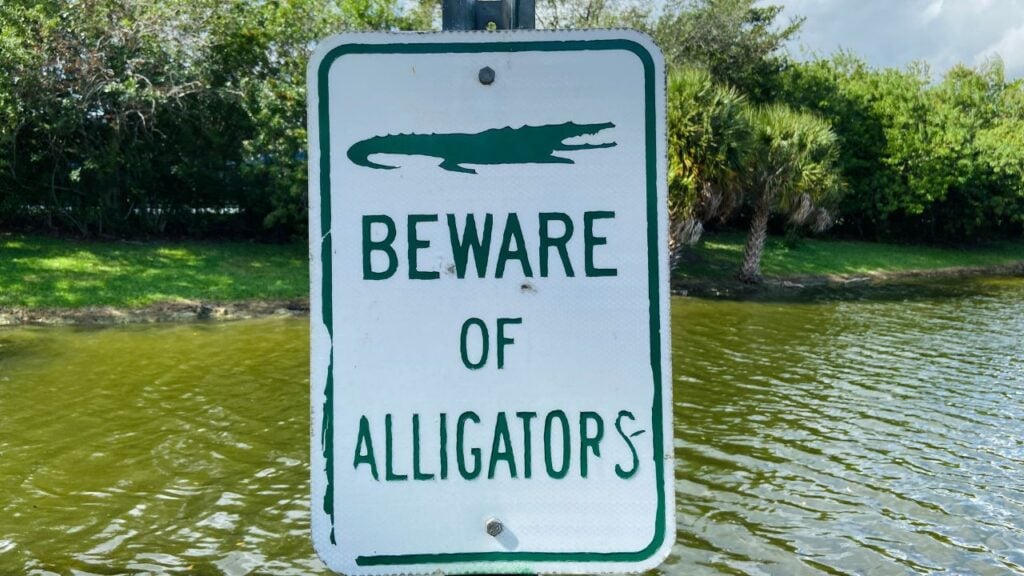
Many people who run into trouble with Florida's wildlife rules are only trying to help an animal or snap a good photo.
10 Florida Wildlife Rules People Break Just by "Being Friendly"
