
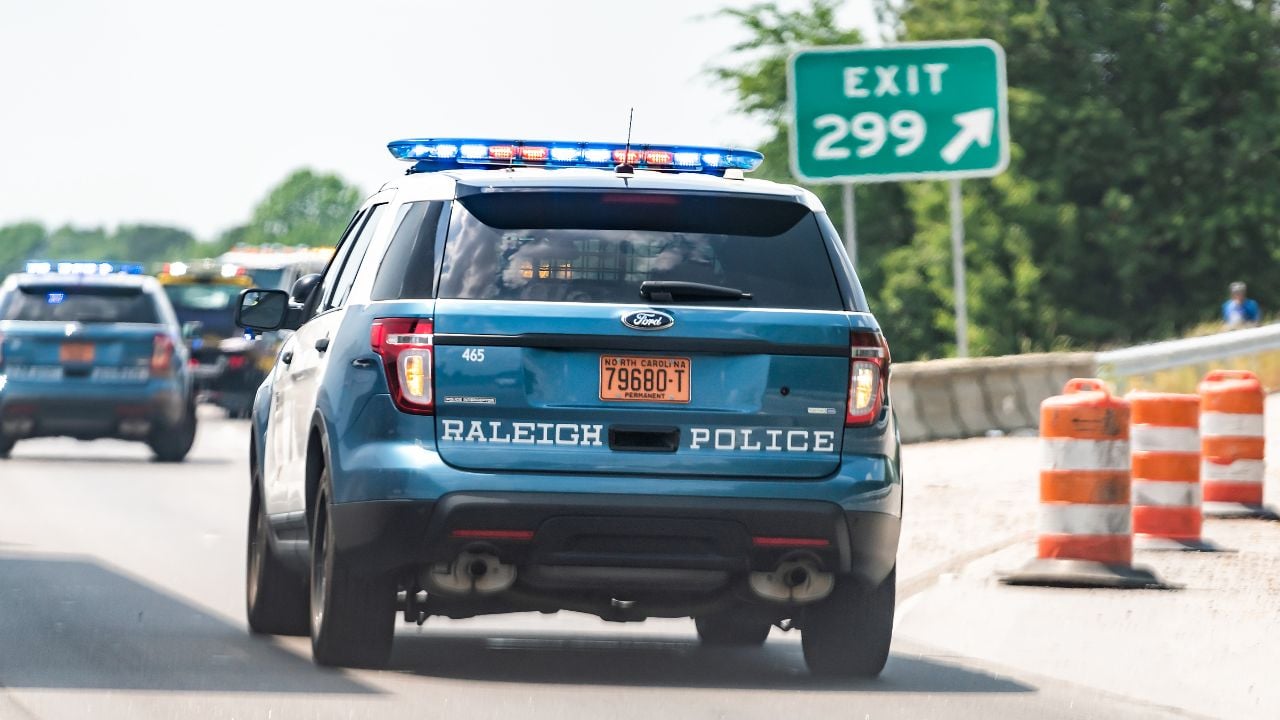
8 Things Foreign Diplomats in the U.S. Get Away With That Would Land Any North Carolina Driver in Serious Trouble

A car with diplomatic plates can pile up parking tickets in North Carolina for years, and nobody tows it.
The reason traces back to a treaty many North Carolinians have never heard of.
These are the things foreign diplomats in the U.S. get away with that would land North Carolina drivers in serious trouble.
Note: This is general information, not legal advice. Traffic laws and penalties are subject to change, so confirm the current rules with the North Carolina Division of Motor Vehicles.
1. A Speeding Ticket That Isn’t
North Carolina troopers can pull diplomats over for speeding, just like anyone else.
What happens after the stop is where the difference starts.
The State Department’s Office of Foreign Missions expects a diplomat who receives a ticket with a fine attached to pay the fine or contest it in court, the same as anyone else.
North Carolina just has no way to make that happen.
The stop instead goes into the Office of Foreign Missions’ point system, where eight points in two years triggers a review and twelve brings an automatic suspension of the diplomat’s driving privileges nationwide.
An ordinary North Carolina driver doesn’t get that leniency.
Locals walk away with a citation, points on their driving record with the state’s Division of Motor Vehicles (DMV), an insurance surcharge, and, if the speed is bad enough to count as willful or reckless, a Class 2 misdemeanor that carries up to $1,000 in fines and 60 days in jail.
The diplomat just drives off.
2. A DWI Arrest That Never Happens
Officers don’t handcuff a diplomat suspected of driving while impaired (DWI) in North Carolina the way they would anyone else.
Under the Vienna Convention on Diplomatic Relations, an accredited diplomat “may not be arrested or detained.”
They carry full immunity from prosecution no matter how serious the charge, unless their government waives it first.
Officers can still stop the car and call it in.
They just can’t put the diplomat in their back seat.
A North Carolina driver caught doing the same thing faces arrest on the spot and booking into jail.
North Carolina charges impaired driving as a misdemeanor under G.S. 20-179, sentenced on a five-level scale that tops out at $4,000 in fines and 24 months in jail.
A conviction also brings a mandatory one-year license revocation, on top of whatever the sentence itself carries.
What Diplomatic Immunity Blocks
Diplomatic immunity doesn’t erase what a diplomat did behind the wheel.
It only blocks the United States from putting that diplomat on trial for it.
The diplomat’s own home country can still choose to waive that protection.
For a second DWI or driving under the influence (DUI) offense, State Department policy skips the waiver request altogether and requires that diplomat to leave the country instead.
Outside that policy, North Carolina has no lever of its own: Every consequence still runs through Washington, never Raleigh.
3. Refusing the Breath Test
North Carolina officers only need reasonable grounds before they ask a driver to take a breath test.
There’s no room to just say no.
Refuse it, and North Carolina’s implied-consent law triggers an immediate civil revocation of the license.
That revocation runs 30 days and starts right at the roadside, no conviction and no DWI verdict needed first.
Willfully refuse, and a second, harsher penalty follows on its own track: A mandatory 12-month revocation built from a sworn officer affidavit mailed to the state’s DMV, not a decision made on the roadside.
Diplomats sidestep that entire law because they don’t carry North Carolina driver’s licenses in the first place.
Their credentials come from the Office of Foreign Missions, so there’s no state-issued license sitting in a North Carolina file for the implied-consent statute to reach.
Nothing happens to them.
A refusal costs a diplomat nothing that North Carolina controls.
4. Parking Tickets That Never Come Due
Diplomatic plates make a parking ticket almost impossible for a North Carolina city to collect.
Diplomatic immunity has long put the ordinary tools that force payment, a boot or a tow, out of reach for a car wearing them.
It took a special act of Congress, the 2002 Clinton-Schumer Amendment, before New York City could start towing repeat diplomatic offenders and denying them plate renewals over unpaid tickets.
North Carolina never got a similar carve-out.
Not one dollar collected.
Nationwide, diplomats let more than $16 million in tickets written before that 2002 crackdown pile up in New York City alone.
An ordinary driver in Raleigh, Durham, Greensboro, or Winston-Salem doesn’t get the same patience: Three unpaid tickets sitting for 90 days is enough for the city to clamp a wheel lock on their car.
5. A License North Carolina Can’t Touch
North Carolina has zero say over whether a diplomat gets to keep driving.
The Office of Foreign Missions regulates the acquisition, registration, and disposition of every diplomat’s vehicle nationwide.
It also issues each diplomat’s driver’s license itself, so no state DMV and no state court has the power to suspend either one.
Their whole driving record lives inside a federal file North Carolina never sees.
No state can touch it.
An ordinary North Carolina driver’s license lives entirely inside the state’s own system, where the DMV suspends anyone who racks up 12 points in three years.
Keep driving on a revoked license anyway, and that’s its own separate crime.
6. A Car North Carolina Can’t Seize
A diplomat’s car in North Carolina can’t be taken away, no matter how it was driven.
The Vienna Convention on Diplomatic Relations protects a diplomat’s personal property, a vehicle included, from search or from any measures of execution used to enforce a judgment or penalty.
North Carolina happens to run a program built for exactly that kind of enforcement.
Under the state’s seize-and-sell law, a driver caught behind the wheel after an impaired-driving license revocation, or fleeing at felony speeds to escape an officer, can have their car permanently taken and auctioned, with the proceeds going to the county’s schools.
A diplomat’s car never lands on that list.
The diplomat keeps driving.
The North Carolina driver loses the car for good.
Psst! How much do you know about diplomatic immunity? Play myth or fact below and see how many you get right.
7. Resisting Arrest for Free
A diplomat who shoves past an officer trying to make a stop doesn’t pick up a separate charge for it.
There’s no lawful arrest happening in the first place for them to resist.
Take that same swing at a North Carolina trooper as an ordinary driver, and the charge stands on its own two feet.
Resisting, delaying, or obstructing a public officer is a Class 2 misdemeanor in North Carolina, good for up to 60 days in jail on top of whatever the original stop turns up.
It doesn’t take a struggle, either.
Refusing alone counts.
8. Driving on Lapsed Coverage
Every diplomat driving in the United States is required to carry liability insurance, the same as anyone else.
The difference shows up in who checks.
The Office of Foreign Missions tracks that coverage through its own point system, so a lapse never touches a North Carolina file or a North Carolina court docket at all.
Not a diplomat’s problem.
A North Carolina driver whose policy lapses answers to the state directly.
The DMV can charge a civil penalty that rises from $50 to $150 for repeat lapses and revoke the plate for 30 days.
Get caught driving without coverage, and North Carolina charges that separately as a Class 3 misdemeanor.
None of it slows the diplomat down.
Their plates stay valid, their file stays outside the state’s reach.
8 North Carolina Roadside Finds That Aren’t Finders Keepers
Finding something on a North Carolina roadside doesn’t settle who owns it, no matter how empty the shoulder looks.
Some of these finds come with rules many drivers have never had a reason to learn.
8 North Carolina Roadside Finds That Aren’t Automatically Finders Keepers
Kitchen Tools Worth Replacing
How many tools in a North Carolina kitchen drawer have gone years past their replace-by date?
Many cooks have never had a reason to check.
7 Kitchen Tools North Carolina Cooks Should Have Replaced Years Ago
