

8 Georgia Short-Term Rental Rules Owners Find Out About After Their First Complaint

A Georgia homeowner lists a spare house on Airbnb, books a group for a weekend, and figures the platform has the paperwork covered.
It doesn’t, not all of it.
Georgia leaves short-term rental rules almost entirely to individual cities and counties.
So, what’s legal on one street can be a violation a mile away. Owners often find out which is which only once a neighbor, an HOA, or a city office files a complaint.
These are the Georgia short-term rental rules that homeowners often find out about too late.
Note: This is general information, not legal advice. Short-term rental ordinances, license fees, and caps are set locally and are subject to change, so confirm the current requirements with your city or county planning department.
1. Skipping Atlanta’s Rental License
Georgia’s capital requires a short-term rental license (STRL) before an Atlanta owner ever hosts a paying guest, and many first-time hosts never realize it.
The license costs $150 a year and covers a primary residence, plus one additional dwelling unit if the owner wants it.
Nobody chases that fee down before listing a property, though.
A complaint routing to Zoning Enforcement is how many owners hear about the license in the first place.
By then, the penalty already costs more than the fee ever would have.
Get caught operating without one, and Atlanta imposes a mandatory one-year wait before the city will even accept a new application.
That’s a whole booking season, gone.
2. Hitting Atlanta’s Two-Property Cap
Atlanta caps how many Georgia short-term rental properties one owner can list, and the number surprises people who own more than a couple of houses in the city.
One STRL covers exactly one primary residence and one additional dwelling unit, nothing more, no matter how many other properties that owner holds inside city limits.
The cap is two.
Atlanta rarely catches a third listing on its own.
A neighbor or a competing host who spots a listing running without a visible STRL number can file a complaint with the city, and that’s usually what puts the address in front of City Planning first.
City Planning cross-references that address against its own license database.
That’s how an investor with a third Atlanta property learns the cap is already maxed out, and the listing can’t be licensed at all, no matter how the paperwork gets filed.
The rule also has a catch that trips up owners who never intend to rent their own house.
The primary residence has to be registered first, even if the plan is to rent only the second unit.
3. Assuming Homeowners Insurance Covers It
Georgia short-term rental owners often assume a regular homeowners policy carries them through a bad weekend, and that assumption is exactly what a claim exposes.
Savannah requires proof of insurance that states the property is used as a short-term vacation rental, for every new and renewing application.
Not just any policy passes.
A generic policy that never mentions paying guests can leave an owner without coverage at the exact moment they need it, whether that’s a guest injury or property damage from an overcrowded booking.
A claim is usually what exposes that gap, or a neighbor’s complaint about an incident on the property forces the same paperwork into the open just as fast.
4. Missing Savannah’s Ward Cap
Savannah, Georgia, limits how many non-owner-occupied short-term rentals can operate inside its historic districts, and the limit isn’t theoretical anymore.
The city caps non-owner-occupied vacation rentals at 20% of residential parcels per ward across the Downtown and Victorian Historic Districts.
Every single ward in both districts has already hit that cap.
No exceptions.
Applying is one way a historic-district buyer finds this out.
A complaint over an uncertified listing next door works just as fast, bringing a city inspector out to explain there’s nothing left to issue, only a waiting list.
5. Missing Chatham County’s New Freeze
Georgia short-term rental owners outside Savannah’s city limits aren’t off the hook, and Chatham County just proved it.
County commissioners approved a 120-day moratorium on new short-term vacation rental licenses in unincorporated Chatham County in July 2026.
Residents pushed for it.
Complaints about noise, parking, parties, and unlicensed rentals piling up in residential neighborhoods drove commissioners to freeze new licenses while they write clearer rules.
A first-time host who lists a house in unincorporated Chatham County without a license has already broken county rules, freeze or not.
It’s often a neighbor’s complaint about noise or parked cars that brings a code enforcement officer to the property first.
That visit is when the host learns a new license can’t even be issued there at all until the freeze lifts.
Savannah the City vs. Chatham County
Savannah’s 20% ward cap and Chatham County’s new freeze sound like the same rule, but they come from two different governments.
The ward cap only governs certificates inside Savannah’s city limits, the Downtown and Victorian Historic Districts.
The county’s 120-day freeze only covers unincorporated Chatham County, the land outside the city’s own borders.
A property just outside Savannah answers to the county’s freeze, not the city’s cap.
The freeze doesn’t touch a license that was already renewing before the vote.
6. Assuming the HOA Can’t Stop It
Georgia homeowners often assume no homeowners association (HOA) can touch what they do with their own house, and short-term rentals are where that assumption falls apart fastest.
Georgia’s Property Owners’ Association Act lets a community amend its covenants to ban or restrict short-term rentals, and once that amendment passes the proper vote, it binds every owner in the community, including owners who voted against it.
If the ban already sat in the covenants when an owner bought the house, the HOA can typically enforce it from day one.
Many owners never read that far into the governing documents.
A fine or a violation notice is usually the first anyone from the HOA reaches out at all, and a neighbor’s complaint is usually what triggers it.
The notice comes first.
Psst! Georgia short-term rental rules: Myth or fact? Flip each card and see how many you’d get right.
7. Miscounting Savannah’s Guest Limit
Georgia’s short-term rental rules turn especially strict in Savannah, where a hard cap on adults per unit trips up more owners than you’d think.
A two-bedroom rental tops out at four adults.
Anything with three or more bedrooms caps out at two adults per bedroom, and the city can verify the bedroom count against building code before it ever signs off.
A noisy weekend is usually what does it: A neighbor calls it in, and code enforcement shows up counting heads at the door before the host ever ran the math.
Savannah’s code enforcement writes that fine fast.
8. Assuming Airbnb Covers Every Tax
Georgia short-term rental hosts on Airbnb often believe the platform handles every tax bill on their behalf, and that belief is only partly true.
Airbnb collects and remits Georgia’s 4% state sales tax and the $5-per-night state hotel-motel fee automatically.
Not every local tax.
Some Georgia cities and counties still expect the host to register, file, and pay that portion directly, no matter how the booking came in.
Airbnb’s own Georgia help page says it collects all locally imposed occupancy taxes, but Atlanta and Savannah both still expect some hosts to file and pay their local portion directly.
An unrelated complaint is usually what puts a listing on a local tax office’s radar in the first place.
That’s when an owner who never checked learns the gap exists, with back taxes landing on a property that looked fully compliant on paper.
Georgia’s Patchwork of Rental Rules
Georgia has no statewide short-term rental law at all, which is exactly why the rules above only apply the way they do in the cities and counties that wrote them.
No state licensing requirement exists.
No state law preempts a city from writing its own.
That leaves Georgia owners navigating a genuine patchwork, where a rental legal in one county can be a violation two exits down the interstate.
Atlanta’s city council has also floated tightening the rules further, including a much larger insurance requirement and a buffer distance between licensed rentals.
A separate proposal from council member Byron Amos, introduced in January 2026, would create a dedicated Office of Short-Term Rentals and cap unhosted stays at 90 nights a year.
8 Costly Mistakes First-Time Georgia Homebuyers Make
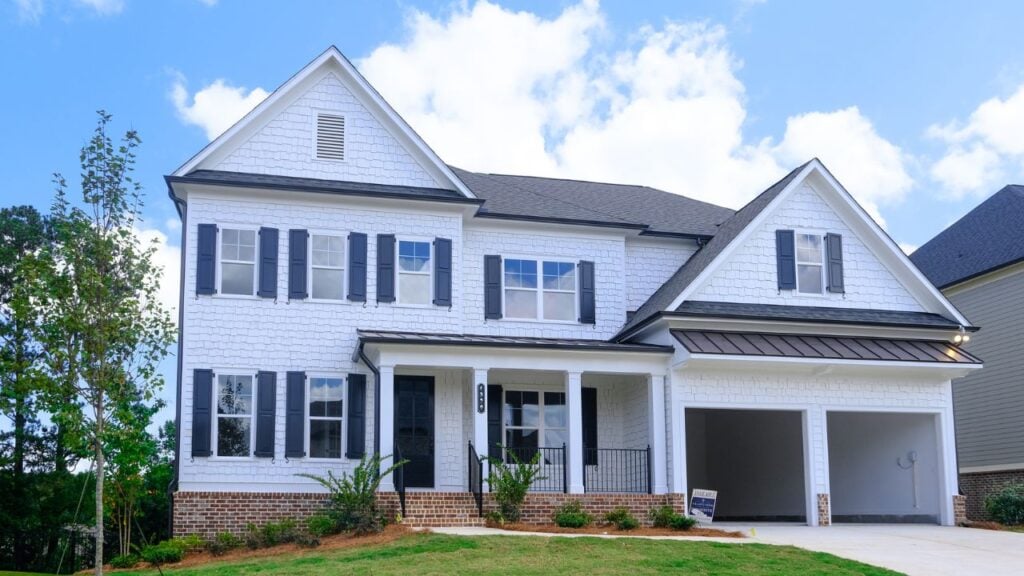
A first-time buyer in Gwinnett County signs the purchase contract and high-fives their agent in the driveway, certain the hard financial decisions are done.
They aren’t.
8 Costly Mistakes First-Time Georgia Homebuyers Make
8 Reasons Your Georgia Porch Feels Hotter Than the Rest of Your House
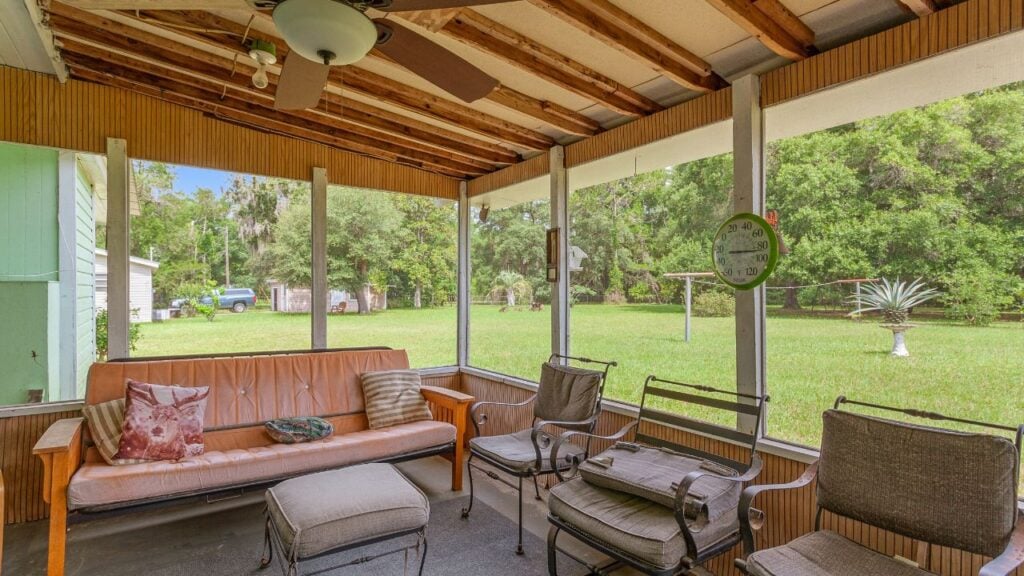
A homeowner outside Macon steps onto her covered porch expecting shade and gets a wall of heat instead.
Her living room, ten feet away, sits at a comfortable 72 degrees, and her porch might as well belong to a different summer.
8 Reasons Your Georgia Porch Feels Hotter Than the Rest of Your House
