

8 Costly Mistakes First-Time Georgia Homebuyers Make

A first-time buyer in Gwinnett County signs the purchase contract and high-fives their agent in the driveway, certain the hard financial decisions are done.
They aren’t.
The next few weeks bring decisions nobody warned them were still coming, each one with its own price tag attached.
These are the expensive mistakes first-time Georgia homebuyers often make.
Note: This is general information, not financial advice. Costs, tax rates, and program details are subject to change, so confirm the current numbers with a lender or closing attorney.
1. Skipping Georgia Dream Down Payment Assistance
Ask about Georgia Dream down payment assistance before signing anything.
Georgia offers first-time buyers cash toward a down payment, and many never ask for it.
The Georgia Dream program counts you as a first-time buyer as long as you haven’t owned a home in the past three years.
Standard assistance covers 5% of the purchase price, up to $10,000, structured as a second loan at 0% interest with no monthly payment.
Nurses, teachers, first responders, and active military can qualify for up to $12,500 instead.
Many eligible buyers never file the paperwork to claim it.
Ask your lender directly.
You repay it only when you sell, refinance, or move out, and income and home price limits apply.
A required homebuyer education course takes a few hours online.
Many buyers skip that short class and walk away from thousands of dollars they qualified for.
2. Trusting Your First Mortgage Quote
Call one lender, like the rate they quote, and stop looking?
That single call can cost thousands.
That’s far from pocket change.
Mortgage rates vary lender to lender on the very same day.
During the volatile rate swings of late 2022, Freddie Mac research found buyers who collected five rate quotes could have saved more than $6,000 over the life of the loan compared with buyers who stopped at one.
That was a stress-tested rate environment, not a guarantee under today’s market, but the lender-to-lender gap doesn’t close just because rates settle down.
A second or third quote costs nothing but time.
Buyers in Macon and Savannah who request written loan estimates from three or four lenders in the same week end up negotiating from strength instead of guessing.
A lower rate on a $280,000 loan can mean a payment tens of dollars smaller every month for the next 30 years.
3. Budgeting Only for Your Down Payment
The down payment clears.
The wire confirms, and a first-time Georgia buyer exhales, certain the hard part is over.
It isn’t.
Closing costs in Georgia typically run 2% to 5% of the purchase price, covering the lender’s fees, the appraisal, title work, and prepaid items like homeowners insurance and the first chunk of property tax.
On a $325,000 home, that’s $6,500 to $16,250 due at the closing table, above and beyond the down payment.
That’s a second down payment’s worth of cash, due the same week as the first.
Buyers who budget down to the last dollar for a down payment and nothing else scramble in the final week, sometimes asking a lender for a credit that raises their interest rate just to cover the gap.
Ask for a loan estimate early, and that range stops being a guess.
4. Letting the Due Diligence Deadline Slide By
Seven to 14 days, sometimes less.
Georgia’s standard purchase contract gives first-time buyers a due diligence period, the window a buyer has to inspect a home and investigate the deal before deciding whether to move forward.
It’s the one stretch where a buyer can walk away for any reason and get their earnest money back in full.
Once that window closes, the money goes hard, meaning non-refundable, with no exceptions besides a contingency that survives in writing, like financing falling through.
A buyer who lets the deadline pass without finishing an inspection or a second look at the seller’s disclosures loses the easiest exit in the whole transaction.
No more free look.
Mark the date the day you sign the contract in Marietta or anywhere else, not the day it starts to feel urgent.
Psst! See how many of these home-buying claims you can call correctly. Flip each card to check your answer.
5. Trusting Your Prorated Tax Credit
Ever wonder why the tax credit on the settlement statement never matches next year’s actual bill?
Georgia property tax bills go out annually, and the seller’s credit a first-time buyer sees at closing is only an estimate.
Here’s the part that trips up new buyers: The credit on the settlement statement is usually based on the seller’s old tax bill, the one still carrying the seller’s homestead exemption, the discount Georgia gives owners on the home they live in full time.
None of it carries over.
You have to file your own homestead exemption application, and in most Georgia counties the deadline is April 1, with eligibility based on owning and living in the home as of January 1 of that year.
Miss that date, and Georgia’s House Bill 92 (HB 92) opens a 45-day late-filing window in some circumstances, though buyers shouldn’t count on it and should still treat April 1 as the deadline that matters.
Close in July, and the earliest your own exemption can apply is the following January.
That leaves a gap year with a higher bill than the closing estimate suggested, sometimes several hundred dollars more once the county reassesses the home at its new sale price.
Budget for the bigger number, not the prorated estimate.
6. Misreading Your PMI
Putting less than 20% down on a Georgia home almost always means paying private mortgage insurance (PMI), a policy that protects the lender, not the buyer, if the loan ever goes unpaid.
It typically costs 0.46% to 1.5% of the loan amount every year.
On a $280,000 loan, that’s roughly $1,300 to $4,200 a year, or about $110 to $350 added to the payment every month.
Here’s the mistake: Many first-time buyers assume PMI sticks around for the life of the loan.
Not forever.
Once the loan balance drops to 80% of the home’s original value, a buyer can request that PMI come off, and federal law requires the lender to drop it automatically at 78%.
Buyers who never track their balance and never request the cancellation keep paying for coverage they no longer legally need.
Wasted money.
7. Skipping the HOA Paperwork
First-time buyers assume HOA paperwork shows up the same way a title report does, automatically.
It doesn’t.
Buy into a homeowners association (HOA) anywhere in Georgia, and the state doesn’t require the seller to hand a first-time buyer much of anything on their own.
Unlike a condo, a Georgia HOA carries no statutory resale disclosure package it must produce.
Nothing arrives by default.
A first-time buyer has to request the declaration, the current budget, the dues statement, and recent board meeting minutes directly, and reading them can reveal a reserve fund running low, a lawsuit against the association, or a special assessment already planned for next year.
Skip that step, and a first-time buyer in a Henry County subdivision can close on a house only to learn the dues are about to jump or a roof-replacement assessment is already due.
Ask before you sign the contract, not after you’ve already committed to your first house.
8. Forgetting the Intangible Tax on Your Loan
Georgia charges a state intangible recording tax on every mortgage, and first-time buyers rarely see it coming.
The rate is $1.50 per $500 of the loan amount, due the day the county records the security deed, Georgia’s version of the mortgage document that pledges the home as collateral for the loan.
On a $280,000 loan, that’s $840, a separate line item from the appraisal, title work, and everything else already stacked into closing costs.
Easy to miss.
That’s $840 nobody budgeted for, sitting right next to the down payment on closing day.
The tax applies to the loan amount, not the purchase price, so a buyer putting more money down owes less intangible tax, one of the few costs in the whole process that rewards a bigger down payment.
Finance $250,000 instead of $280,000, and the bill drops to $750, a $90 difference that shows up nowhere else on the closing disclosure.
9 Squatter Laws Every Georgia Homeowner Should Know in 2026

A house sitting empty after a Georgia funeral can go untouched for a year while family argues over who inherits it.
Nobody has to break a window for that gap to turn into a real legal fight, and a new owner can walk into a mess left by someone who was never supposed to be there.
9 Squatter Laws Every Georgia Homeowner Should Know in 2026
9 Reasons People Are Leaving Georgia in 2026
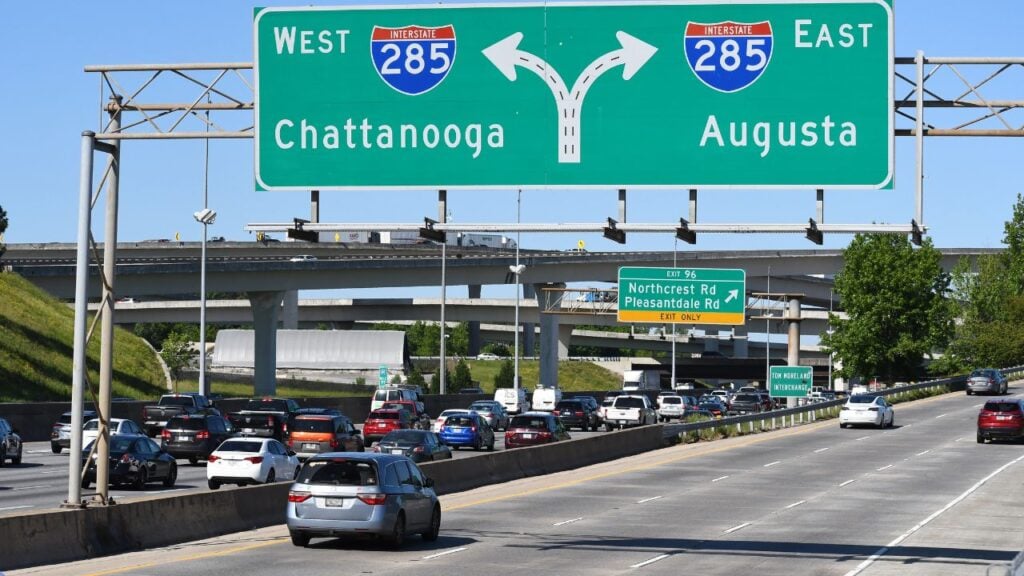
Georgia sells itself as the affordable corner of the Sun Belt, right up until a driver opens a car insurance renewal that jumped 26% in a single year.
For a growing number of new homeowners, the pitch is starting to look different than the monthly bill.
